Asia's silver generation is rewriting the rules of retirement and recovery — and Thailand is emerging as the undisputed destination of choice. As populations age rapidly across China, Singapore, Malaysia, and beyond, a quiet revolution in senior care and rehabilitation medicine is unfolding along Thailand's palm-lined coastlines and in its world-class hospital corridors.
The ASEAN Senior Care Crisis — and Thailand's Answer
By 2030, more than 20% of Southeast Asia's population will be aged 60 or older, according to ASEAN demographic projections. China alone is adding roughly 10 million new senior citizens every year. Yet the domestic infrastructure for long-term elder care, post-stroke rehabilitation, and geriatric medicine in many of these countries remains severely stretched. Hospital beds are oversubscribed. Specialist waiting times are long. Family caregivers are exhausted.
Thailand has stepped boldly into this gap. Backed by decades of investment in medical tourism infrastructure, a highly trained nursing workforce, and a government-endorsed "Medical Hub" strategy, the country now offers something few destinations can match: world-class rehabilitation and senior care at a fraction of the cost found in Western nations or even in Singapore and Hong Kong.
Why This Matters Now
A recent report highlighted by Travel and Tour World confirms that growing demand for medical tourism and senior healthcare travel is actively reshaping Asia's healthcare landscape. The story is clear: Chinese and ASEAN families are no longer waiting for domestic solutions to catch up. They are flying their elderly parents and recovering relatives to Chiang Mai, Bangkok, Phuket, and Hua Hin — and they are staying for months at a time.
Thailand recorded over 3.5 million medical tourists in 2023, with rehabilitation and elderly care programmes among the fastest-growing segments. Industry analysts project this figure to exceed 5 million by 2027, driven almost entirely by inbound patients from China, Malaysia, Myanmar, and Cambodia.
What Thailand's Senior Care Revolution Actually Looks Like
Integrated Rehabilitation Hospitals
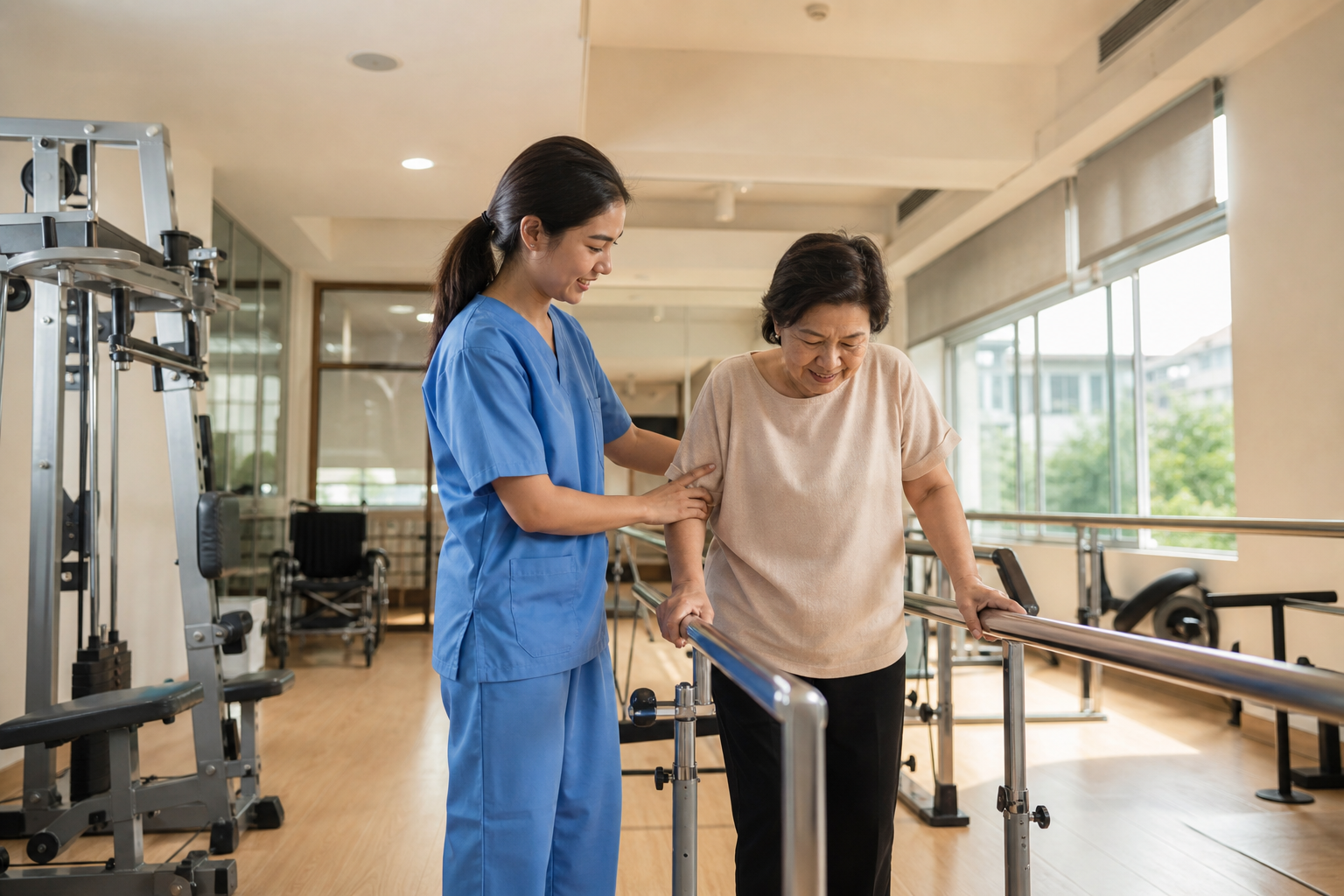
Leading Thai facilities such as Bumrungrad International Hospital in Bangkok, Bangkok Hospital Group, and Vejthani Hospital now operate dedicated rehabilitation wings staffed by neurologists, physiotherapists, occupational therapists, and speech-language pathologists — many of whom hold international certifications and speak Mandarin or Cantonese. These centres treat post-stroke patients, those recovering from orthopaedic surgery, individuals living with Parkinson's disease, and patients requiring dementia management.
Long-Stay Packages Designed for Families
Unlike typical acute-care admissions, Thailand's senior-focused facilities have developed long-stay rehabilitation packages specifically tailored to international patients. A comprehensive 30-day inpatient rehabilitation programme — including accommodation, nursing, physiotherapy sessions, meals, and specialist consultations — typically costs between USD 3,000 and USD 8,000 per month, depending on the hospital tier and treatment complexity. Comparable care in Singapore would exceed USD 15,000–25,000 per month, and in Western Europe or Australia, costs climb even higher.
Elder Care Retreats and Geriatric Wellness Centres
Beyond hospitals, Thailand has cultivated a growing ecosystem of licensed elder care retreats — residential facilities that blend medical monitoring with wellness programming, traditional Thai therapeutic massage, nutritional support, and cultural comfort. Many of these retreats, concentrated in Chiang Mai and Hua Hin, actively recruit Mandarin-speaking staff and offer menus tailored to Chinese and Southeast Asian dietary preferences. Monthly residential costs at a mid-tier care retreat typically range from USD 1,500 to USD 4,000, making extended stays financially accessible for middle-class ASEAN families.
Why Chinese and ASEAN Patients Are Choosing Thailand Specifically
Cultural and linguistic compatibility: Large communities of Thai-Chinese residents mean Mandarin, Hokkien, and Cantonese speakers are far easier to find in Thai medical settings than in many other countries.
Visa accessibility: Thailand offers visa-on-arrival or visa-free entry to most ASEAN nationals, and long-stay medical visas are available for patients receiving extended treatment.
Climate and quality of life: Warm weather, affordable living costs, Buddhist cultural familiarity, and excellent food make Thailand a genuinely comfortable environment for elderly patients undertaking multi-month programmes.
JCI-accredited hospitals: Thailand has more Joint Commission International (JCI)-accredited hospitals than any other country in Southeast Asia, providing international families with verifiable quality assurance.
Caregiver support ecosystems: Professional home-nurse agencies, physiotherapy home-visit services, and dedicated patient liaison officers are widely available, reducing the burden on accompanying family members.
How Le Medica Supports Families Through the Process
For families navigating this journey from China, Singapore, Malaysia, or elsewhere in ASEAN, the logistics can feel overwhelming. Which hospital is the right fit? Which rehabilitation centre has genuine Mandarin-speaking staff? How do you coordinate treatment plans across borders? This is precisely where Le Medica's concierge service delivers real value.
Le Medica specialises in coordinating long-stay rehabilitation and elder care programmes in Thailand, handling every element of the patient journey — from initial medical assessment and hospital selection to on-the-ground caregiver coordination and ongoing family liaison. Our team communicates in English, Mandarin, and Cantonese, and maintains direct relationships with leading rehabilitation centres and geriatric facilities across Bangkok, Chiang Mai, Phuket, and Hua Hin. We ensure that families back home receive regular, clear updates — so distance never means disconnection.
Frequently Asked Questions
How long do most patients stay in Thailand for senior rehabilitation?
The most effective rehabilitation outcomes are typically achieved over a minimum of four to twelve weeks of structured inpatient or residential care. Many families from China and ASEAN opt for initial 30-day programmes, which can be extended based on the patient's progress. Le Medica helps families plan both short and extended stays with full logistical support.
Is it safe for elderly patients to travel to Thailand for treatment?
With proper pre-travel medical clearance and professional coordination on both ends of the journey, the vast majority of elderly patients — including those recovering from stroke, hip replacement, or cardiac events — travel to Thailand safely. Le Medica works with referring physicians and receiving hospitals to ensure transfer protocols are in place before the patient departs.
What languages are available at Thai rehabilitation centres?
Many of Thailand's leading international hospitals offer Mandarin-speaking doctors, nurses, and patient liaison officers, particularly in Bangkok and Chiang Mai. Le Medica specifically screens all partner facilities for genuine language capability — not just basic translation — so your family member can communicate comfortably throughout their stay.
What does the family coordination service from Le Medica include?
Le Medica's family liaison service includes regular written and video call updates, translation of medical reports, coordination with treating physicians for question-and-answer sessions, assistance arranging family visits, and support for care transitions when the patient returns home. We treat family communication as an essential part of the care package, not an afterthought.
Begin Your Family's Care Journey Today
Thailand's senior care revolution is already well underway — and for families across China and ASEAN, the opportunity to access world-class rehabilitation and elder care at genuinely affordable costs has never been more real. Whether your loved one is recovering from a stroke, managing a degenerative condition, or simply needs the kind of attentive, professional long-term care that overcrowded domestic systems cannot yet provide, Thailand offers a compelling and proven solution. Let Le Medica guide your family every step of the way. Contact our team today to receive a personalised programme recommendation and cost estimate within 48 hours.