Asia's silver generation is rewriting the rules of healthcare travel — and Thailand is emerging as the destination of choice. As populations age rapidly across China, Malaysia, Vietnam, and beyond, families are discovering that Bangkok and Chiang Mai offer something rare: world-class geriatric medicine, compassionate rehabilitation care, and the warm hospitality that makes recovery genuinely feel like healing.
Thailand's Aging Care Revolution: What's Driving the Surge
A landmark report covered by Travel and Tour World in June 2026 confirms what regional health planners have long suspected: Thailand's senior care and rehabilitation infrastructure is capturing serious attention from aging patients across ASEAN and mainland China. The growing demand for Thailand aging care medical tourism senior healthcare travel Asia is no longer a niche trend — it is reshaping how families across the region think about long-term health management for elderly loved ones.
Thailand now hosts over 60 JCI-accredited hospitals, many of which have invested heavily in dedicated geriatric wings, post-stroke rehabilitation centers, and memory care units over the past decade. Bumrungrad International in Bangkok, Samitivej, and Bangkok Hospital Group have each expanded their senior-focused offerings, hiring neurologists, geriatricians, physiatrists, and occupational therapists trained at leading institutions in the United States, United Kingdom, and Australia.
Why Aging Patients from China and ASEAN Are Choosing Thailand
Cost Savings Without Compromising Quality
One of the most powerful drivers is price. A comprehensive geriatric assessment — including cognitive screening, cardiovascular evaluation, bone density testing, and nutritional consultation — costs approximately USD 800 to USD 1,500 at a top Bangkok hospital. The same assessment in Singapore can exceed USD 4,000, and comparable services are often unavailable locally in smaller ASEAN markets. For Chinese patients, Thailand offers comparable savings relative to private hospitals in Shanghai or Beijing, while adding the benefit of internationally trained specialists.
Inpatient rehabilitation stays — including post-stroke recovery, hip fracture rehabilitation, or Parkinson's disease management — typically range from USD 150 to USD 350 per day in Thailand, inclusive of physiotherapy sessions, nursing care, and specialist consultations. This compares favorably with rehabilitation facility costs of USD 600 to USD 1,200 per day in South Korea or Japan, two other popular regional medical tourism destinations.
Specialized Geriatric and Rehabilitation Expertise
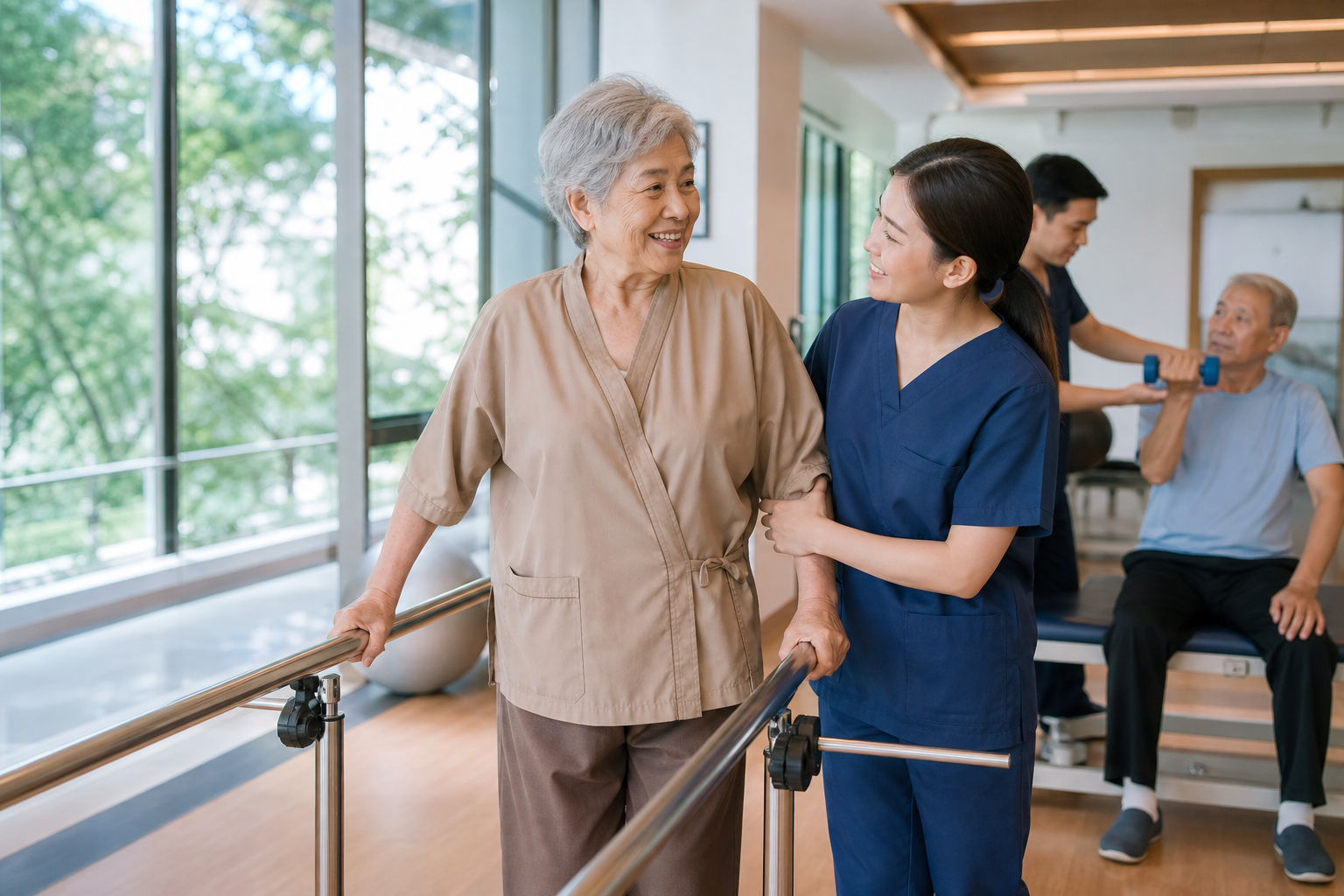
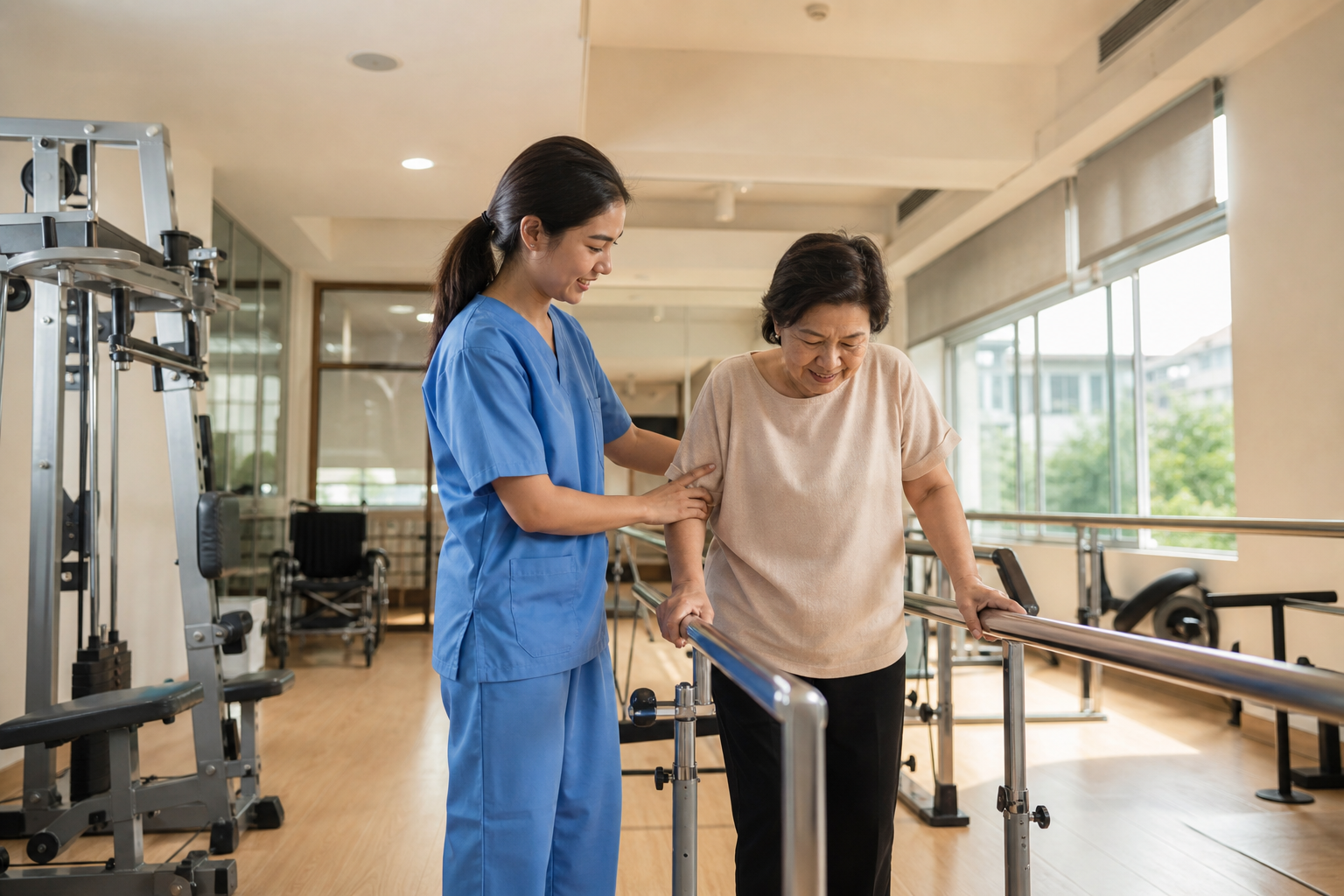
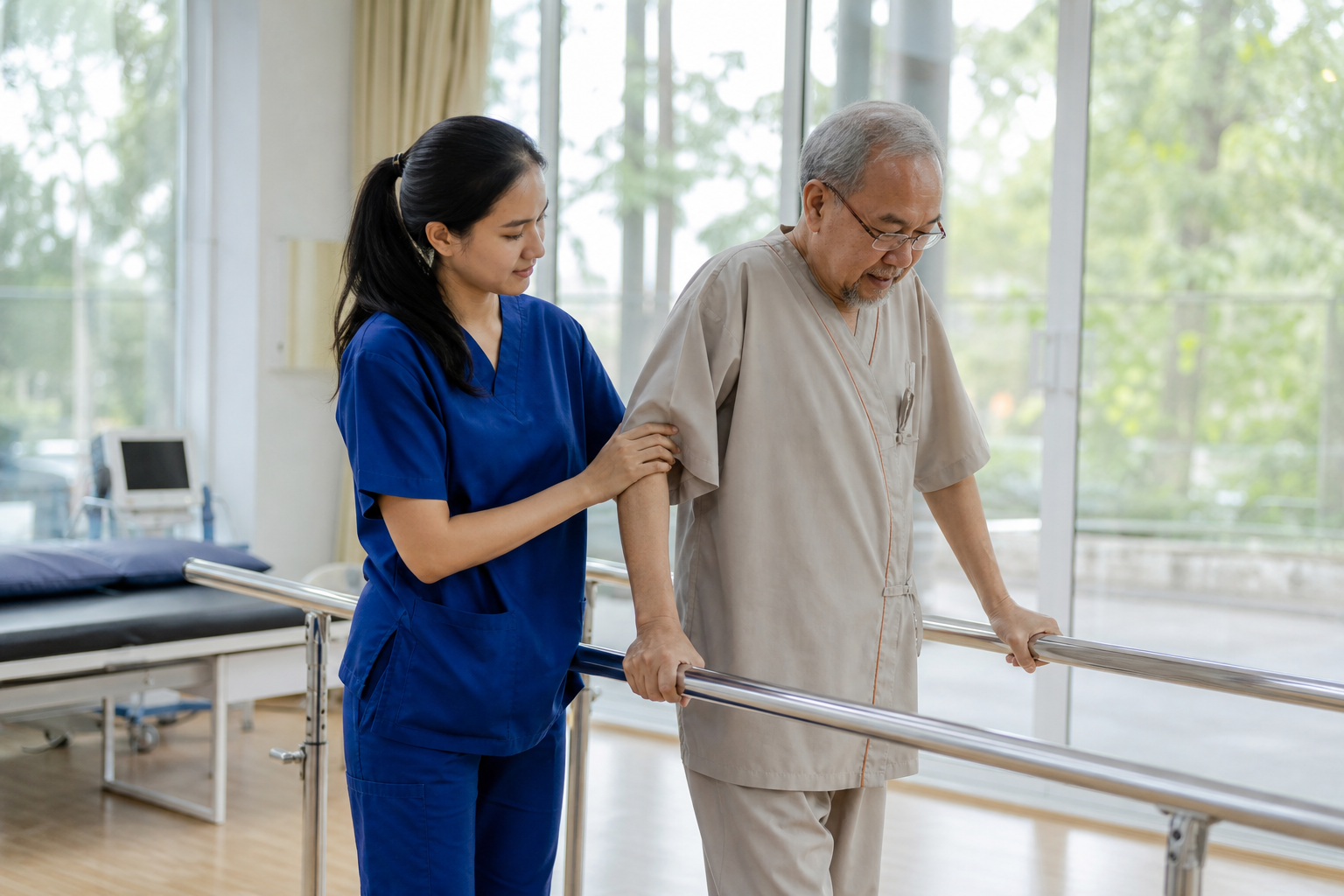
Thailand's leading hospitals have moved well beyond general medicine. Senior patients arriving from abroad can access dedicated programs including post-operative orthopedic rehabilitation, neurological recovery after stroke or traumatic brain injury, cardiac rehabilitation following bypass surgery or heart attack, dementia evaluation and care planning, and palliative care coordination. Multidisciplinary teams — combining geriatricians, rehabilitation physicians, speech therapists, and psychologists — create individualized care pathways that many patients' home countries simply cannot offer at an equivalent standard.
Cultural Sensitivity and ASEAN Connectivity
Language access matters enormously when elderly patients are anxious and families are worried. Major Thai hospitals serving international patients maintain Mandarin-speaking patient coordinators, Bahasa Indonesia and Malay support staff, and Vietnamese interpreters. Direct flights connect Bangkok with dozens of Chinese cities, Kuala Lumpur, Ho Chi Minh City, and Jakarta in under four hours, making it practical for families to accompany a senior patient or visit during a rehabilitation stay. Thailand's deeply rooted Buddhist culture of care and respect for elders also resonates strongly with Chinese and Southeast Asian families seeking an environment that mirrors their own values.
Why This Matters Now
The demographic numbers are stark. By 2030, China alone will have over 400 million people aged 60 or older — a population larger than the entire United States. ASEAN's aging population is growing at a comparable pace, with Malaysia, Vietnam, and Thailand itself all classified by the United Nations as "aging societies." Domestic healthcare systems across the region are under acute pressure, struggling to build the specialist geriatric and rehabilitation capacity required at the speed the population demands. Thailand's existing infrastructure, international accreditation, and tourism-oriented hospitality ecosystem make it uniquely positioned to absorb this overflow — not as a last resort, but as a genuinely preferred option for families who can plan ahead.
The June 2026 Travel and Tour World report signals that regional governments, hospital networks, and travel industry players are all taking notice. Investment in senior-focused medical tourism packages, airport wheelchair assistance programs, and post-discharge concierge care in Thailand is accelerating — and the competitive advantage Thailand holds today may widen further as new hospital capacity comes online over the next three years.
What to Expect: A Typical Senior Care Journey to Thailand
For most families, the process begins weeks before departure. Pre-trip medical record translation and specialist review allow Thai physicians to prepare a care plan before the patient arrives. Upon arrival, patients are met at the airport and transferred directly to their hospital or rehabilitation facility. A typical rehabilitation stay lasts between two and six weeks, depending on the condition being treated. Families may choose to stay in adjacent hospital suites, nearby serviced apartments, or even resort-style recovery facilities affiliated with the treating hospital. Discharge planning — including follow-up telemedicine consultations and coordination with home-country physicians — is arranged before the patient leaves Thailand.
How Le Medica Supports Senior Patients and Their Families
Le Medica's concierge team specializes in the particular complexities of coordinating care for elderly patients traveling from China, Malaysia, Vietnam, and across ASEAN. We manage every detail: pre-arrival specialist matching and record review, visa and medical travel documentation, airport meet-and-greet with medical escort if needed, accommodation arrangements for accompanying family members, real-time translation support throughout the hospital stay, and discharge coordination back to your home-country care team. We work exclusively with JCI-accredited Thai hospitals whose geriatric and rehabilitation departments meet international standards — so families can focus entirely on supporting their loved one rather than navigating an unfamiliar healthcare system.
Frequently Asked Questions
What conditions are best treated through Thailand's geriatric and rehabilitation hospitals?
Thailand's leading hospitals are particularly strong in post-stroke rehabilitation, post-surgical orthopedic recovery (especially hip and knee replacement), Parkinson's disease management, cardiac rehabilitation, dementia assessment and care planning, and general geriatric wellness optimization. If you are unsure whether your family member's condition is suitable for treatment in Thailand, Le Medica can arrange a free specialist consultation review before you commit to any travel.
Is it safe for a frail elderly patient to travel to Thailand for treatment?
With proper planning, yes. Le Medica coordinates pre-travel fitness assessments with your home-country physician, arranges medical escort or airline medical clearance where needed, and ensures that the receiving Thai hospital team is fully briefed on the patient's condition before arrival. Direct flight routes from major Chinese and ASEAN cities to Bangkok minimize travel fatigue. Many patients who initially seemed too frail to travel have completed successful rehabilitation stays with careful preparation.
How much does a rehabilitation stay in Thailand typically cost for a senior patient?
Costs vary by hospital, condition, and length of stay. As a general guide, a four-week inpatient stroke rehabilitation program including daily physiotherapy, occupational therapy, nursing, specialist consultations, and accommodation ranges from approximately USD 8,000 to USD 18,000. This represents significant savings compared to equivalent programs in Singapore, South Korea, or Japan, and often surpasses the clinical quality available through domestic private hospitals in many ASEAN countries.
Can family members stay close to the patient during the rehabilitation period?
Absolutely, and we strongly encourage it. Most of Thailand's international hospitals offer in-room family accommodation or adjacent suites at modest additional cost. Le Medica also arranges serviced apartments or hotel accommodation near the hospital for family members who prefer more privacy. Having family present not only supports the patient emotionally — research consistently shows it improves rehabilitation outcomes.
Take the First Step Toward Better Senior Care
Your family member deserves expert, compassionate rehabilitation care — and you deserve a team that makes the entire journey feel manageable. Whether you are planning ahead for an aging parent, responding to an urgent medical need, or seeking a second opinion on a diagnosis received at home, Le Medica is here to guide you every step of the way. Contact our senior care concierge team today for a confidential, obligation-free consultation and let us help you find the right care, in the right place, at the right time.