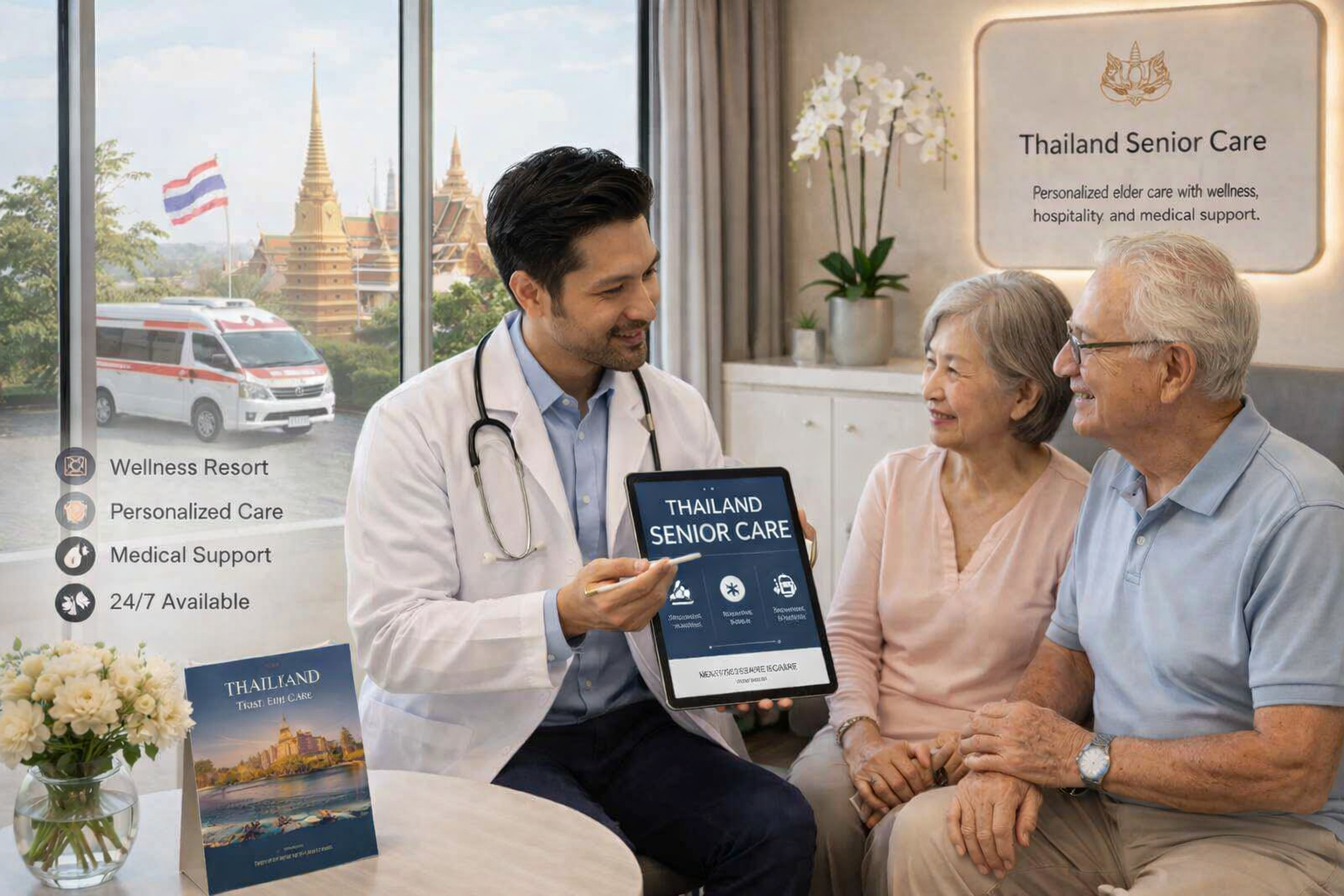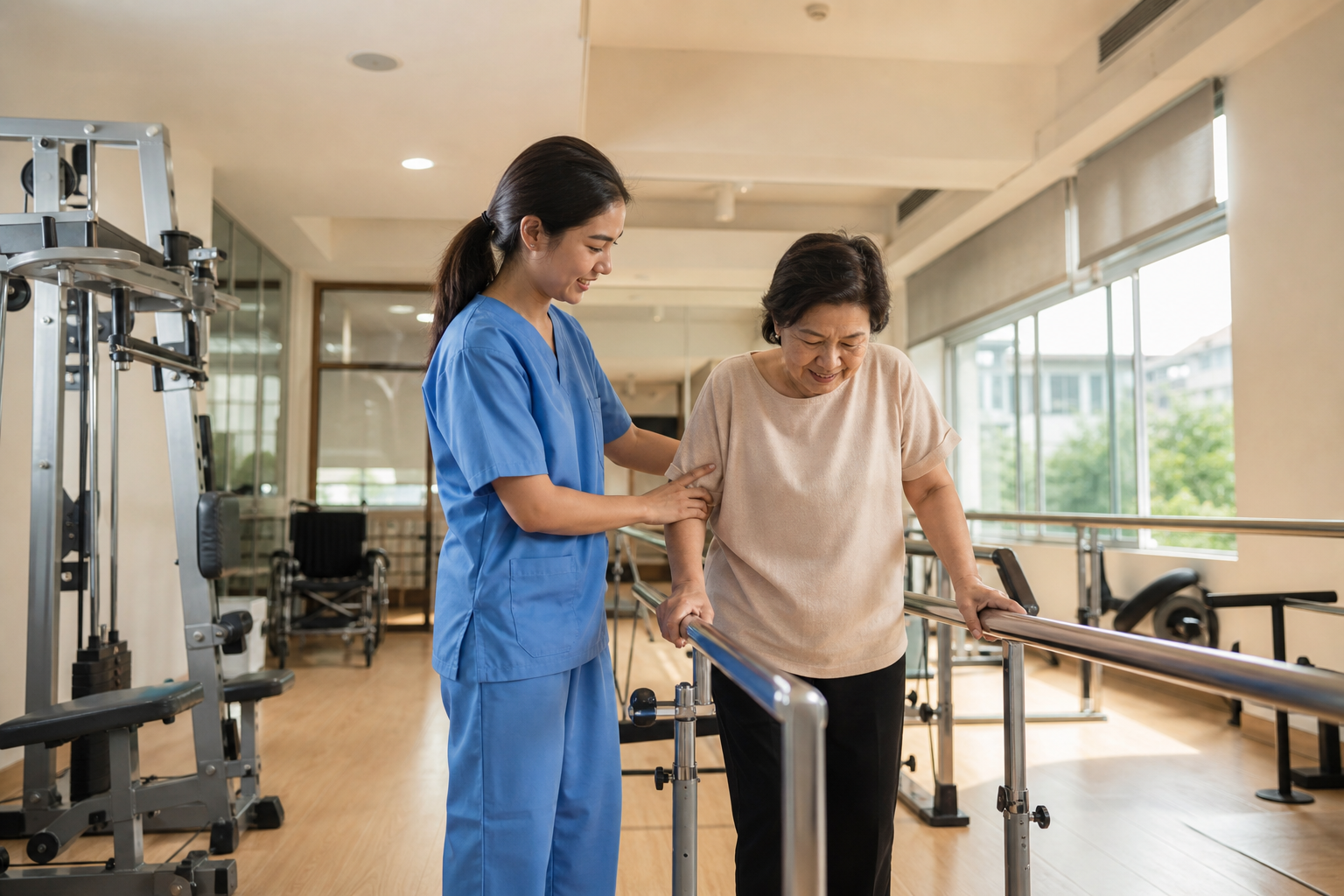
Asia's aging population is reaching a turning point — and Thailand is quietly becoming the destination that families across ASEAN and China are choosing when they need more than just a hospital stay. With world-class rehabilitation centers, English and Mandarin-speaking care teams, and long-stay packages that cost a fraction of what patients pay at home, Thailand's senior healthcare revolution is no longer a rumor. It is a measurable, growing reality.
The Scale of Asia's Senior Care Crisis
By 2030, the World Health Organization estimates that one in six people globally will be aged 60 or older. In Asia, this demographic shift is accelerating faster than healthcare infrastructure can absorb. China alone has over 280 million citizens aged 60 and above, and while urban hospital systems are sophisticated, the gap in long-term rehabilitation, post-surgical recovery, and dementia care remains significant. In ASEAN nations including Indonesia, Vietnam, and the Philippines, the supply of qualified geriatric specialists is even more constrained.
Thailand, by contrast, has spent the past decade building a senior care ecosystem that combines hospital-grade clinical expertise with the warmth of Thai hospitality culture. The result is a model that ASEAN neighbors and Chinese patients are now actively choosing for aging-related care, rehabilitation after stroke or orthopedic surgery, and complex neurological recovery programs.
Why This Matters Now
A recent report highlighted by Travel And Tour World confirms that Thailand's new aging care breakthrough is now capturing serious attention across both ASEAN markets and mainland China. The article points to surging inbound medical tourism numbers specifically tied to senior healthcare travel, with Thailand positioned as a regional hub for rehabilitation and long-stay recovery. This is not an emerging trend — it is an accelerating one, and 2026 is shaping up to be the year the momentum becomes undeniable.
Several factors are converging simultaneously: post-pandemic pent-up demand for quality elder care abroad, Thailand's strategic investment in Joint Commission International (JCI)-accredited rehabilitation facilities, and the growing comfort of Chinese and Southeast Asian families with cross-border healthcare planning. The timing matters because those who begin coordinating care now will access the best availability windows before demand tightens further.
What Thailand Offers That Other Destinations Cannot Match
Clinical Depth in Rehabilitation and Geriatrics
Thailand's leading hospitals — including Bumrungrad International in Bangkok, Samitivej Hospital, and Bangkok Hospital — operate dedicated geriatric medicine departments and rehabilitation centers staffed by physicians who have trained internationally. Neurological rehabilitation following stroke, physical therapy after hip or knee replacement, cardiac rehabilitation, and memory care programs for early to moderate dementia are all available at standards comparable to Europe or Australia, but at dramatically lower cost.
A comprehensive three-month rehabilitation program in Thailand, including accommodation in a senior-friendly facility, daily physiotherapy, weekly specialist consultations, and caregiver support, typically costs between $3,500 and $8,000 USD depending on the hospital or residential care partner. Equivalent care in Singapore, Hong Kong, or major Chinese private hospitals often runs three to five times higher for the same duration.
Language Accessibility for Chinese and ASEAN Patients
One of the most underappreciated strengths of Thailand's senior care sector is its investment in language infrastructure. Major Bangkok hospitals now employ Mandarin-speaking nurses, patient coordinators who handle WeChat communication with families back home, and translated care documentation. For Cantonese-speaking patients from Guangdong or Hong Kong, dedicated liaison teams are increasingly standard. ASEAN patients from Malaysia and Indonesia benefit from hospitals familiar with Malay language needs and halal dietary requirements.
Long-Stay Visas and Care Continuity
Thailand's Long-Term Resident (LTR) visa, available to retirees and those seeking long-stay healthcare, allows eligible patients to remain legally for up to ten years. This policy infrastructure, combined with Thailand's relatively low cost of living, makes it possible to structure multi-month or even multi-year aging care plans that simply are not legally or financially viable in countries like Singapore or Taiwan for most families.
How Thailand Compares to Malaysia and Taiwan for Senior Care
For families weighing their options across the region, the choice between Thailand, Malaysia, and Taiwan is not straightforward. Each destination has genuine strengths.
Malaysia offers strong private hospital networks in Kuala Lumpur and Penang, excellent English proficiency, and competitive pricing. However, dedicated long-stay rehabilitation residential care is less developed than Thailand's, and the geriatric specialist density is lower outside Kuala Lumpur.
Taiwan excels in neurological care and has a sophisticated National Health Insurance system that does not extend to non-residents. Private rehabilitation at premium Taiwanese hospitals is excellent but can range from $6,000 to $12,000 USD per month for residential programs, placing it at the higher end for international patients.
Thailand occupies a middle ground that wins on cost-to-quality ratio, climate appeal for elderly patients, hospitality culture, and long-stay infrastructure. For families seeking three to twelve month recovery or care programs, Thailand consistently emerges as the most practical and affordable choice without sacrificing clinical quality.
What Families Should Plan For
Coordinating senior care abroad involves more than booking a hospital appointment. Families need to assess pre-departure medical documentation, plan airport and in-country transfers for mobility-limited patients, arrange temporary guardianship or power of attorney for medical decisions, and build a communication routine that keeps caregivers in the home country informed. Medication continuity, dietary accommodation, and cultural comfort are all genuine planning variables — not afterthoughts.
This is where a concierge coordination service becomes genuinely valuable. Rather than navigating multiple hospital websites in a foreign language and hoping the pieces fit together, families benefit from a single point of contact who understands the clinical requirements, knows which facilities have genuine geriatric expertise versus general ward capacity, and can negotiate long-stay package terms on their behalf.
Frequently Asked Questions
Is Thailand safe for elderly patients traveling alone or with a caregiver?
Yes — Thailand's major international hospitals have extensive experience receiving international patients with limited mobility, post-surgical needs, or cognitive impairment. Airport meet-and-assist services, accessible transfers, and on-arrival medical assessment protocols are well-established. Traveling with a caregiver or adult family member is recommended for patients with moderate to severe care needs, and Thailand's long-stay visa policies accommodate accompanying caregivers.
How long can a patient realistically stay in Thailand for rehabilitation?
Rehabilitation stays in Thailand range from four weeks for focused post-surgical recovery to twelve months or longer for complex neurological or dementia care cases. Thailand's LTR visa and medical retirement visa options support extended stays, and many families opt for a structured rotation where different family members visit in shifts over a multi-month program.
What conditions are best treated through Thailand's senior care programs?
Thailand's rehabilitation centers have particular strength in stroke recovery, post-orthopedic surgery rehabilitation (hip, knee, and spine), Parkinson's disease management, early and moderate Alzheimer's and dementia care, cardiac rehabilitation, and general age-related mobility restoration. Palliative care programs are also increasingly available at leading hospitals.
How does Le Medica help families plan senior care in Thailand?
Le Medica works directly with vetted hospitals and senior care facilities across Thailand, Malaysia, and Taiwan. We help families compare programs based on clinical specialty, language support, pricing, and long-stay logistics. We coordinate medical record translation, facility introductions, treatment plan reviews with specialist physicians, and ongoing communication support throughout the care journey — so families have one trusted contact instead of dozens of unanswered email threads.
Start Planning Senior Care in Thailand Today
Thailand's aging care transformation is real, it is accelerating, and the families who plan ahead will secure the best facilities, the most qualified teams, and the smoothest transitions. Whether you are supporting a parent recovering from a stroke, a grandparent managing Parkinson's, or a family member who needs long-term dementia care in a warm and clinically capable environment, Thailand in 2026 offers options that simply did not exist five years ago. Contact the Le Medica team today to receive a personalized senior care comparison across Thailand, Malaysia, and Taiwan — and let us help you build a plan your family can trust. Get in touch with Le Medica here.