Asia's senior care landscape is undergoing a quiet revolution — and Thailand is leading the charge. For aging patients and their families navigating complex medical decisions from overseas, the rise of world-class geriatric and rehabilitation services in Thailand may be the most important development in medical tourism this decade.
Thailand's Senior Care Boom: The Big Picture
Thailand has long been celebrated as a global medical tourism destination, drawing over 2.5 million international patients annually to its internationally accredited hospitals. But a new chapter is opening. According to recent reporting covered across ASEAN and Chinese media, Thailand's aging care breakthrough is now capturing serious attention from ASEAN nations and China, as the growing demand for senior healthcare travel reshapes the entire region's medical tourism industry.
This is not a marginal trend. Asia is home to the world's fastest-growing elderly population. China alone will have over 400 million citizens aged 60 or older by 2035. Meanwhile, many aging patients across Southeast Asia and East Asia face a difficult reality: domestic geriatric care infrastructure has not kept pace with demand. Thailand, by contrast, has spent the last decade quietly building an ecosystem of senior-focused hospitals, rehabilitation centers, and post-acute care facilities that are now drawing patients and their families from across the region.
What "Senior Care Medical Tourism" Actually Looks Like in Thailand
When families think about medical tourism for an elderly parent or spouse, they often imagine logistical nightmares — language barriers, unfamiliar healthcare systems, difficult travel. Thailand's top hospitals have worked systematically to dismantle every one of those barriers, and the results are striking.
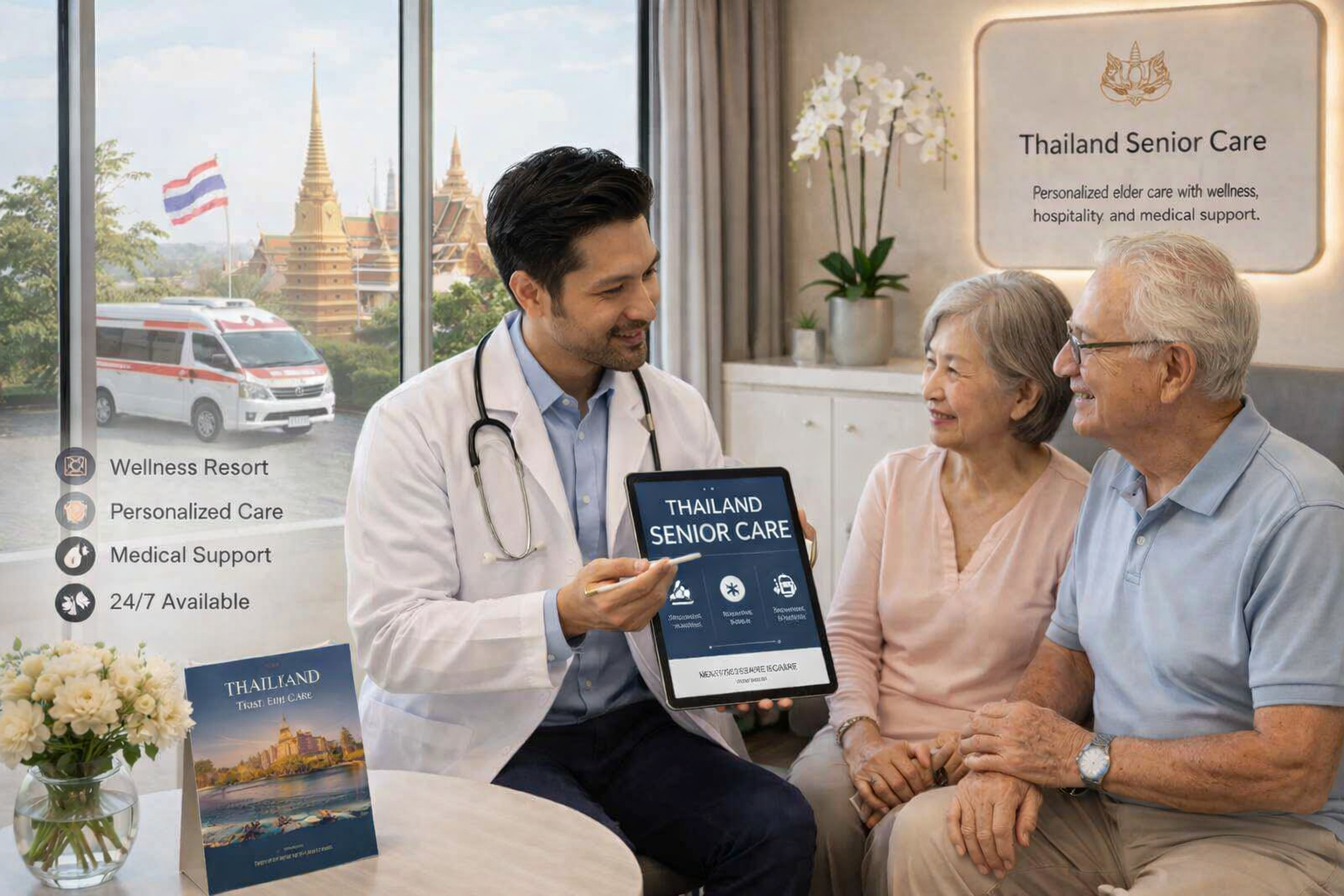
Bangkok's flagship internationally accredited hospitals, including Bumrungrad International and Bangkok Hospital Group facilities, now operate dedicated geriatric medicine departments staffed by English-speaking specialists. These teams manage everything from complex post-surgical rehabilitation to long-term neurological recovery following stroke. Many facilities hold Joint Commission International (JCI) accreditation — the same gold standard applied to leading hospitals in the United States and Europe.
Key Services Available for Senior Patients in Thailand
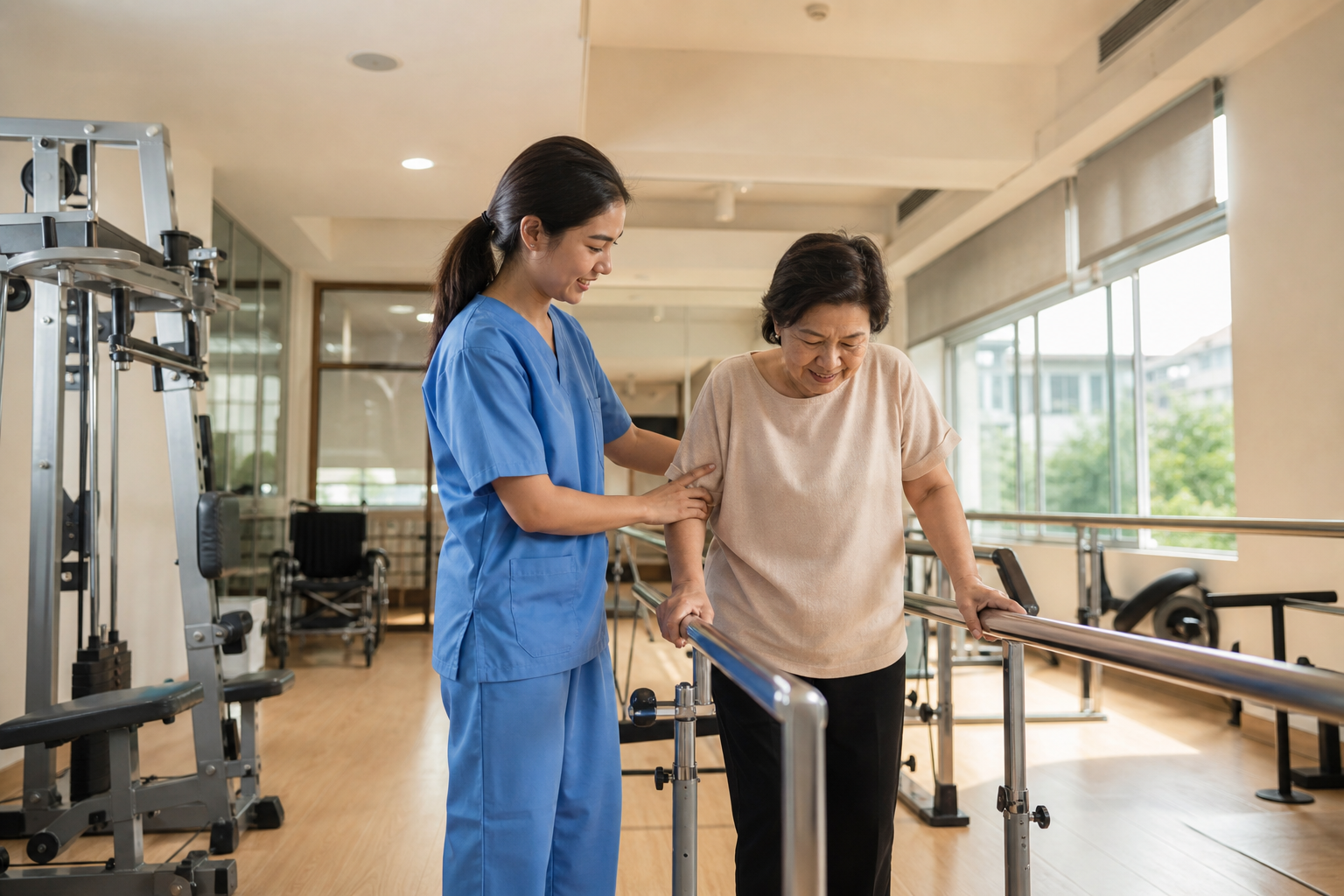
Inpatient rehabilitation following hip replacement, knee replacement, or spinal surgery
Stroke recovery and neurological rehabilitation with multidisciplinary care teams
Geriatric cardiology and post-cardiac event monitoring
Dementia assessment and management in specialist memory clinics
Oncology support and palliative care for elderly cancer patients
Orthopedic surgery with integrated recovery programs combining physiotherapy and occupational therapy
Wellness and preventive health screenings tailored to patients over 65
The Cost Advantage: Why Thailand Remains Compelling in 2026
Cost remains one of the most persuasive reasons families consider Thailand for senior care. A full hip replacement with comprehensive inpatient rehabilitation at a JCI-accredited Bangkok hospital typically ranges from $10,000 to $15,000 USD all-inclusive — compared to $35,000–$50,000 in the United States or $20,000–$30,000 in Singapore. Post-surgical inpatient rehabilitation programs that might run $1,500 per day in Australia are available in Thailand for $300–$600 per day, including specialist physiotherapy, nursing care, dietary management, and private room accommodation.
For families accompanying an elderly patient, Thailand's infrastructure also makes the extended stay practical and affordable. Bangkok and Chiang Mai offer a wide range of serviced apartments and hotels located within walking distance of major hospitals, often at a fraction of the cost of comparable accommodation in Tokyo, Seoul, or Sydney.
Why This Matters Now: ASEAN and China Are Taking Notice
The timing of Thailand's senior care expansion is not accidental. ASEAN's combined elderly population is projected to double between now and 2040, and national healthcare systems across the region are under mounting pressure. Chinese families in particular — who face both a rapidly aging parent generation and domestic hospital overcrowding in geriatric wards — are increasingly exploring Thailand as a credible destination for high-quality elder care.
Thailand's government has actively supported this positioning, investing in medical tourism infrastructure, streamlining long-stay visa pathways for medical patients, and encouraging hospitals to develop internationally competitive senior care programs. The Thailand Long-Term Resident (LTR) visa, introduced in recent years, specifically enables elderly foreigners to remain in-country for extended medical and wellness stays — a policy signal that underscores how seriously Thailand is pursuing this market.
For patients and families based in China, Taiwan, Malaysia, or further afield, the combination of geographic proximity, English-language hospital services, competitive pricing, and established medical tourism infrastructure makes Thailand a uniquely practical choice in 2026.
How Le Medica Supports Senior Patients Traveling to Thailand
Coordinating medical travel for an elderly patient involves a level of complexity that goes far beyond booking flights and hotels. At Le Medica, we specialize in exactly this kind of journey. Our coordination team manages every aspect of a senior patient's treatment trip to Thailand — from initial specialist consultations and medical record translation to airport transfers, hospital admissions, accommodation close to the treating facility, and family communication throughout the stay.
We work directly with Thailand's top JCI-accredited hospitals, giving our patients priority access to geriatric specialists, rehabilitation medicine departments, and surgical teams with proven experience treating international elderly patients. For families who cannot travel with their loved one, our on-the-ground support provides peace of mind that someone fluent in both the medical and cultural context is present throughout the process.
Frequently Asked Questions
Is Thailand safe for elderly patients traveling alone for medical care?
Thailand's major international hospitals are exceptionally well-equipped to care for elderly patients traveling without family members. Most JCI-accredited facilities have dedicated patient liaison teams, multilingual nursing staff, and social work services specifically designed for international patients. Le Medica also provides an in-country coordinator who remains a consistent point of contact for both the patient and their family back home.
How long should a senior patient plan to stay in Thailand for rehabilitation?
This depends significantly on the treatment involved. Post-orthopedic rehabilitation programs typically last between three and six weeks. Stroke recovery programs may require two to three months of intensive inpatient therapy before a patient is stable enough for discharge or repatriation. Le Medica works with each patient's care team to develop a realistic timeline before travel begins, so families can plan accordingly.
What languages are supported at Thailand's senior care hospitals?
Bangkok's leading international hospitals offer interpreter services in Mandarin, Cantonese, Japanese, Korean, Arabic, and numerous other languages in addition to English. Le Medica provides an additional layer of dedicated translation and communication support, ensuring that medical documentation, consent forms, and care instructions are fully understood by patients and their families in their preferred language.
How do I start the process of arranging senior care in Thailand through Le Medica?
The process begins with a confidential consultation in which we review the patient's current medical condition, treatment goals, and any logistical requirements unique to their situation. From there, we identify the most appropriate hospital and specialist team in Thailand, initiate the pre-approval process, and guide the family through every step of preparation before departure.
Begin Your Senior Care Journey with Le Medica
Thailand's moment as Asia's premier destination for senior medical care and rehabilitation is here. Whether your family is navigating post-surgical recovery, stroke rehabilitation, complex geriatric conditions, or simply seeking world-class preventive care in a supportive environment, Thailand's internationally accredited hospitals offer a compelling combination of quality, affordability, and compassionate specialist expertise. Le Medica is ready to guide you every step of the way — from first inquiry to safe return home. Contact our team today to discuss your loved one's needs and discover what a well-coordinated senior care journey to Thailand can look like in 2026.