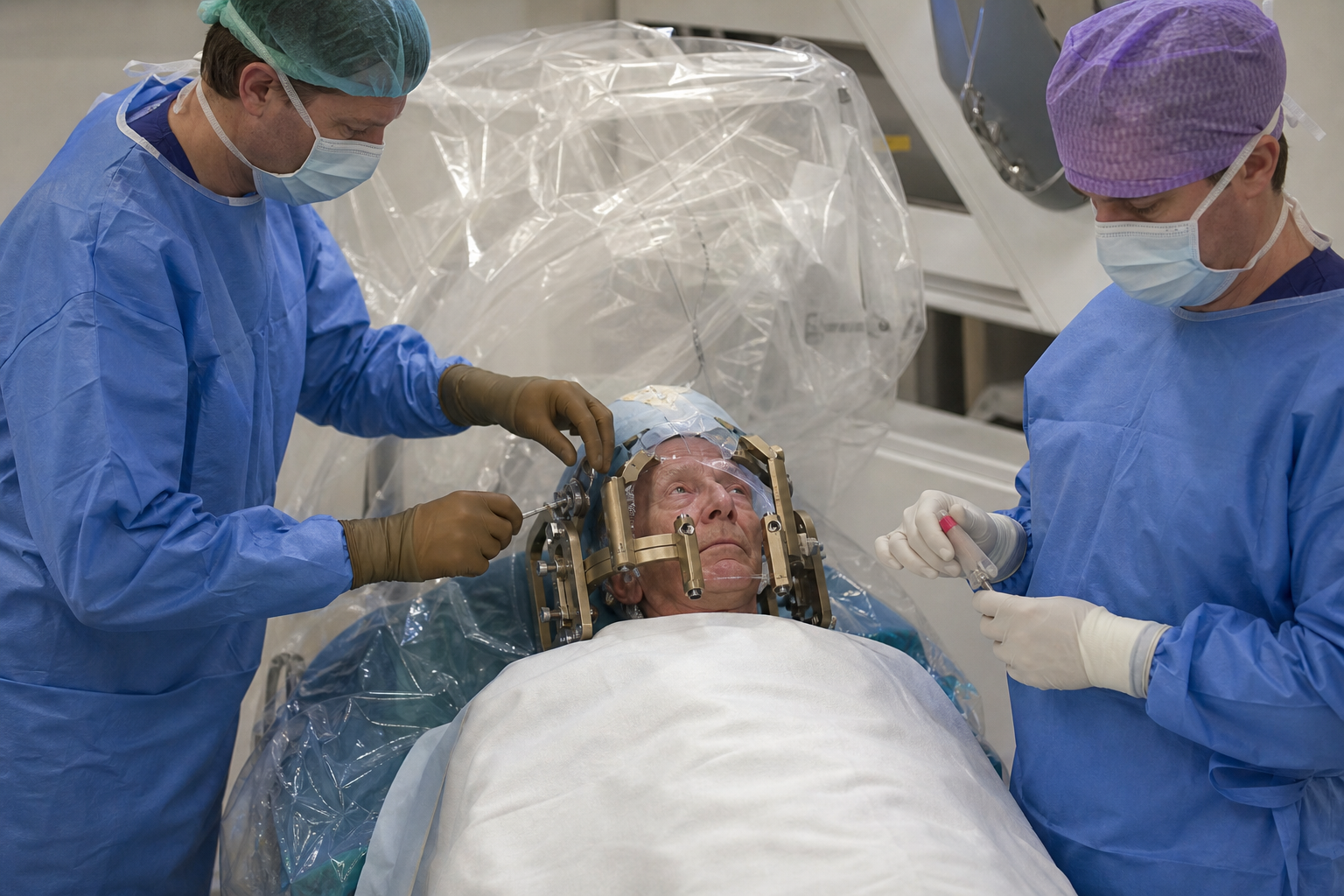
If you or someone you love lives with Parkinson's disease, essential tremor, or a treatment-resistant psychiatric condition, you already know that "good enough" is never enough. The field of neuromodulation is undergoing a quiet revolution, and at the centre of it is Adaptive Deep Brain Stimulation, a technology that promises to make brain therapy as responsive as the brain itself. This guide breaks down what the science means for real patients, what it costs, and how Le Medica can connect you to the specialists leading this charge across Asia's top medical destinations.
What Is Deep Brain Stimulation — and Why Does It Need to Evolve?
Traditional Deep Brain Stimulation (DBS) has been transforming neurological care for over three decades. A surgeon implants a slender electrode into a precisely targeted region of the brain — most commonly the subthalamic nucleus for Parkinson's disease, and a small pulse generator (the "brain pacemaker") delivers a continuous, fixed-rate electrical signal to suppress tremors, rigidity, and other debilitating motor symptoms.
The results have been remarkable. Clinical data consistently show that conventional DBS reduces motor symptoms in Parkinson's patients by 40–60% and improves quality-of-life scores significantly. For many patients, it restores independent walking, fine motor control, and the freedom to reduce medication dosages. But the technology has one fundamental limitation: it never stops stimulating, even when the brain doesn't need it. It is, in essence, a thermostat with no thermometer.
That is precisely the problem Adaptive Deep Brain Stimulation was designed to solve.
How Adaptive Deep Brain Stimulation Works: The Closed-Loop Revolution
Adaptive Deep Brain Stimulation, also called closed-loop DBS, introduces real-time sensing into the equation. Instead of simply broadcasting a fixed electrical pulse 24 hours a day, an adaptive system continuously reads the brain's own electrophysiological signals (called local field potentials, or LFPs) through the same implanted electrode. When the system detects a biomarker indicating that symptoms are worsening, such as a surge in pathological beta-band oscillations in Parkinson's, it automatically increases stimulation. When the brain stabilises, it reduces output accordingly.
Think of it less like a pacemaker and more like a smart thermostat with artificial intelligence. The device listens, learns, and responds, all within milliseconds, far faster than any clinician could adjust settings manually.
Adaptive DBS vs DBS: A Comparison
1. Stimulation Pattern
Traditional DBS: Fixed, continuous.
Adaptive DBS: Demand-driven, real-time.
2. Brain Signal Sensing
Traditional DBS: None.
Adaptive DBS: Continuous LFP monitoring.
3. Battery Longevity
Traditional DBS: 3–5 years (typical).
Adaptive DBS: Potentially longer (less energy waste).
4. Side Effect Profile
Traditional DBS: Over-stimulation possible.
Adaptive DBS: Reduced via biomarker-guided dosing.
5. Programming Visits
Traditional DBS: Frequent manual adjustments.
Adaptive DBS: Potentially fewer, self-adjusting.
6. Best Candidate
Traditional DBS: Stable symptom profiles.
Adaptive DBS: Fluctuating or complex symptom profiles.
7. Availability
Traditional DBS: Widely available globally.
Adaptive DBS: Clinical trials + select approved centres.
Are you considering whether an adaptive system is right for your symptom profile? Determining candidacy involves evaluating your specific motor fluctuations, history of medication response, and neurological imaging. Book a free, confidential case review here to have a specialist compare your options and provide an expert perspective on your journey.
Adaptive DBS in Parkinson's Disease: Where the Evidence Stands
Adaptive DBS in Parkinson's disease is the most clinically advanced application of this technology. Research published in leading journals, including The Lancet and Nature Medicine, has demonstrated that closed-loop systems produce superior motor control compared to conventional fixed-rate devices, particularly for gait freezing and fall prevention, two of the most disabling and dangerous aspects of advanced Parkinson's.
A landmark 2024–2025 trial demonstrated that patients using adaptive stimulation experienced significantly fewer "off" periods during their day, with some studies reporting a 30–50% reduction in dyskinesia (involuntary movements caused by over-stimulation) compared to continuous DBS. For patients who spend years managing the exhausting "on-off" rollercoaster of Parkinson's symptoms, this represents a genuinely life-changing improvement.
The clinical implication is clear: for patients in Asia whose Parkinson's disease has progressed to the point where conventional DBS no longer provides consistent relief, Adaptive Deep Brain Stimulation represents the most scientifically compelling next step available today. Le Medica works with neurological centres in South Korea, China, and Taiwan on advanced programmes.
Beyond Parkinson's: Expanding the Frontiers of Neuromodulation
Adaptive DBS for Essential Tremor
Essential tremor affects an estimated 70 million people globally, making it the most common movement disorder in the world. While traditional DBS targeting the ventral intermedius nucleus (VIM) of the thalamus is well-established for severe essential tremor, researchers are now actively investigating whether closed-loop systems can deliver even more precise tremor suppression with fewer stimulation-induced side effects, such as ataxia. Early results are promising, particularly for patients whose tremors fluctuate with stress, fatigue, or activity level, exactly the scenario where an adaptive system's real-time responsiveness offers the greatest theoretical advantage.
The Psychiatric Frontier: OCD, Depression, and Tourette's Syndrome
Perhaps the most exciting, and still evolving, frontier in neuromodulation is psychiatric care. DBS for treatment-resistant obsessive-compulsive disorder (OCD) and major depressive disorder is an active area of research, with closed-loop approaches offering the intriguing possibility of stimulating only when a patient's neural biomarkers indicate a depressive episode or compulsive state is emerging.
Important Regulatory Note for Patients:
It is vital to understand that neuromodulation for psychiatric conditions is often classified differently from DBS for Parkinson's. While some applications have received specific regulatory approvals in certain jurisdictions, many psychiatric uses remain investigational.
Tourette's syndrome deserves special mention. Unlike its approved status for Parkinson's disease, Deep Brain Stimulation (DBS) for Tourette syndrome is not FDA-approved and does not hold a Humanitarian Device Exemption (HDE). It is classified as an investigational treatment. It is generally accessed through:
Controlled Clinical Trials: Participating in structured, IRB-approved research.
Specialised Institutional Protocols: Accessing care at leading academic medical centres that operate under rigorous ethical and clinical oversight.
Le Medica’s role is to ensure that, if you pursue these advanced protocols, you do so through verified, high-authority academic institutions that prioritise patient safety and transparent, informed consent. We help you navigate which options are currently in "standard of care" versus "clinical trial" status.
The Medtronic Adaptive DBS Platform: Leading the Market
When patients and clinicians discuss Adaptive DBS Medtronic platforms, they are primarily referring to Medtronic's Percept™ PC neurostimulator, a device that incorporates BrainSense™ Technology, enabling the first FDA-cleared system capable of simultaneously delivering stimulation and sensing local field potential signals from the brain. This hardware architecture is the foundation that makes true closed-loop adaptive therapy possible in a commercially available device.
Other industry players, including Abbott (with their Infinity™ directional system) and Boston Scientific, are also advancing sensing capabilities. However, Adaptive DBS Medtronic Percept-based systems currently hold the most substantial real-world clinical data for closed-loop applications, particularly in the Parkinson's disease population. Hospitals in Le Medica's network in South Korea and Taiwan have access to these platforms and the specialised programming expertise required to deploy them effectively.
Understanding the Cost of Adaptive Deep Brain Stimulation
Cost is a legitimate and important consideration for any patient evaluating advanced neuromodulation. The Adaptive deep brain stimulation cost is higher than conventional DBS primarily because of the advanced sensing hardware embedded in the implantable pulse generator and the additional clinical expertise required for biomarker-guided programming.
As a general benchmark across Asia's leading medical destinations through Le Medica:
Conventional bilateral DBS (device + surgery + hospitalisation): approximately USD $25,000–$45,000 in South Korea, China, or Taiwan, a fraction of Western pricing for equivalent quality.
Adaptive/closed-loop DBS (sensing-capable device + surgery + programming): typically USD $35,000–$60,000 depending on device brand, hospital tier, and surgical complexity.
This compares to USD $100,000–$150,000+ in the United States or similar figures in Western Europe.
These figures are indicative. Le Medica provides detailed, personalised cost estimates after reviewing your medical records, with no obligation. Book a free consultation with our neuromodulation specialist to receive a transparent cost comparison for your specific situation.
Deep Brain Stimulation for Parkinson's Disease: Success Rates
For conventional DBS in Parkinson's disease, the data are compelling: large-scale studies and meta-analyses consistently report that 70–90% of carefully selected patients achieve near-total relief from severe tremors and medication-induced dyskinesias. Overall motor UPDRS Part III scores typically improve by 50–60%. The procedure is most effective when performed in the earlier stages of motor fluctuation, before severe cognitive decline sets in.
For adaptive DBS, comparative trials suggest even better motor outcomes in patients with fluctuating symptoms, with added benefits in reducing medication burden and improving non-motor quality-of-life markers.
Why Choose Le Medica?
Navigating specialised medical care abroad is a complex journey. Le Medica simplifies this process by acting as your dedicated health advocate, ensuring you never have to manage the logistics alone:
Concierge Case Management: From initial record review to post-treatment follow-up, our team coordinates every step of your medical journey.
Verified Medical Networks: We exclusively partner with hospitals and specialists that meet the highest international clinical standards.
Transparent Communication: We translate complex medical protocols into clear, actionable plans so you always know your options and expected outcomes.
Prioritised Access: Our partnerships allow us to facilitate consultations and procedures with world-class experts, often faster than independent booking.
Ready to take the next step? Contact our care team for a free, obligation-free consultation regarding your case.
Frequently Asked Questions About Adaptive Deep Brain Stimulation
How does adaptive DBS work compared to traditional stimulation?
Traditional DBS delivers a fixed, continuous electrical pulse to a brain target regardless of what the brain is doing at any given moment. Adaptive Deep Brain Stimulation instead reads the brain's own electrophysiological signals in real time and adjusts its stimulation output up or down based on detected biomarkers, most commonly beta-band oscillations associated with Parkinson's motor symptoms. This closed-loop approach means stimulation is delivered precisely when and at the intensity the brain actually needs it.
What are the primary benefits of Adaptive DBS vs DBS?
The core advantages of Adaptive DBS vs DBS include reduced dyskinesia (since the system avoids over-stimulation during periods of good motor control), potentially longer battery life due to energy efficiency, and improved symptom control during fluctuating periods. Patients often report a more natural feeling of motor control, less "med daily rhythms.
Is Adaptive DBS currently available for Parkinson's disease?
Yes, though access varies by country. Sensing-capable devices like the Medtronic Percept™ PC are commercially approved and available in multiple markets. True closed-loop adaptive algorithms are still being refined through clinical trials in many centres, but a growing number of specialised neurology departments, including hospitals in Le Medica's network in South Korea and Taiwan, are deploying these systems in clinical practice. Your eligibility will depend on symptom profile, disease stage, and local centre expertise.
Is Adaptive DBS effective for essential tremor?
Research is actively ongoing. While conventional DBS for essential tremor targeting the VIM thalamus has a well-established track record, adaptive systems hold particular promise for patients with variable tremor, especially those whose symptoms fluctuate with stress, activity, or fatigue. Early clinical studies are encouraging, but adaptive DBS for essential tremor is not yet as standardised as its Parkinson's application. Discussing your case with a movement disorder specialist is essential to understanding whether a sensing-capable system is the right choice for you.
What should I expect regarding the Adaptive deep brain stimulation cost?
The Adaptive deep brain stimulation cost is higher than conventional DBS because the implantable device includes advanced sensing hardware, and post-operative programming requires biomarker-trained specialists. In Asia, through Le Medica, all-in costs (device, surgery, hospital stay, and initial programming) typically range from USD $35,000 to $60,000, significantly below comparable care in North America or Western Europe. Le Medica provides itemised, obligation-free estimates based on your actual medical file.
Is deep brain stimulation FDA-approved for Tourette's syndrome?
Not in the standard full-approval sense. DBS for Tourette's syndrome currently falls under a Humanitarian Device Exemption (HDE) in the United States, applicable for patients 25 years and older with severe, chronic, treatment-refractory tics. This means it is legally available through qualified centres but is not broadly approved the way DBS for Parkinson's is. Internationally, including in Asia, several academic hospitals conduct approved research protocols. Patients should work with an experienced team to understand the regulatory and clinical context carefully before proceeding.
What is the success rate of deep-brain stimulation for Parkinson's disease?
Deep Brain Stimulation (DBS) is highly effective for managing Parkinson's disease, with success generally measured by motor symptom improvement and quality of life rather than a single "cure" rate.
Motor Improvement: For well-selected candidates, DBS typically provides a 50–60% improvement in motor symptoms such as tremors, rigidity, and slowness of movement.
Dyskinesia Reduction: It can reduce medication-induced involuntary movements (dyskinesia) by 60–80% by allowing for a lower dosage of Parkinson’s medications.
Patient Satisfaction: Long-term studies indicate that approximately 75% of patients feel the procedure helps them manage their symptoms, and satisfaction rates, based on willingness to recommend the procedure, often exceed 90%.
Duration: These benefits are durable, with clinical evidence of symptom management persisting for 10–15 years post-surgery.
It is important to note that DBS is a symptomatic treatment, not a cure, and does not stop the progression of the disease. Success is highly dependent on proper patient selection, including disease stage, cognitive health, and overall physical condition.
Expanding Your Healthcare Horizons
At Le Medica, we believe that staying informed about medical innovation means looking at the full spectrum of care—from brain health to restorative procedures and infrastructure improvements. To deepen your understanding of the medical landscape, we recommend exploring these related resources:
Restorative Eye Care: If you are interested in how modern technology is revolutionising ophthalmology, read our deep dive on Corneal Transplant Types: Traditional vs. Modern Techniques to see how precision surgery is changing patient outcomes.
Global Medical Trends: To see how rapid infrastructure growth is making world-class treatments more accessible in unexpected places, check out Vietnam's Rural Healthcare Revolution and what it means for your next health journey.
Take the Next Step in Your Neurological Journey
Advanced neuromodulation is no longer a futuristic concept; it is a life-changing reality. Whether you are exploring Adaptive DBS for Parkinson’s or investigating emerging protocols for treatment-resistant conditions, Le Medica acts as your navigator in the global medical landscape. We coordinate with elite neurological centres in Asia to ensure you receive not just the latest technology, but the precise clinical expertise required to manage it. Start your confidential case review here to see if you are a candidate for closed-loop therapy.