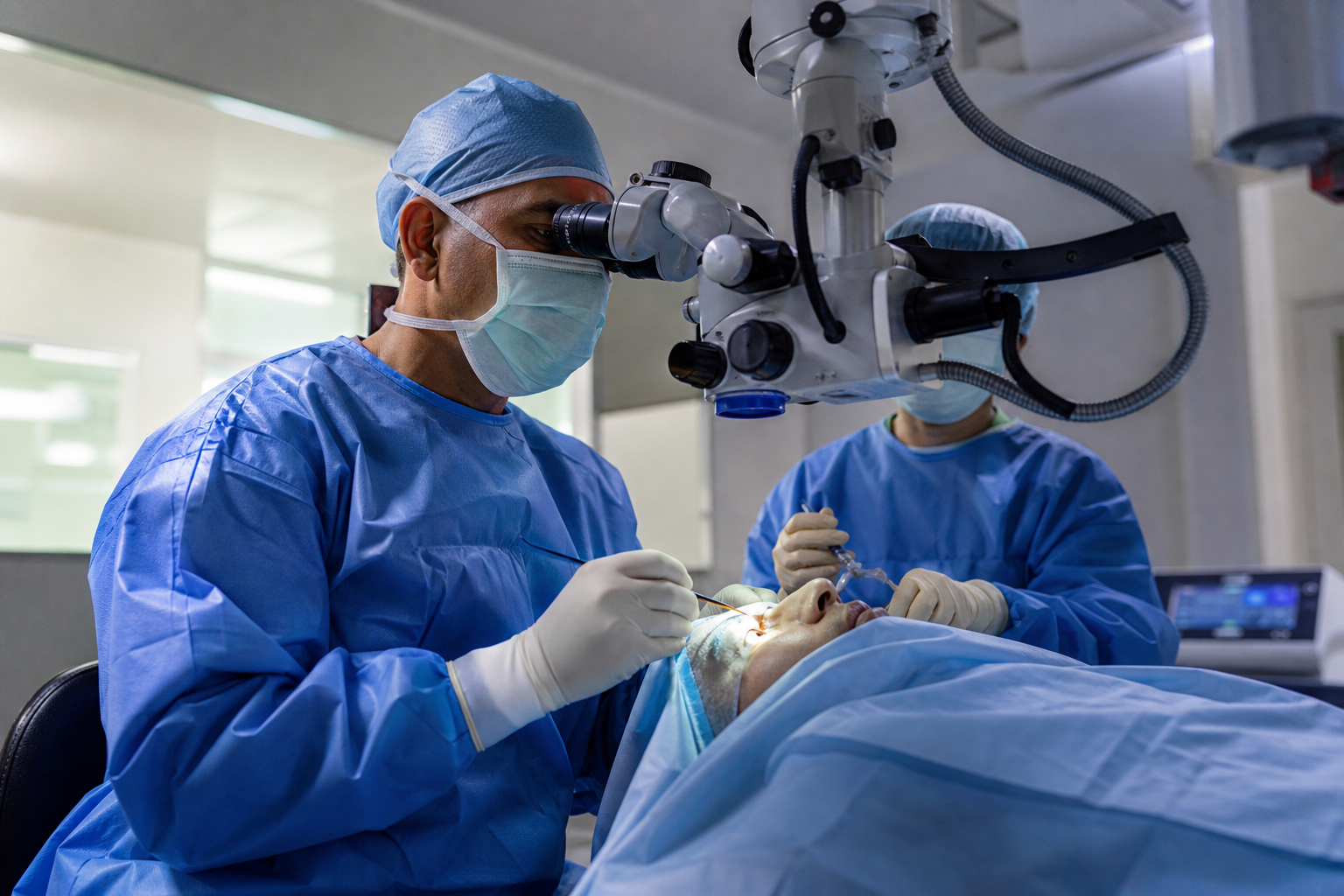
If your vision is deteriorating due to corneal disease and your doctor has mentioned a "cornea transplant operation," you may feel overwhelmed and full of questions. Which technique is right for you? How long will recovery take? Is there a less invasive option? The good news is that corneal surgery has undergone a remarkable transformation over the past two decades, and understanding the full spectrum of corneal transplant types is the first step toward making a confident, well-informed decision.
First, Let's Clarify: Cornea Transplant vs. Full Eye Transplant
One of the most common questions patients ask is, "Can doctors transplant a whole eye?" The honest answer is no, a full eye transplant is not medically possible. The optic nerve, which connects the eye to the brain, cannot currently be reattached after severance. What surgeons can do with exceptional precision and increasingly impressive outcomes is transplant the cornea, the clear, dome-shaped tissue at the front of the eye.
A cornea graft replaces damaged or diseased corneal tissue with healthy donor tissue. Depending on which layers of the cornea are affected, surgeons may replace only the necessary portion, a concept that sits at the heart of modern corneal surgery's evolution.
The Surgical Shift: From Full-Thickness to Selective Replacement
For most of the 20th century, there was essentially one standard approach to corneal surgery: Penetrating Keratoplasty (PK), a full-thickness replacement of the entire corneal disc. While PK remains a vital tool, its limitations became clearer over time: longer recovery periods, higher rejection risk, and induced astigmatism led surgeons to ask a compelling question: why replace what isn't broken?
This philosophy sparked the development of selective lamellar techniques, which target only the diseased layer of the cornea. Today, patients have access to several distinct corneal transplant types, each optimized for specific diagnoses. Choosing the right technique is no longer one-size-fits-all; it's precision medicine applied to vision.
As we monitor advancements in ophthalmology, we also keep a close eye on broader healthcare access trends. You can read more about how regions like Vietnam are transforming their medical landscape in our latest report: Vietnam's Rural Hospital Revolution, or about emerging high-tech interventions in other fields, such as Adaptive Deep Brain Stimulation for chronic neurological conditions.
A Complete Guide to Corneal Transplant Types
1. Penetrating Keratoplasty (PK) — The Traditional Standard
PK involves removing the full thickness of the central cornea (typically 7–8 mm in diameter) and replacing it with a matched donor disc, sutured in place. It remains the only viable option for conditions where all five corneal layers are damaged, including severe scarring from infections, trauma, or advanced disease. Recovery can take 12–18 months for full visual stabilization, and sutures may remain in place for 1–2 years. Rejection risk sits at approximately 10–20% over 5 years. Despite its limitations, PK is irreplaceable in certain clinical situations.
2. DALK — Deep Anterior Lamellar Keratoplasty
DALK replaces the outer and middle layers of the cornea while preserving the patient's own healthy inner endothelial layer. This is the modern gold standard for conditions like Keratoconus, a progressive thinning and bulging of the cornea that is increasingly common across Asia, affecting roughly 1 in 2,000 people. Because the patient's endothelium is retained, the risk of immune-mediated graft rejection is dramatically reduced. Recovery is still measured in months (typically 6–12), but visual outcomes are often superior, and the long-term graft survival rate is excellent.
3. DSAEK — Descemet Stripping Automated Endothelial Keratoplasty
DSAEK targets the innermost endothelial layer of the cornea, the pump cells responsible for keeping the cornea clear. It is the preferred technique for conditions like Fuchs' Endothelial Dystrophy or bullous keratopathy. A thin disc of donor endothelium and supporting stroma (approximately 100–150 microns thick) is inserted through a small incision and secured with an air bubble. There are no sutures. Recovery is significantly faster than PK, with functional vision often restored within weeks to months.
4. DMEK — Descemet Membrane Endothelial Keratoplasty
DMEK represents the current cutting edge of endothelial surgery. An ultra-thin graft, just the Descemet membrane and endothelium, approximately 10–15 microns thick, is transplanted. The mantra here is "thinner is better." DMEK delivers the fastest visual recovery (often 1–3 months to near-normal vision), the lowest rejection rate (as low as 1% reported in some studies), and the most natural visual outcomes. It is technically demanding but increasingly available at leading centers across Asia, including hospitals within the Le Medica ophthalmology network.
Technique Comparison
Corneal Transplant Comparison Table
Penetrating Keratoplasty (PK): Full-thickness replacement. Best for severe, multi-layer damage. Recovery: 12–18 months.
Deep Anterior Lamellar Keratoplasty (DALK): Front/middle layers replaced. Best for Keratoconus. Recovery: 6–12 months.
Descemet's Stripping Automated Endothelial Keratoplasty (DSAEK): Back layers replaced. Best for endothelial disease. Recovery: 3–6 months.
Descemet Membrane Endothelial Keratoplasty (DMEK): Ultra-thin back layer replacement. Best for Fuchs' dystrophy. Recovery: 1–3 months.
For a broader look at how we facilitate comprehensive screenings before surgical interventions, visit our 2026 Comprehensive Health Check-up Guide.
What Does a Cornea Transplant Operation Cost in Asia?
One of the most compelling reasons patients travel to Asia for advanced corneal care is the significant cost advantage, without compromising on quality. As a general benchmark:
PK (Penetrating Keratoplasty): USD $3,000–$8,000 in leading Asian centers vs. USD $15,000–$25,000+ in the US/UK
DALK (Keratoconus corneal transplant): USD $4,000–$10,000
DSAEK / DMEK: USD $4,500–$12,000 depending on hospital and country
Costs vary by hospital tier, surgeon experience, and city. Le Medica works with JCI-accredited hospitals and internationally trained corneal specialists to ensure you receive transparent, all-inclusive pricing before you commit to a single step.
Why Choose Le Medica?
Navigating specialised medical care abroad is a complex journey. Le Medica simplifies this process by acting as your dedicated health advocate, ensuring you never have to manage the logistics alone:
Concierge Case Management: From initial record review to post-treatment follow-up, our team coordinates every step of your medical journey.
Verified Medical Networks: We exclusively partner with hospitals and specialists that meet the highest international clinical standards.
Transparent Communication: We translate complex medical protocols into clear, actionable plans so you always know your options and expected outcomes.
Prioritised Access: Our partnerships allow us to facilitate consultations and procedures with world-class experts, often faster than independent booking.
Ready to take the next step? Contact our care team for a free, obligation-free consultation regarding your case.
Frequently Asked Questions
What is the difference between a cornea transplant operation and a full eye transplant?
A cornea transplant operation replaces only the cornea — the clear front surface of the eye — with healthy donor tissue. A full eye transplant is not medically possible because the optic nerve cannot be surgically reconnected. When people say "eye transplant," they almost always mean a corneal graft procedure.
What is a cornea graft, and why is it performed?
A cornea graft is a surgical procedure in which damaged or diseased corneal tissue is replaced with healthy tissue from a deceased donor. It is performed when the cornea becomes cloudy, misshapen, or scarred due to conditions such as Keratoconus, Fuchs' Dystrophy, corneal infections, or traumatic injury — all of which impair clear vision.
What is the difference between traditional and modern corneal transplants?
Traditional Penetrating Keratoplasty (PK) replaces the entire corneal disc, requiring sutures, a long recovery, and carrying a higher rejection risk. Modern lamellar techniques (DALK, DSAEK, DMEK) replace only the diseased layer of the cornea, resulting in faster recovery, lower rejection rates, and superior visual outcomes for the right candidates.
When is a full-thickness (PK) transplant still necessary?
PK remains necessary when multiple or all layers of the cornea are severely damaged — for example, in cases of deep corneal scarring from bacterial or fungal infections, advanced dystrophies affecting the entire cornea, or significant trauma. An experienced corneal surgeon will evaluate your specific anatomy to determine which technique is most appropriate.
How is a corneal transplant used to treat Keratoconus?
Keratoconus is a progressive condition in which the cornea thins and bulges into a cone shape, distorting vision. When corneal cross-linking and contact lens management are no longer effective, a Keratoconus corneal transplant — most commonly DALK — is recommended. DALK replaces the misshapen anterior layers while preserving the patient's healthy endothelium, reducing rejection risk and improving long-term stability. For many patients across Asia, this is a life-changing procedure available at a fraction of Western costs.
What are the advantages of DMEK or DSAEK over full-thickness surgery?
Both DMEK and DSAEK target only the innermost endothelial layer, leaving the rest of the cornea intact. This means smaller incisions (no sutures needed), significantly faster visual recovery (weeks to months rather than over a year), and a substantially lower risk of graft rejection. DMEK, in particular, delivers the closest approximation to natural visual quality and is now the preferred technique at many advanced corneal centers.
How do these modern techniques reduce the risk of graft rejection?
Rejection occurs when the immune system identifies donor tissue as foreign. By transplanting less tissue, modern lamellar techniques reduce the immune system's exposure to donor antigens. DMEK's ultra-thin graft — just the Descemet membrane — is so thin and immunologically "quiet" that rejection rates are reported as low as 1% in some clinical series, compared to 10–20% for full-thickness PK.
What is the recovery timeline for a partial-thickness corneal transplant?
Recovery varies by technique. DALK patients typically achieve functional vision in 3–6 months, with full stability at around 6–12 months. DSAEK patients often regain useful vision within 1–3 months. DMEK offers the fastest trajectory, with many patients achieving excellent vision in 4–8 weeks. All patients require regular follow-up visits to monitor graft health and adjust eye drops.
Am I a candidate for selective lamellar keratoplasty?
Candidacy depends on which layers of your cornea are affected. If your endothelium is healthy, DALK may be ideal. If your endothelium is failing but the rest of your cornea is clear, DSAEK or DMEK is likely a better option. A thorough slit-lamp examination, corneal topography, and specular microscopy are typically used to assess eligibility. Le Medica can connect you with a specialist who will conduct a comprehensive pre-surgical evaluation.
How long does a modern corneal transplant last?
With proper care, a corneal graft can last 15–25 years or even a lifetime. DMEK grafts, due to their low rejection profile and natural integration, have shown excellent long-term durability in published studies. Annual follow-up appointments are important to monitor endothelial cell density and ensure graft health over time.
Your Next Step: A Personalized Corneal Transplant Consultation
Understanding the available corneal transplant types is essential, but selecting the right one for your anatomy, diagnosis, and lifestyle requires expert evaluation. At Le Medica, we connect international patients with leading corneal surgeons across Asia's most advanced eye care centers, offering transparent pricing, pre-surgical teleconsultations, and end-to-end concierge support. Whether you are exploring a Keratoconus corneal transplant, weighing up DMEK vs DSAEK, or simply wanting a second opinion, we are here to guide you every step of the way.
Get a Clearer Perspective on Your Care
Don’t navigate the complexities of corneal disease alone. Whether you are weighing DMEK vs DSAEK or investigating the cost-efficiency of a Keratoconus corneal transplant in Asia, our specialists are here to provide the clarity you need. We specialize in connecting patients with the top 1% of corneal surgeons globally. Click here to start your personalized consultation and receive a transparent, all-inclusive treatment plan.