[QUICK TAKE: THAILAND VS SOUTH KOREA COSMETIC SURGERY]
Best for Body Contouring: Thailand (Saves 50%–70% vs. US; unmatched multi-procedure packages).
Best for Facial Precision: South Korea (Premium Gangnam specialization for rhinoplasty & facelifts).
Total Cost Advantage: Thailand runs thousands cheaper; Korea focuses on elite technique over steep discounts.
Strategic Selection: Choose Thailand for body bundles and budget; choose Korea strictly for facial refinement.
Quick verdict: which country for which procedure
Use this verdict to find your answer fast. The reasoning behind each call comes later in the piece.
Rhinoplasty (Nose Job): Go to South Korea | Why: Highest concentration of facial surgeons globally in Seoul's Gangnam district.
Facial Rejuvenation / Facelift: Go to South Korea | Why: Elite technique specialization worth the price premium.
Liposuction & Tummy Tuck: Go to Thailand | Why: Lower per-area cost, expansive body-contouring infrastructure, and resort recovery settings.
Multi-Procedure / Mommy Makeover: Go to Thailand | Why: Exceptional value on all-inclusive combo packages that other markets cannot duplicate.
Why Thailand leads for body contouring and combo procedures
When comparing Thailand vs South Korea for cosmetic surgery, Thailand handles body contouring at a scale, capacity, and price point no other global destination matches. The country performs over 112,000 cosmetic procedures a year, led by breast augmentation and body work, and prices run 50 to 70 percent below Western clinics. Liposuction starts around $1,750 at Chaophya Hospital in Bangkok, and a tummy tuck runs $3,300 to $5,400 at the same hospital, against roughly $8,200 in the US.
The hospitals doing this work carry serious credentials. Yanhee Hospital in Bangkok employs 15 full-time cosmetic surgeons, Vejthani runs 500 beds and treats patients from more than 40 countries a year, and BNH and Chaophya both operate as established private facilities. These are large tertiary hospitals with inpatient capacity, not day clinics, which matters when you are recovering from surgery on more than one part of your body.
That capacity is exactly what makes Thailand strong for combined procedures. Thai surgery-tourism operators structure bundled packages around named categories, and the "mummy makeover" combining breast surgery and a tummy tuck in a single operation is a standard offering. Doing both together means one round of anesthesia, one hospital stay, and one recovery window rather than two separate trips.
The package logic reinforces the value. All-inclusive Thailand bundles typically fold surgeon fees, anesthesia, the hospital stay, post-op medications, follow-up visits, and compression garments into one price, items often billed separately in the US and Australia. A typical stay is one overnight, extending to two nights when surgical drains are placed. That structure suits the abdominal and breast work that defines body contouring.
Why South Korea leads for facial procedures
Seoul's Gangnam district concentrates more facial surgery expertise in a few square kilometers than anywhere else on earth. South Korea performs over 1 million plastic surgeries a year, and Gangnam has become the global epicenter of cosmetic surgery. That volume matters most for the face, where surgeons develop a narrow specialization by repeating the same procedures thousands of times.
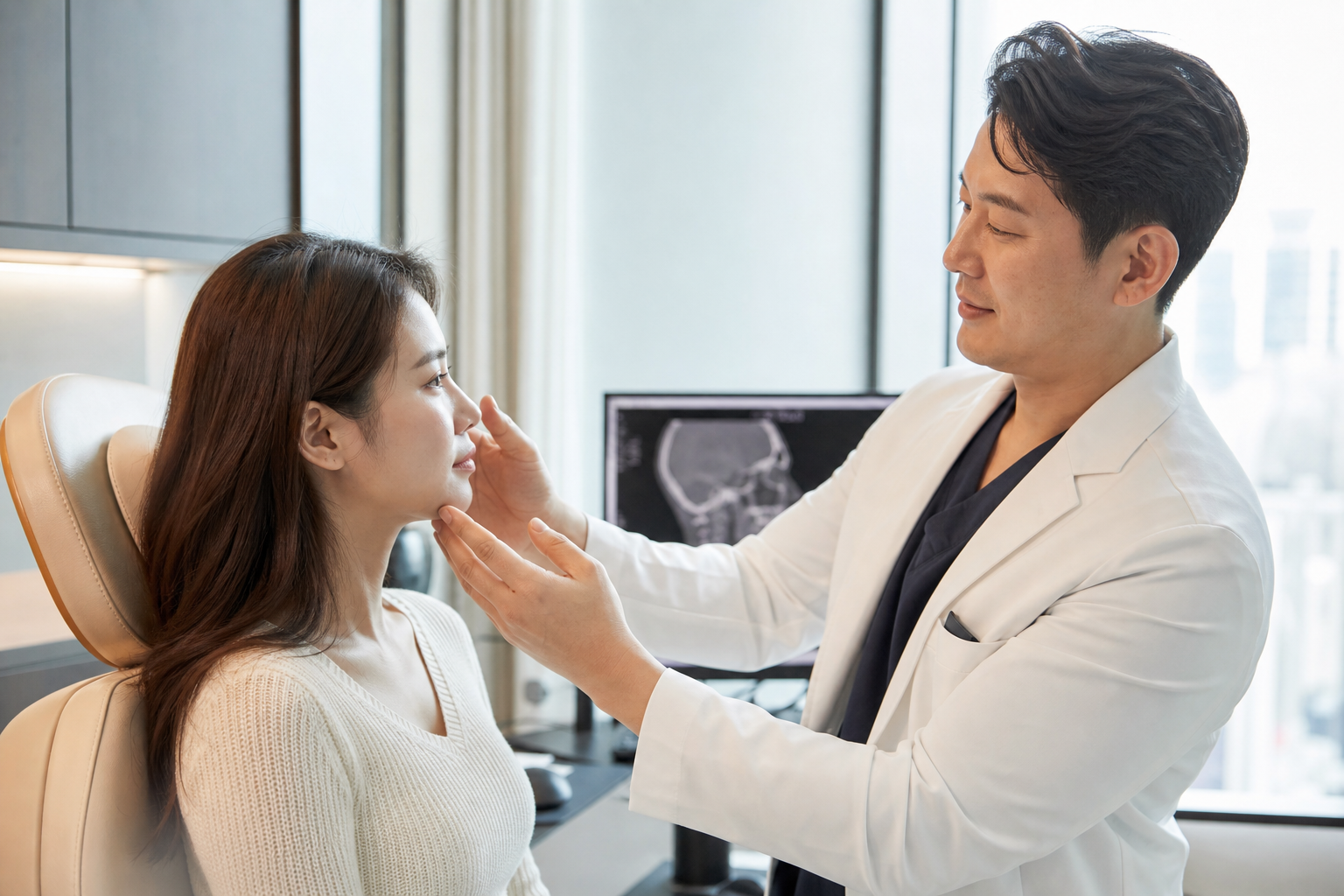
Rhinoplasty is where Korean technique earns its reputation. Surgeons who do almost nothing but noses build a precision with cartilage grafting and tip refinement that generalists rarely match. One ranking names South Korea best for facial precision and advanced techniques, and the same holds for eyelid surgery and facial rejuvenation, where subtle structural changes decide the result.
That precision carries a cost premium. Korean rhinoplasty runs $6,000 to $8,000 and a facelift $10,000 to $12,000, close to US pricing and roughly double what the same procedures cost in Thailand. You pay for the specialization, and for many facial cases that tradeoff is defensible.
If you're weighing a nose or face procedure in either country, read the technique and recovery details on Le Medica's rhinoplasty and facelift pages before you commit. The right question is not simply which country is cheaper, but whether your specific procedure rewards Korean specialization enough to justify the higher price.
Cost comparison: US vs South Korea vs Thailand
Price tells the clearest part of the Thailand-first story, and the gap holds across every major procedure. Thailand runs roughly 50 to 70 percent below US pricing, while South Korea's savings land closer to 20 to 40 percent, reflecting its position as the priciest of the two abroad.
The table below draws on published ranges from medical tourism price surveys. Treat these as planning estimates, since final quotes depend on surgeon, technique, and hospital.
Rhinoplasty: US (~$7,600–$8,000) | South Korea ($6,000–$8,000) | Thailand ($2,000–$4,000)
Liposuction: US (~$4,700) | South Korea ($4,000–$6,000) | Thailand ($2,500–$4,500)
Facelift: US (~$11,000) | South Korea ($10,000–$12,000) | Thailand ($4,000–$7,500)
Breast Augmentation: US ($8,000–$14,000) | South Korea ($4,000–$6,000) | Thailand ($2,700–$5,000)
Tummy Tuck: US (~$8,200) | South Korea ($7,000–$9,000) | Thailand ($5,000–$6,500).
Korea's facelift and rhinoplasty prices sit near US levels, so the premium buys facial specialization rather than savings. Thailand undercuts both markets on body work, where liposuction and tummy tuck ranges leave the widest room to bundle several procedures into one trip.
Bangkok vs Phuket for surgery tourism
Choose Bangkok when you want hospital density and easy logistics. The city concentrates the country's tertiary private hospitals, including Vejthani, a 500-bed facility serving patients from more than 40 countries, and Yanhee, which staffs 15 full-time cosmetic surgeons. Direct international flights, a deep bench of specialists, and short transfers between airport, hospital, and hotel make Bangkok the practical default, especially for combined procedures that need larger surgical teams.
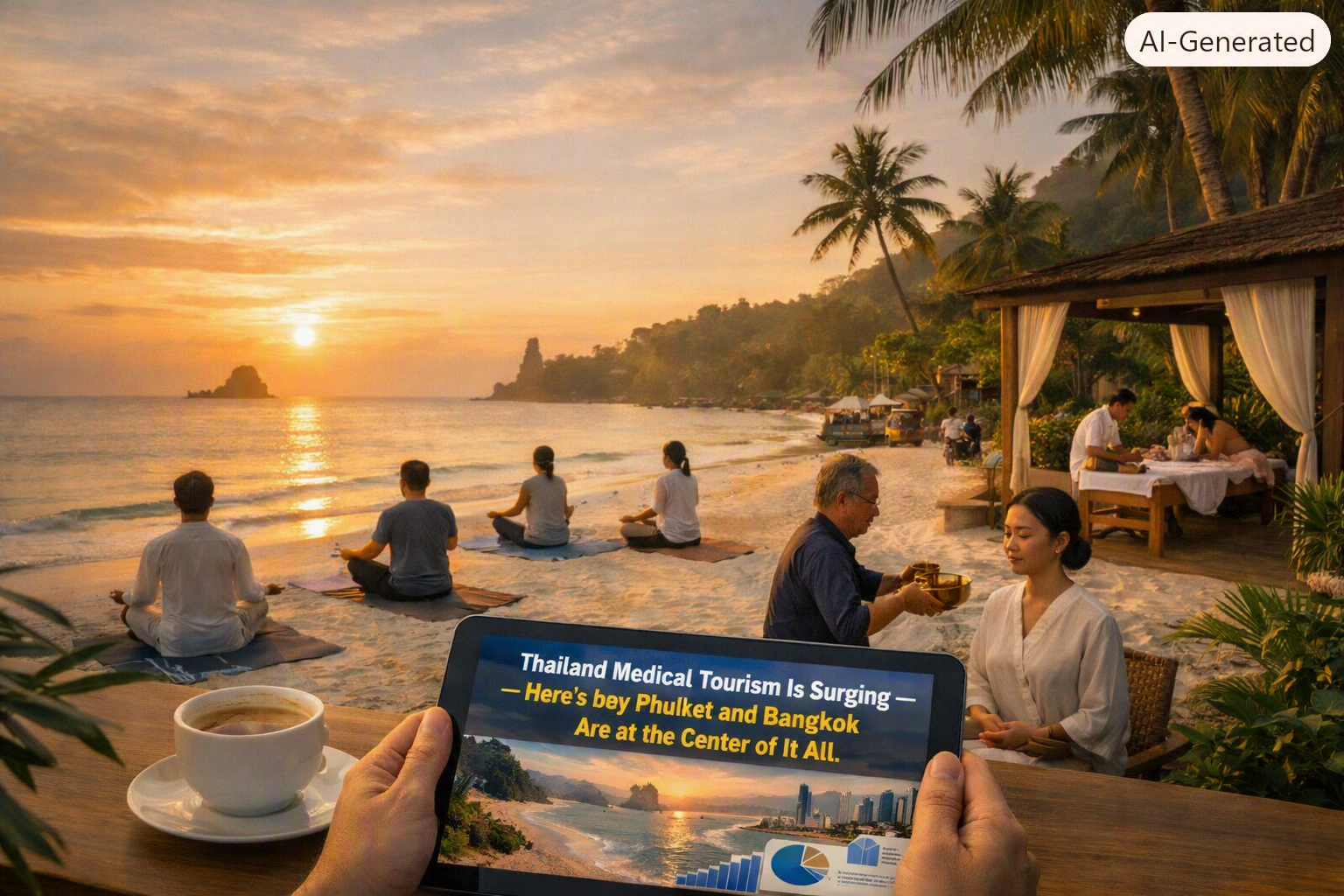
Phuket suits patients who want recovery to feel less clinical. Hospitals like Phuket International Hospital handle standard cosmetic work such as facelifts and breast lifts, and the island pairs surgery with beachfront recovery accommodation on the Andaman coast. That setting helps for single procedures with lighter aftercare, where you spend most of your time resting rather than shuttling to follow-up appointments.
The tradeoff is straightforward. Bangkok gives you more hospital choice and specialist depth for complex or multi-procedure cases. Phuket gives you a calmer recovery environment for simpler ones. Your procedure, not the scenery, should drive the decision.
Why Thailand wins for multi-procedure packages
Thailand's strength shows most clearly when you combine procedures in a single trip, and the mummy makeover proves it. Thai surgery-tourism operators bundle breast work and a tummy tuck into one package priced and scheduled together, alongside named combos like breast lift plus augmentation. Running those procedures separately in the US would mean multiple surgeon fees, hospital charges, and recovery windows. Bundling collapses that into one operating session, one hospital stay, and one recovery period.
Three factors make the bundle worth it rather than just cheaper.
First, JCI-accredited hospitals like Yanhee, Vejthani, and Chaophya perform enough cosmetic volume to handle multi-procedure surgery safely, with an overnight stay that extends to two nights when surgical drains are placed.
Second, Thai package pricing typically folds surgeon fees, anesthesia, hospital stay, post-op medication, follow-up visits, and compression garments into one quote, items US clinics often bill separately.
Third, resort recovery in Phuket or a Bangkok hotel gives you a single stretch of downtime to heal from everything at once.
The harder part is coordinating vetted hospitals, package logistics, and follow-up care once you return home, and that is where Le Medica works as your facilitator. We match you to accredited hospitals from our network, structure the package around the procedures you actually want, and keep your overseas surgeon connected to your local care through recovery.
If you are weighing a combined procedure trip to Thailand, see how it works and start with a hospital match built around your goals.
Why Coordinate Your Journey Through Le Medica?
Navigating international healthcare infrastructure shouldn't feel like a logistical gamble. While choosing the right destination is a critical first step, ensuring your medical data is accurately translated, your surgical safety checks are verified, and your clinical handoff is seamless requires dedicated oversight.
Le Medica eliminates the operational friction of medical travel. We act as your primary advocate, connecting you directly with vetted internationally accredited hospitals and board-certified plastic surgeons across Thailand and South Korea. Our coordination team manages your clinical intake records, structures clear, all-inclusive multi-procedure quotes, and maintains a secure communication loop with your local home physician to oversee your safe recovery.
FAQs
Do I need a special visa for surgery in Thailand or South Korea?
Thailand issues a Medical Treatment Visa valid for 60 days and extendable, which requires a confirmation letter from your treating hospital. South Korea uses the C-3-3 medical visa for short-term treatment, valid up to 90 days. Both require documentation from your provider before you travel.
How long should I plan to stay for recovery?
Most single body or breast procedures involve an overnight hospital stay, extending to two nights when surgical drains are placed. Plan on 10 to 14 days in-country for follow-up visits and clearance to fly, and longer if you combine several procedures in one trip. Read Le Medica's full cosmetic surgery recovery guide for a week-by-week breakdown of what to expect after returning home.
Is it safe to combine multiple procedures in one surgery?
Combining procedures is common at Thailand's JCI-accredited hospitals, where a mommy makeover pairs breast surgery with a tummy tuck in a single session. Whether it suits you depends on your health and total operating time, which your surgeon assesses beforehand. Le Medica coordinates that assessment with vetted hospitals and manages your follow-up care back home.
Which country is better for rhinoplasty — Thailand or South Korea?
South Korea is the stronger choice for rhinoplasty, especially for subtle structural work or Asian nasal anatomy. Gangnam surgeons who specialise in noses exclusively build precision with cartilage grafting that generalists rarely match. Thailand offers good rhinoplasty surgeons too, but Korea's concentration of expertise is difficult to beat for this specific procedure.
Are Thai hospitals safe and internationally accredited?
Yes. Major hospitals serving medical tourists in Bangkok — including Yanhee, Vejthani, BNH, and Chaophya — operate as large tertiary facilities with inpatient capacity and international patient departments. Several hold JCI accreditation, the global benchmark for hospital safety standards.
How much cheaper is cosmetic surgery in Thailand compared to the US?
Thailand typically runs 50 to 70 percent below US pricing across body procedures. A tummy tuck that costs $8,200 in the US runs $5,000 to $6,500 in Thailand. Liposuction that costs $4,700 in the US starts from around $2,500 in Bangkok. South Korea saves 20 to 40 percent by comparison.
What is included in an all-inclusive Thailand surgery package?
Most all-inclusive packages cover surgeon fees, anesthesia, the hospital stay, post-op medications, compression garments, and follow-up appointments — items that US and Australian clinics typically bill separately. Some packages also include airport transfers and recovery accommodation. Le Medica structures packages around the specific procedures you want rather than off-the-shelf bundles.
Do surgeons in Thailand and South Korea speak English?
Surgeons at hospitals catering to international patients speak English, and dedicated medical coordinators handle communication from consultation through discharge. Le Medica's coordination team also stays in contact throughout your trip and after you return home.
Can I get a hair transplant in Thailand?
Yes. Thailand's JCI hospitals and specialist clinics offer FUE and FUT hair transplant procedures at significantly lower prices than Western markets. See Le Medica's hair transplant page for procedure details and how to get matched to a vetted clinic.
How do I choose between Bangkok and Phuket for my surgery?
Bangkok suits complex or multi-procedure cases — it has more hospital choice, larger surgical teams, and direct international flights. Phuket suits simpler single procedures where you want a resort-style recovery environment. Your procedure type and aftercare needs should drive the decision, not the destination's appeal as a holiday spot.
Conclusion: Making Your Decision
The choice between Thailand and South Korea ultimately depends on your anatomical goals. If your priority is advanced facial rejuvenation, complex structural rhinoplasty, or high-precision facial contouring, South Korea’s highly specialized Gangnam district offers unmatched technical expertise. However, if you are looking to combine procedures, undergo major body contouring like a tummy tuck or liposuction, or bundle a complete mommy makeover within a resort recovery setting, Thailand delivers exceptional medical value and infrastructure.
Ready to map out your clinical travel timeline? Contact our medical coordination team today to receive a personalized hospital match tailored to your budget and aesthetic goals.