Last Updated: June 2026
In 2026, the cheapest countries for plastic surgery are China (65–80% savings) and Thailand (50–70% savings), though South Korea remains the leader for facial aesthetic precision. Total costs vary by clinic prestige and recovery requirements; always prioritize JCI-accredited facilities and surgeon board certification over headline prices to avoid complications.
The Reality Check: Safety vs. Savings.
Before diving into the numbers, it is critical to understand that the 'cheapest' destination is not automatically the 'safest' choice. Price disparities in medical tourism are largely driven by local overhead costs and labor arbitrage, not necessarily a lack of medical skill. However, the regulatory landscape varies wildly between countries. In this guide, we evaluate destinations based on their 'Value Floor', where high-tier safety, international accreditation (JCI), and surgeon board certification meet to offer the best total value.
While this guide focuses specifically on the cost landscape for 2026, we have also compiled a comprehensive roadmap on selecting international surgeons and evaluating clinic safety to guide your broader planning.
Summary
Plastic surgery costs 30–80% less than in the USA, UK, and Australia across key destinations in Asia-Pacific and China.
Deepest savings: Thailand and China offer 65–80% cost reductions; South Korea typically 30–50%.
All-inclusive pricing varies: surgery + anesthesia + facility + 1–3 nights post-op stay included; travel and extended accommodation are not.
Key caveat: The cheapest price is not the safest choice. Board certification, JCI accreditation, and post-operative continuity matter most.
Le Medica's role: We coordinate verified surgeons, accredited facilities, itemized quotes, and post-op continuity across eight destinations so you don't have to.
Why Plastic Surgery Costs So Much More in the USA, UK, and Australia: The Truth About "Affordability"
The cost gap is stark: A rhinoplasty can cost $12,000 in the US or Australia, yet only $2,000–$4,000 in Thailand or China. It is tempting to assume this price difference reflects a compromise in quality—but the reality is more nuanced.
In 2026, the price you pay for surgery is driven by three structural factors, not by a difference in surgical skill:
Labor and Overhead Arbitrage. A surgeon in Thailand with 15 years of experience and international training operates out of a clinic with lower occupancy costs, lower staff wages, and no US-scale malpractice insurance. This does not mean lower skill. It means lower overhead gets passed to patients. A surgeon in New York with identical credentials operates from a midtown surgical suite with triple the overhead.
Surgical Volume and Clinic Scale. High-volume destinations like Seoul and Bangkok perform hundreds of thousands of procedures yearly. This volume allows clinics to negotiate lower implant costs, streamline operations, and reduce per-procedure overhead. A Bangkok hospital performing 50 rhinoplasties weekly achieves economies of scale that a solo surgeon in Sydney performing 8 yearly cannot.
Post-Operative Care Bundling. All-inclusive packages bundle surgery, anesthesia, facility, and 1–3 nights of post-op care. What they do NOT bundle—flights, hotels beyond the post-op window, return travel, or domestic follow-up—can add $1,500–$5,000 to your true total cost. Understanding this distinction is critical when comparing headline prices.
The Le Medica Value Guarantee: At Le Medica, we strip away the ambiguity. We work exclusively with verified, accredited clinics across eight destinations to provide itemized, all-in quotes. We don't just help you find the lowest price; we help you identify the "Value Floor"—where safety, surgeon certification, and facility quality meet at the most competitive price point.
Plastic Surgery Cost Comparison: All Destinations at a Glance
TABLE 1: Procedure Costs by Destination (USD Ranges)
PROCEDURE SOUTH KOREA, THAILAND, MALAYSIA, SINGAPORE, CHINA
-----------------------------------------------------------------------------
Rhinoplasty $3.5-7k, $2.0-4k, $2.5-4.5k, $6.0-9k, $1.5-3k
Breast Augmentation $4.5-8.5k, $2.7-5k, $3.0-5.5k, $7.0-11k, $2.0-4k
Facelift (Deep) $6.0-10k, $4.0-7k, $4.5-7.5k, $9.0-14k, $2.5-5k
Liposuction $3.0-5.5k, $1.5-3k, $2.0-3.5k, $4.0-7k, $1.0-2.5k
Tummy Tuck $4.5-8k, $3.5-6k, $3.5-6k. $6.0-10k. $2.0-4k
Hair Transplant $3.5-7k, $2.5-5k, $2.5-4.5k, $5.0-8k, $1.2-3k
Pricing Note: Figures shown are all-in (surgeon, anesthesia, facility, 1–3 nights post-op stay). Travel, extended accommodation, and domestic follow-up not included. Prices are indicative ranges based on 2026 market data; individual cases vary.
Data Source: Aesthetic Society national databanks, destination clinic surveys, ISAPS 2024 Global Statistics, Le Medica partner clinic data.
South Korea: Premium Quality, Moderate Pricing
Best For: Rhinoplasty, facial contouring, and eyelid surgery.
The "Why": As the global epicenter of cosmetic innovation, South Korea performs over 1 million procedures annually. Surgeons here are trained to the highest technical standards, making it the top choice for complex facial aesthetics.
Cost Ranges:
Rhinoplasty: $3,500–$7,000
Breast augmentation: $4,500–$8,500
Facelift: $6,000–$10,000
Hair transplant: $3,500–$7,000
Key Consideration: South Korean clinic-level pricing is not standardized publicly. Quotes vary by clinic prestige, surgeon reputation, and revision history. Request itemised quotes from at least two clinics before deciding. Revision surgery in Korea may require a return trip, as remote aftercare coordination is less developed than in Thailand or Singapore.
Le Medica Concierge Note: Pricing in Korea is highly variable by clinic prestige. We help you navigate the Gangnam district's top-rated facilities to ensure you are quoted for premium results, not just a "tourist price."
Accreditation: KSPRS (Korean Society of Plastic Reconstructive Surgeons) board certification is mandatory. Verify membership independently at ksprs. JCI accreditation is limited in Korea; instead, clinics hold approval from the Korean Ministry of Health and Welfare (MOHW).
Thailand: Best Value with JCI Infrastructure
Best For: Liposuction, Breast Augmentation, and comprehensive body transformation packages.
The "Why": Thailand balances affordability (50–70% savings) with a massive network of JCI-accredited hospitals. Its recovery-focused culture—offering luxury, all-inclusive post-op suites—is unmatched.
Cost Ranges:
Rhinoplasty: $2,000–$4,000
Breast augmentation: $2,700–$5,000
Facelift: $4,000–$7,000
Liposuction (per area): $1,500–$3,000
Hair transplant: $2,500–$5,000
Key Consideration: Extended recovery stay required. Most patients stay 3–4 weeks post-op due to VTE/DVT flight risk. All-inclusive packages often include resort-style recovery suites, which sound luxurious but add to per-procedure cost.
Le Medica Concierge Note: Due to flight safety protocols, we always recommend planning for a 4–6 week recovery window before return air travel. We can help you vet the recovery suites included in your surgical package.
Accreditation: JCI accreditation is strong. Verify at JCI. Surgeons must be registered with the Thai Medical Council (สภาแพทย์ไทย) and ideally members of the Thai Society of Plastic & Aesthetic Surgeons (TSPAS).
Malaysia: Emerging Destination, Limited Public Pricing
Best For: Liposuction and body contouring for cost-conscious patients.
The "Why": Malaysia provides significant savings (40–60% vs. the US) and is increasingly popular for its seamless English-language communication and regional proximity to Singapore.
Estimated Cost Ranges (based on limited public data):
Rhinoplasty: $2,500–$4,500
Breast augmentation: $3,000–$5,500
Liposuction (per area): $2,000–$3,500
Key Consideration: Itemised quotes are essential. Many clinics require direct contact via WhatsApp or email before providing pricing. This makes independent comparison shopping difficult.
Accreditation: Facilities must be registered with the Malaysian Medical Council. MSQH (Malaysian Society of Quality in Health) accreditation is valuable but less globally recognized than JCI.
Le Medica Concierge Note: Data transparency is a challenge in Malaysia, as many top clinics do not publish prices online. We maintain direct relationships with these facilities to provide you with itemized, comparison-ready quotes.
Singapore: Premium-Tier Destination, Regulatory Rigor
Best For: Face Lift and complex procedures for patients prioritizing oversight.
The "Why": While not a "budget" destination, Singapore is chosen for its uncompromising regulatory rigor. Surgeons are SMC-registered, and facilities operate at a level that mirrors top-tier Western standards.
Cost Ranges:
Rhinoplasty: $6,000–$9,000
Breast augmentation: $7,000–$11,000
Facelift: $9,000–$14,000
Key Consideration: Singapore is not a cost-saving destination. It is chosen by patients who prioritize regulatory transparency and English-language ease over price discounts. Consider Singapore if you want international standards without air travel to Thailand or Korea.
Le Medica Concierge Note: Choose Singapore if your primary goal is peace of mind through strict government oversight and English-language ease.
Accreditation: SMC (Singapore Medical Council) registration is rigorous. Facilities are regulated by MOH and often hold JCI accreditation.
China: Highest Volume, Lowest Prices, Highest Due-Diligence Burden
Best For: Rhinoplasty, eyelid surgery, patients already in-country or in the region.
The "Why": China performs approximately 5 million cosmetic procedures yearly—about 12.7% of global volume. Pricing is the lowest globally: 65–80% savings vs. the US. Major cities (Shanghai, Beijing, Chongqing) host modern facilities. However, clinic-level regulatory transparency is significantly lower than other destinations on this list.
Cost Ranges:
Rhinoplasty: $1,500–$3,000
Breast augmentation: $2,000–$4,000
Facelift: $2,500–$5,000
Liposuction (per area): $1,000–$2,500
Hair transplant: $1,200–$3,000
Key Consideration: Surgeon credential verification is critical. China has approximately 5,000 plastic surgeons; formal training duration (3–4 years) is shorter than North American standards (6 years). Individual clinic accreditation and surgeon credentials must be independently verified.
Accreditation: Some facilities hold ISQUA accreditation (indirect indicator of quality). JCI accreditation is rare in China.
Le Medica Concierge Note: Because China has a lower regulatory transparency threshold, we utilize a strict 3-step verification process—including diploma authentication—before we ever present a quote from an in-country facility.
USA, UK, and Australia: Home-Country Baselines (Not Affordable Destinations)
These are presented as pricing baselines only—not as recommended destinations for cost savings.
USA: Surgeon fees alone average $5,000–$15,000 depending on procedure and geography. Adding facility, anesthesia, post-op care, and the 20–40% premium for major metro areas (NYC, Beverly Hills, LA) pushes all-in costs to $9,000–$25,000+. Malpractice insurance, regulatory overhead, and real estate costs drive these premiums.
UK: Surgeons operating privately charge £4,000–£12,000. Adding facility and anesthesia brings all-in costs to £6,000–£15,000 (approximately $7,500–$18,750 USD). NHS waiting lists for cosmetic procedures are multi-year; private is the only option for cosmetic work.
Australia: Pricing parallels the US. Surgeon fees start at AUD $6,000–$15,000. All-in costs reach AUD $12,000–$25,000 before any complications or revisions.
The "Total Cost" Formula: Beyond the Headline Price
Many international clinics advertise "headline" prices—a number that covers only the surgeon’s fee and the hospital room. However, your true total cost often includes expenses that aren't listed on a price tag. To avoid surprises, use this formula to calculate your actual budget:
[Headline Price] + [Flights & Transit] + [Extended Recovery Housing] + [Medications & Post-Op Supplies] = Your True Cost.
The "Recovery Buffer": Most "all-inclusive" packages cover 1–3 nights in the hospital. However, for major procedures, you may need to stay in the destination for 2–3 weeks to be medically cleared for flight. Budget for comfortable, recovery-friendly accommodation for this entire window.
The Complication Safety Net: Even with the best surgeon, unexpected costs (such as medication, extra consultations, or revision surgery) can arise. We always advise patients to set aside a 15–20% "contingency fund" on top of the quoted procedure cost.
The Le Medica Advantage: We pride ourselves on providing itemized quotes that account for the "invisible" costs. When you receive a quote through our concierge, you will see exactly what is included—and what isn't—so you can budget with total transparency.
Destination Comparison: Side-by-Side Overview
TABLE 2: Destination Overview
DESTINATION BEST FOR SAVINGS ACCREDITATION
--------------------------------------------------------------------------
South Korea Rhinoplasty, Facial 30–50% KSPRS Board + JCI
Thailand Body, Lipo, Packages 50–70% JCI Strong
Malaysia Cost-conscious, General 40–60% MSQH / MOH
Singapore Regulatory Rigor 0–20%* MOH / SMC / JCI
China Rhinoplasty 65–80% NHSA-Licensed
--------------------------------------------------------------------------
Note: Singapore is a premium-tier destination chosen for oversight, not price.
The "Total Cost" Formula: Beyond the Headline Price
Many international clinics advertise "headline" prices—a number that covers only the surgeon’s fee and the hospital room. However, your true total cost often includes expenses that aren't listed on a price tag. To avoid surprises, use this formula to calculate your actual budget:
[Headline Price] + [Flights & Transit] + [Extended Recovery Housing] + [Medications & Post-Op Supplies] = Your True Cost.
The "Recovery Buffer": Most "all-inclusive" packages cover 1–3 nights in the hospital. However, for major procedures, you may need to stay in the destination for 2–3 weeks to be medically cleared for flight. Budget for comfortable, recovery-friendly accommodation for this entire window.
The Complication Safety Net: Even with the best surgeon, unexpected costs (such as medication, extra consultations, or revision surgery) can arise. We always advise patients to set aside a 15–20% "contingency fund" on top of the quoted procedure cost.
The Le Medica Advantage: We pride ourselves on providing itemized quotes that account for the "invisible" costs. When you receive a quote through our concierge, you will see exactly what is included—and what isn't—so you can budget with total transparency.
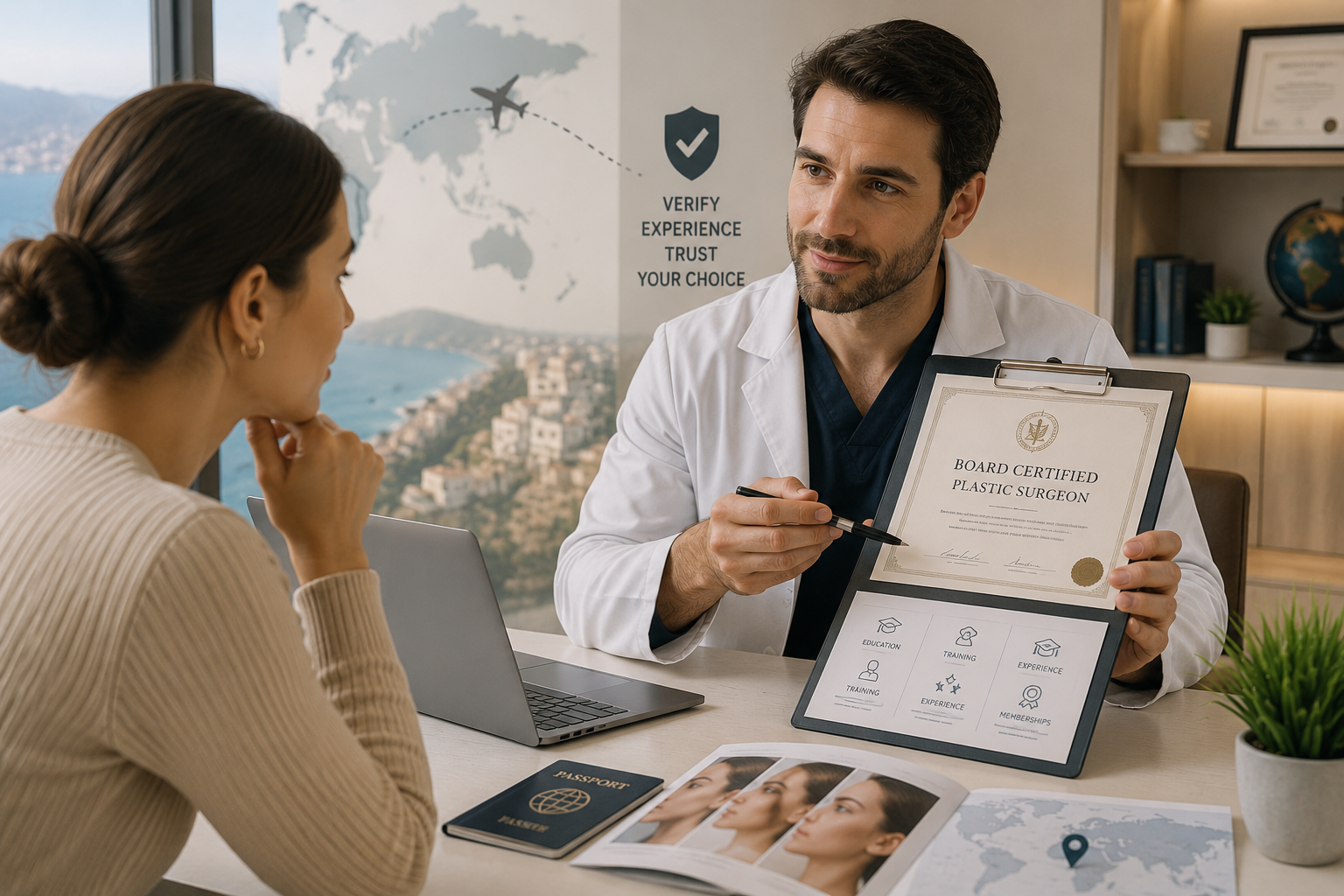
Three Verification Steps Every Patient Must Take
1. Confirm Surgeon Board Certification
Never rely on a clinic's "About Us" page. Demand proof of national board certification and search the specific medical board directory for your destination:
South Korea: KSPRS membership.
Thailand: Thai Medical Council registration.
Malaysia: Malaysian Medical Council check.
Singapore: Singapore Medical Council registration.
Do not rely on clinic websites alone.
2. Verify Facility Accreditation
JCI (Joint Commission International) is the gold standard for global hospital safety. Verify the facility’s status independently at JCI. If a facility isn't JCI-accredited, they must provide documented evidence of local government infection-control audits and emergency care protocols.
3. Document Post-Operative Continuity Plan
A surgery is only as successful as its recovery. Before you fly, get written confirmation on:
Direct surgeon contact after you return home (not just a call centre)?
Response time commitment (same-day or 24-hour)?
Can they assess via remote photos/video?
If you need revision, is it covered or charged separately?
Can they refer you to a qualified local surgeon in your home country if needed?
If a clinic cannot or will not answer these questions clearly, disqualify them.
Methodology: How We Built This Cost Comparison
Data Sources:
Aesthetic Society national databank (2026 update)
Destination clinic surveys (Le Medica partner network)
Published pricing from JCI-accredited facilities
Medical tourism market research (McKinsey, Frost & Sullivan)
Pricing Methodology: Ranges shown reflect all-in costs (surgeon + anesthesia + facility + 1–3 nights post-op stay). Extended hotel stays, flights, and domestic follow-up are NOT included. Prices vary by surgeon reputation, procedure complexity, and patient anatomy; figures are indicative.
Data Gaps:
Malaysia and Singapore have limited published clinic-level pricing; estimates are based on limited public data.
China clinic-level transparency is lower than other destinations; figures represent major urban centers (Shanghai, Beijing) with English-speaking teams.
South Korean pricing is highly variable and not standardized; itemised quotes from multiple clinics are essential.
Patient Action: Request itemised quotes from at least two clinics in your destination before committing. Do not rely on headline prices.
Frequently Asked Questions
Which country is cheapest for plastic surgery?
China offers the deepest discounts (65–80% vs. US). Thailand provides 50–70% savings with stronger JCI accreditation. South Korea averages 30–50% savings. Choose based on accreditation confidence and surgery type, not price alone.
What is the cheapest country for a rhinoplasty?
China: $1,500–$3,000. Thailand: $2,000–$4,000. South Korea: $3,500–$7,000. The choice depends on your risk tolerance for clinic verification and surgeon credential transparency.
Is plastic surgery abroad safe?
Yes, when performed by a board-certified surgeon in a JCI-accredited facility with documented post-operative continuity. Complication rates at accredited international facilities are comparable to US standards (approximately 6–8%).
How do I verify a surgeon's credentials from overseas?
Contact the national medical board directly:
South Korea: KSPRS
Thailand: Thai Medical Council
Malaysia: Malaysian Medical Council
Singapore: SMC
China: Chinese Medical Association
Do not rely on clinic websites.
What does JCI accreditation mean?
Joint Commission International (JCI) audits hospitals on infection control, staff qualifications, emergency protocols, and patient safety. Accreditation is re-evaluated every 3 years. Facilities holding current JCI accreditation have passed rigorous inspection. Verify status at jcrinc.org.
How much does all-inclusive really include?
Typically: surgeon fee, anesthesia, facility, 1–3 nights post-op facility stay, pre-operative tests, medications, compression garments, post-operative appointments (up to 3 months).
Typically NOT included: flights, hotel beyond post-op window, return travel, domestic follow-up with local surgeon, revision surgery.
Can I combine surgery with a vacation?
Before surgery: yes. After surgery: no. Surgeons recommend minimal activity for 2–3 weeks post-op. Sightseeing, sun exposure, alcohol, and air travel carry complication risks.
Conclusion: Making Your Decision with Confidence
Plastic surgery abroad is not inherently riskier than surgery at home. The risks arise only when due diligence is bypassed in favor of raw savings. The price difference is real: a procedure that costs $12,000 in the US can cost $2,000–$4,000 abroad at a world-class, accredited facility. But these savings only hold value if your health and aesthetic goals are protected.
The path to a safe, successful transformation starts with three questions:
Is my surgeon independently board-certified?
Is the facility JCI-accredited?
What is my written post-operative continuity plan?
Ready to start your journey? At Le Medica, we handle this verification heavy lifting for you. We vet surgeons, audit facilities, provide transparent, itemized quotes, and bridge the gap between your home and your destination. Our mission extends beyond cosmetic goals. We also facilitate access to specialized diagnostic services like modern gender-specific cancer screenings for patients traveling for comprehensive health check-ups.
Book a free pre-consultation call to discuss your goals with our concierge team.
Last Updated: June 2026. Data sources: ISAPS 2024, Aesthetic Society, Le Medica partner clinic data, JCI accreditation records