QUICK TAKE: SEOUL RHINOPLASTY SUMMARY
Midpoint Pricing: $2,100–$8,000 in Gangnam vs. $14,500+ in the United States.
Minimum Stay: 10–14 days in-country is required for safe splint removal and air travel clearance.
Surgical Caseload: Top Seoul specialists average 300–800 rhinoplasties annually (approx. 5x Western averages).
Critical Safety Warning: Ensure your contract explicitly bans "ghost surgeries" by specifying your named lead surgeon.
Why South Korea Became the World's Rhinoplasty Capital
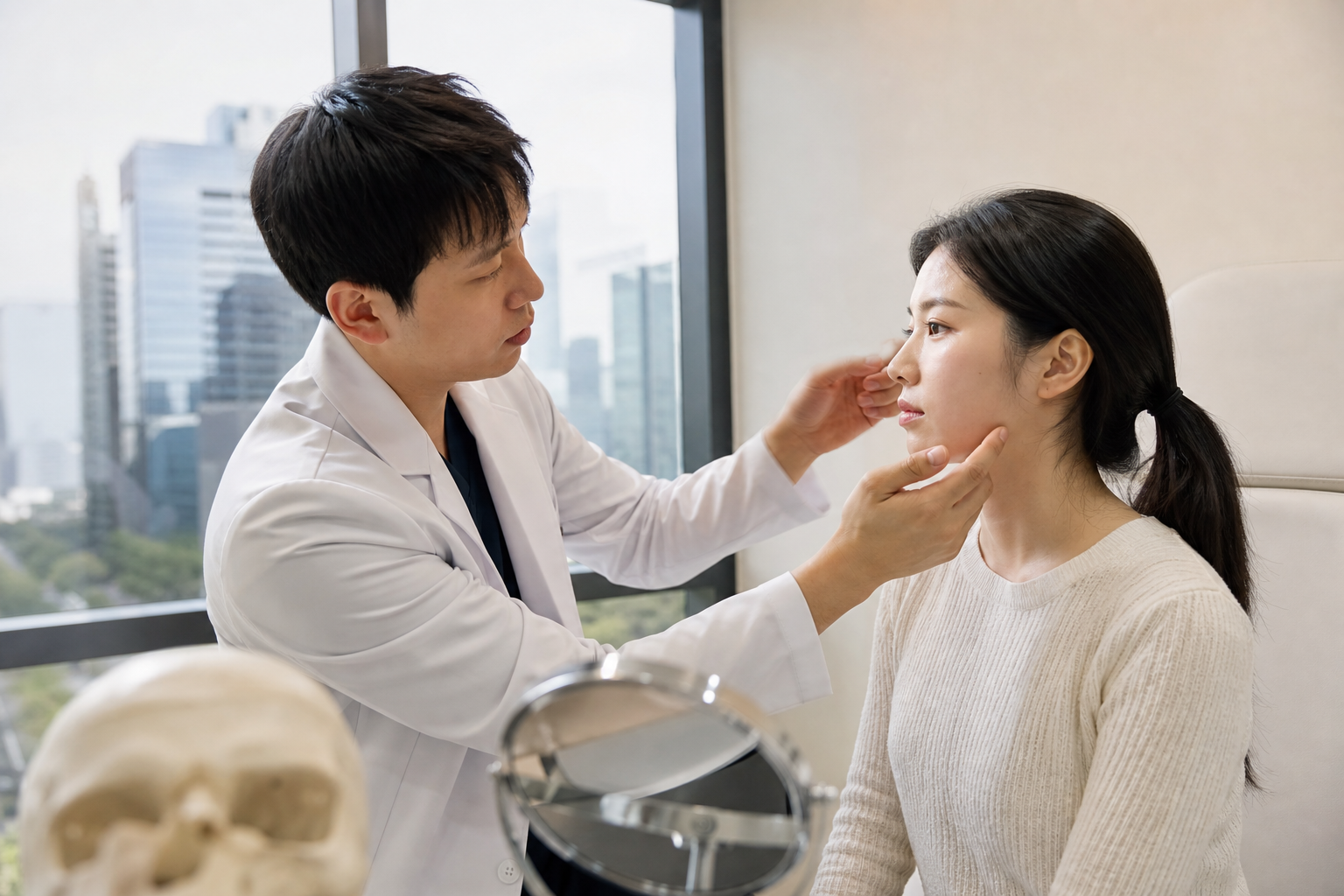
South Korea's reputation rests on repetition, not just its cosmetic surgery culture. A specialist in Gangnam, Seoul's plastic surgery district, performs 300 to 800 rhinoplasties a year. A typical US plastic surgeon does 50 to 150. That gap in caseload shows up in how quickly a surgeon reads unusual anatomy, plans grafts, and handles complications, because they have simply seen the same problems far more often.
The city itself functions as a medical hub with government backing. Gangnam District runs a dedicated Gangnam Medical Tourism Center as an official public service, which gives foreign patients a recognized point of reference rather than a purely private marketplace.
The technical edge comes from specialization in Asian nose structures. Korean surgeons work daily with septal extension grafts to project the tip, alar reduction to narrow the base, and cartilage-first techniques that build support from the patient's own tissue rather than relying on implants alone.
Because these custom anatomical reconstructions require highly specific clinical pathways, you can explore the full procedural breakdown, step-by-step techniques, and specialized medical packages directly through the Le Medica Rhinoplasty Treatment Portal. Surgeons in Western markets rarely see East and Southeast Asian anatomy at that frequency, so they build less muscle memory for it. For a patient with Asian features, that difference in daily practice matters more than any brochure claim.
What Rhinoplasty Abroad Actually Costs: 2026 Destination Comparison
The gap between South Korea and Western markets is wide enough to fund the entire trip and still leave money on the table. A standard augmentation in Gangnam runs $2,100 to $3,500, while the same procedure from a top Los Angeles surgeon reaches $14,500 all-in before you add anesthesia and facility fees. The table below covers Le Medica's five Asian destinations plus three Western baselines.
DESTINATION PRIMARY RANGE REVISION RANGE NOTES / DATA SOURCE
South Korea $2,100–$8,000 $2,700–$15,000 50-clinic Gangnam survey data. Complex/rib cases hit top end.
Thailand $2,000–$4,500 $3,500–$7,000 Indicative; benchmarked against regional medical averages.
Malaysia $2,500–$5,000 $4,000–$8,000 Estimated baseline; verify with your specific clinical quote.
Singapore $6,000–$12,000 $9,000–$16,000 Priced significantly closer to Western medical markets.
China $2,800–$6,000 $4,500–$9,000 Estimated baseline; verify with your specific clinical quote.
USA $8,000–$16,000 $8,000–$35,000+ Primary average lands around $14,500 all-in.
Australia $6,000–$12,000 $7,000–$26,000 Primary average lands around $11,500.
UK $5,000–$10,000 $9,500–$18,000 Premium Harley Street consultations reach $22,000+.
South Korea saves foreign patients roughly 65% against the US midpoint of $14,500. Price alone should not decide your clinic, because high-volume Gangnam "factory" clinics quote $1,500 to $2,800 and carry the highest ghost-surgery risk, meaning a surgeon other than the one you consulted may operate.
What a South Korea Rhinoplasty Package Includes
A good all-inclusive package covers everything that happens inside the clinic. SoonPlus Plastic Surgery in Seocho-gu publishes a fully itemized $5,200 primary rhinoplasty package, and the breakdown shows exactly what you are paying for. The surgical fee covers 1.5 to 2.5 hours of operative time. A board-certified anesthesiologist handles monitoring throughout. The hospital-grade operating theater, post-op recovery room, medications, antibiotics, nasal splint, and compression tape for the first 30 days are all included. Nursing check-ins, three in-Seoul follow-up visits, and six months of virtual video consultations after you fly home round out the package.
What the package almost never covers is the travel itself. Budget separately for flights, accommodation near the clinic (roughly $1,200 to $1,600 for 10 to 14 nights in Seocho-gu), meals (around $250), local transport, and a medical-tourism travel insurance policy ($150 to $300).
Add both halves together, and a realistic all-in trip lands between $7,300 and $7,775, still well under a mid-tier US surgical fee alone. Ask any clinic for this same itemized split before you book. A quote that lumps everything into one number usually hides which line items you will pay twice for.
How to Vet a Rhinoplasty Surgeon Abroad
The photos and price only tell you so much. Six concrete checks separate a specialist from a high-volume factory clinic, and a patient can run every one of them before booking a flight.
Confirm the national board credential. In South Korea, ask whether the surgeon holds Korean Society of Plastic and Reconstructive Surgeons (KSPRS) certification and active membership, not just a general medical license.
Ask the annual rhinoplasty volume. A Gangnam specialist typically performs 300 to 800 cases a year, far above the 50 to 150 a typical US surgeon does. Ask what share is rhinoplasty-only versus mixed cosmetic work.
Review before-and-afters for your anatomy. Look for cases that match your nasal structure, since Asian and ethnic rhinoplasty demands different techniques than a Western reduction.
Request the personal revision rate. Roughly 5 to 15% of patients seek revision, so the number itself matters less than the surgeon's willingness to state it.
Get an itemized quote in writing. The breakdown should name anesthesia, facility fees, implant material, and follow-up visits separately.
Confirm the named surgeon operates. Ask directly who holds the scalpel, because ghost surgery, where a junior swaps in after consultation, is the biggest risk at budget clinics.
Three red flags are the hardest to catch from abroad. A clinic that refuses an itemized quote, dodges its revision policy, or will not disclose case volume has told you enough.
Recovery Timeline and When to Book Your Return Flight
Book your return flight after your post-op visit, not before. Rhinoplasty recovery follows a predictable arc, and the flight home from Seoul carries real risk if you leave too early. Cabin pressure and dry air both worsen swelling, and a nosebleed at 35,000 feet becomes a serious problem fast.
During days 1 through 7, your external splint stays on, bruising and swelling peak, and bleeding risk runs highest. Flying is off the table this week, so plan to stay near your clinic.
Your surgeon removes the splint around days 5 to 7. Short flights become possible after that milestone with clearance, but pressure changes without a decongestant can be very painful, and you should expect renewed swelling for a day or two afterward.
For a long-haul flight from Seoul, wait at least two weeks. Most international patients recover more comfortably in the weeks 2 to 3 window, and by weeks 4 to 6 the nasal bones have healed enough that travel adds minimal risk. To prepare completely for this process, cross-reference your timeline with our comprehensive roadmap on what to expect after cosmetic surgery abroad to map out everyday swelling and activity restrictions
For a 10 to 12 hour Seoul flight, take a decongestant before takeoff and use saline spray throughout. Book a direct flight, keep your head elevated, and skip glasses that press on your bridge.
How Le Medica Coordinates Your Rhinoplasty in South Korea
The biggest obstacle to a Gangnam rhinoplasty isn't the surgery. It's that most top Seoul clinics run their consultations, quotes, and post-op instructions in Korean, and coordinating that alone from another country invites mistakes at every step. Le Medica handles the Korean-language communication with the clinic directly, so nothing about your quote or your anatomy gets lost in translation.
We match you to a surgeon based on your nose type and your budget, not whichever clinic pays for placement. Once you commit, we book accommodation within walking distance of the clinic in Seocho-gu or Gangnam, and we sequence your consultation, surgery, and in-Seoul follow-up visits around your recovery milestones so you're never guessing when to be where.
After you fly home, we stay involved. Le Medica coordinates the six months of virtual video follow-ups with your surgeon, which means you keep the same clinical relationship without booking a second flight.
Our role is logistics, not luxury. We remove the friction so you can focus on the outcome. Le Medica's international network is built to guide patients through all levels of care—whether you are organizing localized cosmetic transformations in Seoul, traveling for complex vision-restoring corneal transplant options, checking into advanced adaptive neuromodulation care, or scheduling proactive gender-specific cancer screenings during your travels.
Instead of navigating the complex foreign market alone, our specialized framework connects you directly with internationally accredited partner hospitals and board-certified surgeons who have been strictly vetted for volume, credentials, and safety. To learn exactly how we manage your documentation, translation, and local transit, explore our step-by-step concierge coordination process. When you are ready to review tailored options for your anatomy, simply submit your inquiry through our encrypted platform, and our team will initiate your clinical intake.
Frequently Asked Questions
How much does rhinoplasty cost in South Korea for a foreign patient?
Primary rhinoplasty in South Korea runs roughly $2,100 to $8,000, depending on whether you need a standard augmentation or structural cartilage grafting. Le Medica works with Gangnam clinics across this range and matches you to a surgeon by budget and anatomy. That figure sits about 65% below the US midpoint of $14,500.
How long do I need to stay in South Korea after rhinoplasty?
Plan for 10 to 14 days in Seoul so your splint comes off around day 5 to 7 and your surgeon clears you before you fly. Le Medica sequences your accommodation and follow-up visits around these recovery milestones. Do not book your return flight until after the post-op check.
Is rhinoplasty in South Korea safe for non-Korean patients?
Yes, when you choose a properly credentialed surgeon who performs your procedure personally. Le Medica confirms each surgeon's board credentials and case volume, and flags high-volume clinics where ghost surgery risk runs highest. Verified surgeon selection is the single strongest safety signal.
What does a rhinoplasty package in South Korea include?
A typical all-inclusive package covers the surgical fee, anesthesia, operating room, recovery room, medications, the nasal splint, and in-Seoul follow-up visits. Packages rarely cover flights, accommodation, or travel insurance. Le Medica itemizes every cost in writing before you commit.
Ready to Get a Quote for Rhinoplasty in South Korea?
Send us your details and one photo, and Le Medica matches you with a vetted Gangnam surgeon whose caseload fits your anatomy and budget. The consultation is free, and you commit to nothing until you decide the surgeon and quote are right. Reach out through Le Medica, and we handle the Korean-language coordination from there.