Last Updated: June 2026
SUMMARY:
Plastic surgery abroad saves patients 50–80% versus US/UK prices across major procedures.
Top destinations are Thailand (JCI hospitals, affordable, long recovery travel), South Korea (facial expertise, high pricing), Turkey (volume, all-inclusive packages), and Mexico (proximity for North Americans, facilitator support).
The single most important safety criterion is board certification + independent verification, not the country. Ghost surgeon risk is real in high-volume markets.
A medical tourism facilitator reduces risk by managing surgeon vetting, facility accreditation checks, post-operative continuity, and complication response—essentially acting as your informed advocate when distance separates you from your surgeon.
At Le Medica, we coordinate this entire process so you can focus on healing.
Why Patients Choose Plastic Surgery Abroad
The global cosmetic surgery market performed 38 million procedures in 2024, with an estimated 15–20% conducted across international borders. Patients do not seek surgery abroad for the novelty. They do it because the math works: a rhinoplasty costing $12,000 in New York costs $2,500–$4,000 in Bangkok. A facelift at $15,000 in London costs $4,000–$6,000 in Istanbul. Breast augmentation at $10,000 in the US drops to $3,500–$5,500 in Seoul.
The savings are not achieved through compromise. Modern hospitals in accredited centers (Thailand's JCI hospitals, Turkey's JCI and TEMOS clinics, South Korea's board-certified surgeons, Mexico's COFEPRIS-licensed facilities) meet or exceed Western standards. The difference is cost structure: lower overhead, higher surgical volume, and favorable currency exchange rates.
But price alone is not the deciding factor for informed patients. Four variables determine whether plastic surgery abroad becomes a positive experience or a cautionary tale:
Surgeon credentials (board certification, independent verification)
Facility accreditation (JCI, national equivalents, compliance standards)
Post-operative continuity (access to your surgeon after you return home)
Complication protocol (what happens if something goes wrong)
This guide covers all four across the top four destinations. If you are considering surgery abroad, reading this first will shape every decision that follows.
Top Destinations for Plastic Surgery Abroad
Thailand: Affordable Procedures with JCI-Accredited Hospitals
Best For: Comprehensive cosmetic work, recovery in luxury resort settings, patients with extended recovery windows
Thailand is one of the most mature medical tourism markets globally. Bangkok, Chiang Mai, and Phuket host dozens of JCI-accredited hospitals specializing in cosmetic procedures. The Thai government actively regulates private practice through the Medical Council of Thailand (established 1986), and surgeons must pass board exams and maintain continuing education.
Cost Range (USD):
Rhinoplasty: $2,200–$3,800
Breast augmentation: $2,800–$4,200
Liposuction (single area): $1,500–$2,800
Facelift: $4,000–$6,500
Many Thai clinics market "all-inclusive" packages covering surgeon fees, hospital, anaesthesia, implants, and 4–7 nights at an affiliated resort. While these may seem attractive, read the fine print: revision procedures, extended stays, and complications beyond the package may carry additional costs.
Key Accreditation: JCI accreditation is strong in Thailand. Over 20 hospitals hold current JCI status. When vetting a Thai surgeon, confirm JCI accreditation at the hospital level and membership in the Thai Society of Plastic & Aesthetic Surgery (ThSPAs).
Primary Risk: Travel fatigue and flight timing. Bangkok is 17–19 hours from North America and 11–13 hours from Western Europe. Long-haul travel within 3–4 weeks of surgery increases the risk of venous thromboembolism (VTE), including deep vein thrombosis (DVT) and pulmonary embolism. The American Society of Plastic Surgeons (ASPS) recommends waiting 4–6 weeks post-op before long-haul flights. This means a Thailand package typically requires 3–4 weeks away—a significant commitment for working patients. If you cannot commit to this timeline, Thailand is not the right choice.
Facilitator Value: A medical tourism facilitator can coordinate direct communication with your Thai surgeon and arrange post-op photo assessments remotely, reducing the need for a costly return visit.
Recovery is a critical component of any breast procedure. For a detailed look at what your journey home looks like, we have compiled a week-by-week breast lift recovery guide to help you plan your time off and manage expectations.
South Korea: The Global Leader in Facial and Contouring Surgery
Best For: Rhinoplasty, blepharoplasty, facial contouring, jaw surgery, patients prioritizing surgical finesse over affordability
South Korea's status as the plastic surgery capital is not marketing, it is epidemiological. The country performs approximately 8.9 surgical procedures per 1,000 residents annually (Source: ISAPS 2024), the highest rate globally. This volume produces surgeons with pattern recognition and technical skill that few peers in other countries match.
Korean surgeons specializing in facial procedures have refined techniques over decades. Rhinoplasty results, in particular, are regarded as exceptionally natural across diverse patient ethnicities. The Korean Society of Plastic and Reconstructive Surgeons (KSPRS) mandates strict board certification, and surgeons must complete 5+ years of training post-medical school.
Cost Range (USD):
Rhinoplasty: $5,000–$8,500
Blepharoplasty (eyelid surgery): $2,500–$4,500
Facial contouring (cheekbones, chin): $6,000–$9,000
Facelift: $7,000–$12,000
Note: South Korean clinic-level pricing is not standardized publicly. Quotes vary by clinic prestige, surgeon reputation, and revision history. Request itemised quotes in writing, and cross-verify pricing with multiple clinics.
Key Accreditation: South Korea does not use JCI accreditation as heavily as Thailand or Turkey. Instead, vet surgeons through the KSPRS directory and confirm board status independently via the Korean Medical Board (Uisa Myeongbu). Ask for credentials in English; reputable surgeons will provide them.
Primary Risk: Language barrier and clinic selectivity. Many high-reputation clinics are volume-based and serve predominantly Korean patients. English-speaking coordinators are increasingly common, but communication gaps can occur during consultations and post-op follow-up. Additionally, revision surgery in Korea (if needed) may require a return trip, as long-distance remote management is less developed than in Turkey or Mexico.
Facilitator Value: A facilitator fluent in Korean operations and surgeon networks can translate consultations, verify credentials through KSPRS, and coordinate post-op communication with your surgeon. This bridges the language and logistical gap.
Facial harmony often comes down to small, precise adjustments. If you are considering balancing your profile, our guide on chin augmentation breaks down the differences between temporary fillers, implants, and surgical genioplasty.
Turkey: Volume, Value, and All-Inclusive Packages
Best For: Patients prioritizing affordability, all-inclusive planning, combined procedures (mommy makeovers, full-body contouring), Eastern European proximity
Turkey has become the most aggressively marketed medical tourism destination. According to the Turkish Ministry of Health, the country received 1.5 million medical tourists in 2023, with plastic surgery accounting for roughly 25% of this volume. Istanbul, Ankara, and Izmir host a dense cluster of clinics competing fiercely on price and convenience.
Turkish clinics excel at packaging. A typical all-inclusive offer might cover surgeon fee, anaesthesia, hospital stay (2 nights), pre-operative tests, post-operative garments, airport transfers, and 5 nights hotel accommodation for USD $4,000–$5,500. The procedural pricing is genuinely low, but the packaging can obscure total cost and hidden add-ons.
Cost Range (USD):
Rhinoplasty: $1,800–$3,200
Breast augmentation: $2,500–$4,000
Liposuction (single area): $1,200–$2,500
Tummy tuck: $2,500–$4,200
Brazilian Butt Lift (BBL): $3,500–$5,500
Facelift: $3,500–$6,000
Key Accreditation: Turkish clinics hold JCI accreditation (Turkey had 38 JCI-accredited hospitals as of 2024), and surgeons must be licensed by the Turkish Medical Association (Türk Tabipleri Birliği). However, regulatory oversight varies. The Turkish Association of Aesthetic Surgeons (TEAS) maintains a directory, but TEAS membership is not mandatory.
Primary Risk — Ghost Surgeon: The most significant concern in Turkey is the "ghost surgeon" phenomenon. High-volume clinics book international patients rapidly, sometimes assigning them to the most available surgeon (not necessarily the most experienced for that specific procedure). In some cases, patients consult with a senior surgeon, then a different doctor performs the procedure. This is not unique to Turkey, but the volume-based business model makes it more common.
The Turkish media has covered cases where patients received surgery from residents or junior surgeons without explicit consent. Always obtain written confirmation that your named surgeon will perform your procedure. If the clinic refuses this in writing, walk away.
Secondary Risk — BBC Investigation: In 2023, the BBC investigated weight-loss and cosmetic surgery complications among British patients treated in Turkey. Doctors reported a spike in complications, including infections, poor wound healing, and revision surgeries. The Turkish regulatory system is functional, but patient selection and informed consent standards vary clinic-to-clinic.
Facilitator Value: A facilitator with on-the-ground relationships in Turkish clinics can verify surgeon assignment beforehand, inspect facilities, and confirm that your specific surgeon (not a deputy) is scheduled. This eliminates the ghost surgeon risk.
If you are exploring body contouring, you likely want to understand the unique safety and recovery protocols required for procedures like the Brazilian Butt Lift. See our full guide on buttock enhancement surgery to compare costs and safety standards across Asia.
Mexico: Proximity and Speed for North American Patients
Best For: Patients from the US and Canada (short travel), quick recovery turnaround, facilitator-supported surgery, continuity of care with access to your surgeon
Mexico offers a unique advantage: proximity. A flight from Los Angeles to Cancun or Monterrey takes 3–4 hours. From the US East Coast, Miami to Mexico City is 3 hours. Recovery timelines are compressed because long-haul flight risk (VTE/DVT) is minimized with flights under 5 hours. Patients can often return home within 5–7 days post-op with lower thromboembolic risk than long-haul options.
Mexico also benefits from cultural and linguistic proximity. Many surgeons speak English, and clinics are accustomed to serving North American patients across decades of cross-border medical referrals.
Cost Range (USD):
Rhinoplasty: $2,500–$4,500
Breast augmentation: $3,000–$5,000
Liposuction (single area): $1,800–$3,200
Tummy tuck: $3,500–$5,500
Mommy makeover (combined breast, abdominal, body): $7,000–$11,000
Key Accreditation: The Mexican Federal Commission for the Protection against Sanitary Risk (COFEPRIS—Comisión Federal para la Protección contra Riesgo Sanitario) licenses all clinics and surgeons. Board certification is through the Mexican Board of Plastic, Aesthetic, and Reconstructive Surgery (ABPS—Asociación Británica de Cirugía Plástica). However, COFEPRIS licensing does not guarantee the same rigor as JCI accreditation. Data transparency on complication rates and infection rates is weaker in Mexico than in other destinations, though this is improving.
Primary Risk — Regulatory Transparency Gap: While Mexico has competent surgeons and hospitals, published complication data is less accessible than in the US, Korea, or Turkey. This means you cannot independently verify a clinic's infection rate or revision rate the way you might in other markets. Due diligence relies more heavily on surgeon credentials, testimonials, and facilitator vetting.
Facilitator Value — Critical Advantage: Mexico is where the facilitator model adds the most value. At Le Medica, we maintain direct relationships with board-certified surgeons across Mexico (Cancun, Mexico City, Monterrey). We verify COFEPRIS licensing, inspect facilities, confirm board certification, and coordinate pre-operative and post-operative care. Because Mexico has less third-party regulatory transparency than JCI-accredited centers, a trusted intermediary who has personally vetted your surgeon becomes invaluable.
Explore Our Specialized Procedures
Ready to learn more about a specific procedure? Our treatment hubs provide detailed insights into safety protocols, recovery expectations, and surgeon expertise for your specific transformation:
Rhinoplasty: Precision facial balance and airway preservation.
Breast Augmentation: Custom implant selection and safety-first standards.
Liposuction: Advanced tissue-sparing body contouring.
Face Lift: Bespoke, naturally rejuvenated facial contours.
Tummy Tuck: Comprehensive, precisely contoured core restoration.
Buttock Enhancement: Note: You can link this to your Liposuction or BBL-specific treatment page if you have one.
Plastic Surgery Abroad: Cost Comparison by Procedure
Table 1: Procedure Costs by Destination (USD)
PROCEDURE THAILAND KOREA TURKEY MEXICO
Rhinoplasty $2.2-3.8k $5-8.5k $1.8-3.2k $2.5-4.5k
Breast Aug $2.8-4.2k $4.5-7k $2.5-4k $3-5k
Liposuction $1.5-2.8k $3.5-6k $1.2-2.5k $1.8-3.2k
What "All-Inclusive" Usually Covers:
Surgeon fee
Anaesthesia and anaesthesiologist
Hospital or surgical facility costs
Implants (if applicable)
Pre-operative blood tests
Post-operative compression garment
2–5 nights post-operative facility stay
Follow-up appointments (usually up to 3 months)
What It Often Does NOT Cover:
Flights and accommodation
Revision surgery (if needed)
Extended hotel stays beyond package
Complications or additional procedures
Medications for home recovery
Return flights if you stay longer
Always request an itemised quote and clarify what is and is not included before committing.
How to Vet a Surgeon Before Booking Surgery Abroad
This section is your defense against poor outcomes. Each step targets a specific risk.
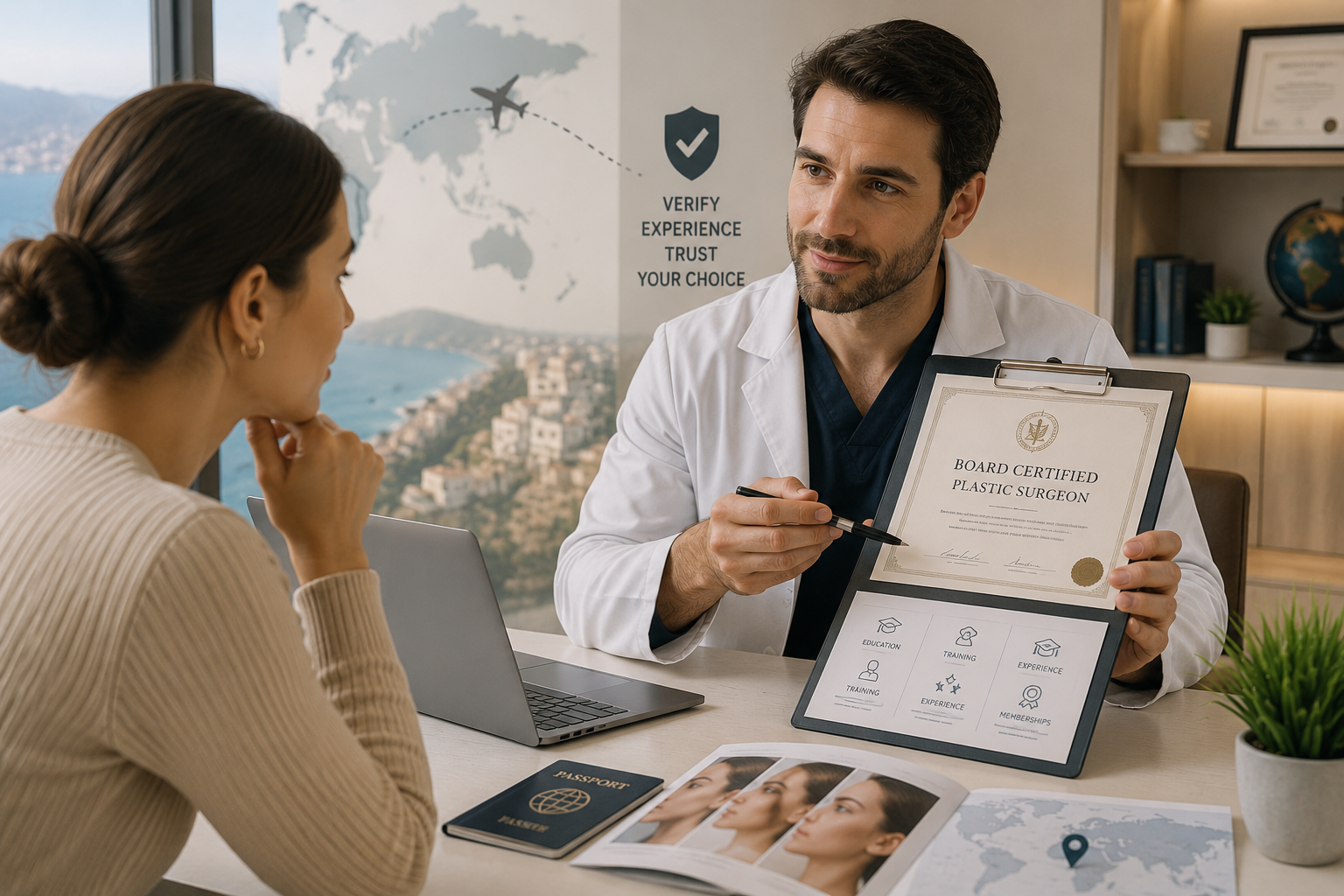
1. Verify Operating Surgeon Assignment (Guards Against: Ghost Surgeon)
Ask explicitly: "Will you be the surgeon performing my procedure, or will it be someone else?"
Demand a written confirmation. In jurisdictions requiring informed consent (Serbia since 2025, some Turkish clinics), the operative surgeon must be named in your consent paperwork. If a clinic cannot or will not confirm this in writing, disqualify them immediately.
2. Request Recent Procedure Volume (Guards Against: Low Skill, Outdated Technique)
Do not accept "I have been doing this for 25 years." You need: "I performed 180 rhinoplasties this year and 420 over the past three years."
Volume matters because complications force pattern recognition. A surgeon doing 10 procedures per year will not encounter the anatomical variations and edge cases that a 150/year surgeon sees quarterly. High-volume surgeons have seen and solved problems you might face.
3. Ask for Before/After Photos Matching Your Profile (Guards Against: Unrealistic Expectations, Cherry-Picked Results)
Request photos of patients who match your age, ethnicity, body type, and starting anatomy. A 45-year-old seeking breast augmentation should not be shown results on 25-year-olds. A patient with thick skin seeking rhinoplasty should see thick-skin results, not thin-skinned profiles.
Good surgeons will show a range—some perfect, some merely good, some that required revision. Surgeons showing only flawless results are either filtering out failures or exaggerating.
4. Ask for Complication Rate and Revision Rate (Guards Against: Undisclosed Failures)
Questions to ask:
"What is your revision rate?" (percentage of patients needing a second procedure to achieve desired results)
"What is your infection rate?" (percentage of patients with post-operative infections)
"What is your implant displacement or rupture rate?" (if relevant to your procedure)
"Have any patients required emergency intervention or hospitalization?"
A surgeon with zero complications is lying or has not done enough procedures. Realistic rates: revision rates typically range 3–12% depending on procedure; infection rates in cosmetic surgery average 1–3%.
5. Understand Post-Operative Access (Guards Against: Abandonment After You Leave)
This is the question that separates amateur operators from professionals. Ask:
"If something goes wrong after I return home—say, at week 3—what happens?"
Expected answer structure:
Direct access: You can contact the surgeon or clinic directly (not a call centre).
Response time: Same-day or next-day response is standard.
Remote assessment: The surgeon can evaluate photos/videos remotely.
Revision coverage: If a revision is needed, does the surgeon cover it or charge additional fees?
Local referral: If you cannot return, can the surgeon refer you to a qualified surgeon in your home country?
If the clinic cannot answer clearly, they are not set up for international patients.
6. Verify Board Certification Independently (Guards Against: Fraudulent Credentials)
Do not rely on the clinic website. Verify directly:
USA: American Board of Plastic Surgery (ABPS). Search the surgeon's name. Board certification or "board eligible" should appear.
Turkey: Turkish Medical Association website (Türk Tabipleri Birliği).
South Korea: KSPRS (Korean Society of Plastic and Reconstructive Surgeons).
Thailand: Thai Medical Council (สภาแพทย์) and Thai Society of Plastic & Aesthetic Surgeons (TSPAS).
Mexico: COFEPRIS license lookup and ABPS directory.
A surgeon who hesitates to let you verify independently has something to hide.
7. Confirm Facility Accreditation (Guards Against: Substandard Surgical Environment)
Ask: "Is this facility JCI-accredited?" or "What accreditation does this facility hold?"
JCI (Joint Commission International) is the gold standard for surgical facility accreditation globally.
If not JCI, confirm:
Local regulatory approval (COFEPRIS in Mexico, etc)
Infection control protocols (ISO 13485 for medical devices)
Surgical staff qualifications (who is scrubbing in? Are they trained?)
Emergency protocols (can they handle complications on-site or do they transfer?)
8. Ask About Surgical Safety Checklist Compliance (Guards Against: Preventable Errors)
Ask: "Do you use the WHO Surgical Safety Checklist?"
The WHO checklist (introduced 2008) includes briefing before surgery, confirming patient identity, marking surgical site, timeout before incision, and debrief after surgery. It sounds basic. It is not. Studies show it reduces surgical mortality by 47% in some populations.
Serious surgeons will say yes immediately. If they look confused, that is a red flag.
Final Wisdom on Vetting:
"An ethical surgeon welcomes questions because they have nothing to hide. An unethical surgeon discourages them because they do." Synthesised from ASPS patient education and Aesthetic Serbia's evidence-based framework.
What is a "Revision Policy" and Why You Need One
A revision policy is the framework through which a clinic addresses outcomes that do not meet the agreed surgical plan. Not every outcome that a patient is "unhappy" with qualifies as a revision—it is important to distinguish between corrective care and elective changes.
Key distinctions to clarify with your clinic:
Corrective Revision: This covers complications or technical issues (e.g., an infection, capsular contracture, or unexpected asymmetry) that occurred despite following post-op instructions. Reputable clinics often have policies to address these at a reduced cost or at no additional cost within a specific window (e.g., the first 6–12 months).
Elective/Secondary Surgery: If you decide six months later that you want a different look (e.g., "I want my nose slightly smaller" or "I want my breasts a size larger"), this is considered a new procedure, not a revision. This will generally be subject to standard surgical and facility fees.
Before you book, ask these three questions:
What is your revision policy for clinical complications? (Look for clear timelines, like a 12-month window for corrective care).
Does the policy cover facility/anesthesia fees, or only the surgeon’s time? (Many "free" revisions still require you to pay for the hospital and anesthesia).
If I cannot travel back, is there a local referral network? (A professional clinic should be able to assist in finding a local surgeon to evaluate you if an emergency arises).
The Le Medica Safety Guarantee: Your Advocate Abroad
Plastic surgery abroad is a complex logistical and medical undertaking. The difference between a successful transformation and an unmanaged complication often comes down to who is coordinating your care. At Le Medica, we serve as your independent advocate, not just a booking agent.
Our safety commitment includes:
Surgeon Verification: We mandate proof of current board certification and independent credentials verification before any case is finalized.
Ghost Surgeon Prevention: We require signed operative agreements that guarantee the named surgeon will perform your procedure—no deputies, no residents.
Direct Continuity: We maintain personal relationships with our partner clinics. If an issue arises, you have a direct line to our concierge team to bridge the communication gap between you and your surgeon.
Safety Protocol Audit: We confirm that our partner facilities adhere to WHO surgical safety checklists and maintain verified sterilization and emergency standards.
You are the final decision-maker in your surgical journey, but you should never have to navigate the medical landscape alone.
Accreditation Standards That Actually Matter: JCI, ISAPS, and Country Boards
Medical tourists often see acronyms (JCI, ISAPS, ABPS, KSPRS) without understanding what they mean operationally. Here is clarity:
JCI (Joint Commission International)
What It Is: Third-party accreditation of hospitals and surgical facilities worldwide.
What It Covers: Infection control, staff credentials, emergency protocols, surgical safety, patient rights, medical records standards.
How It Works: JCI sends surveyors on-site for a multi-day audit every 3 years. Hospitals must meet ~1,300 standards. Failure results in loss of accreditation.
Practical Meaning for You: If your facility is JCI-accredited, infection rates have been audited, staff qualifications verified, and emergency protocols inspected. You can look up JCI status independently at jcrinc.org.
Countries with JCI Presence:
Thailand: 20+ accredited hospitals
Turkey: 38+ accredited hospitals
Mexico: Growing (major cities have accredited centers)
South Korea: Limited JCI adoption; relies instead on national standards
ISAPS (International Society of Aesthetic Plastic Surgery)
What It Is: Professional organization for board-certified plastic surgeons globally.
Membership Requirements: Surgeons must be board-certified in their home country, peer-reviewed, and maintain ethical standards.
What It Provides: The "Find a Surgeon" directory (online searchable). If your surgeon is ISAPS-listed, you can verify credentials directly.
Practical Meaning for You: ISAPS membership is selective and implies serious credentials. Not all good surgeons are ISAPS members (it is not mandatory), but membership is a confidence signal.
How to Use It: Search the ISAPS.org surgeon directory. Filter by country and procedure.
Practical Meaning: Board certification through your surgeon's national board is the baseline. It is not optional.
Safety Risks of Cosmetic Surgery Abroad (And How to Reduce Them)
Risk 1: Venous Thromboembolism (VTE) / Deep Vein Thrombosis (DVT) from Long-Haul Flights
The Science: Prolonged immobility during air travel increases the risk of blood clots in the legs (DVT) and lungs (PE). The risk is higher post-surgery due to inflammation and hypercoagulability.
Timing Guidance (Source: ASPS):
Flights under 4 hours: Safe after 1–2 weeks post-op
Flights 4–8 hours: Wait 3–4 weeks post-op
Flights over 8 hours (long-haul): Wait 4–6 weeks post-op
Implication: Thailand requires 4–6 weeks away. South Korea requires 3–4 weeks. Mexico requires 5–7 days only (short flights reduce VTE risk).
How to Reduce Risk:
Compression stockings during flights
Aisle seat (easier to stand and walk)
Calf exercises every 30 minutes during flight
Hydration (avoid alcohol)
Consider prophylactic anticoagulation if high-risk (discuss with surgeon)
Risk 2: Post-Operative Access and Complication Management
The Problem: When you leave your surgeon's care (10 days to 3 weeks post-op), you are entering a vulnerable window. Seromas (fluid collections), infections, and wound breakdown can develop weeks later. If your surgeon is overseas, remote assessment and intervention become critical.
What Can Go Wrong:
Infection develops at week 3 (after you are home)
You contact your surgeon via email; a 48-hour delay ensues
Infection worsens; you visit a local ER doctor unfamiliar with your case
Local doctor wants to drain the seroma without coordinating with your surgeon
Complications cascade
How to Reduce Risk:
Pre-establish a communication protocol with your surgeon (direct phone number, not a call centre)
Agree on how remote photo assessments will work
Identify a local surgeon in your home country as a backup (ask your international surgeon for a referral)
Get written post-operative protocols (when to call, what constitutes an emergency)
At Le Medica, we coordinate this continuity for you—you have a single point of contact managing communication between you and your surgeon.
Risk 3: Credential Verification in Markets with Lower Regulatory Transparency
The Problem: In some countries, a surgeon's credentials are not easily verified online. You cannot simply search a name and see board status, licensing, or complication rates.
Solution: This is where a medical tourism facilitator adds irreplaceable value. We have on-the-ground relationships with board-certified surgeons, can inspect facilities, verify licenses through official channels, and conduct due diligence you cannot do remotely.
Destination Comparison: Side-by-Side Overview
PROCEDURE THAILAND KOREA TURKEY MEXICO
Rhinoplasty $2.2-3.8k $5-8.5k $1.8-3.2k $2.5-4.5k
Breast Aug $2.8-4.2k $4.5-7k $2.5-4k $3-5k
Liposuction $1.5-2.8k $3.5-6k $1.2-2.5k $1.8-3.2k
Facelift $4.0-6.5k $7.0-12k $3.5-6.0k $4.0-7.0k
Tummy Tuck $3.0-5.0k $6.0-9k $2.5-4.2k $3.0-5.5k
What a Medical Tourism Facilitator Does (And Why It Reduces Risk)
At Le Medica, facilitator services map directly to the specific risks named above. Here is the operational breakdown:
Pre-Surgery Phase:
Surgeon Verification — We independently verify board certification, licensing, procedure volume, and complication rates. You get a dossier, not a website review.
Facility Inspection — Our team inspects surgical facilities. We confirm infection control, staff qualifications, emergency protocols, and JCI (or equivalent) status.
Intake Process — We gather your medical history, current medications, allergies, and expectations. We translate this into clear briefing materials for your surgeon.
Coordination — We arrange your pre-operative consultations (often via video for international patients), answer questions, clarify pricing in writing, and book your trip.
Surgery & Immediate Post-Op:
On-Site Presence — Depending on your location, a Le Medica representative may be available (especially in Mexico). We serve as your advocate if communication issues arise.
Daily Check-Ins — We confirm your pain level, swelling, any unexpected symptoms, and report to your surgeon.
Post-Operative Phase (Most Critical):
Remote Monitoring — You send photos/videos; we review with your surgeon and relay guidance.
Symptom Interpretation — We help you distinguish normal swelling/bruising from warning signs (fever, excessive drainage, severe pain).
Local Surgeon Coordination — If you need a local follow-up (suture removal, drain management), we coordinate with a surgeon in your home country and brief them on your case.
Complication Management — If an infection or other issue develops, we facilitate rapid communication, decide if you need to return or if local management is safe, and manage any revision costs.
Why This Matters:
The facilitator role is invisible when everything goes well. But in the 5–10% of cases where complications develop, the difference between having a coordinated, informed advocate and trying to navigate alone is enormous. The facilitator has already vetted your surgeon, inspected your facility, and established protocols. When a crisis emerges, there is no scrambling—there is a plan.
How We Evaluated These Destinations
This article synthesizes data from authoritative sources. Here is our methodology for transparency:
Primary Data Sources:
ISAPS Global Statistics 2024: Procedure volume, price ranges, surgeon data
American Society of Plastic Surgeons (ASPS): Safety protocols, complication rates, flight timing guidance
Joint Commission International (JCI) accreditation databases: Hospital and facility status
National medical boards: ABPS, KSPRS, TEAS, TSPAS verification directories
CDC and WHO standards: Infection control, surgical safety protocols
Published peer-reviewed studies: Complication rates by procedure and destination
Data Limitations:
South Korean clinic-level pricing is not standardized; quotes vary widely.
Mexico complication data is less publicly available than US or JCI-accredited centers (this is improving).
Long-term follow-up data (5+ years) is sparse for some destinations.
Criteria We Used to Rank Destinations:
Surgical skill level (procedure volume, training standards, outcomes)
Facility accreditation (JCI presence, national regulatory oversight)
Cost advantage (% savings vs. US baseline)
Safety transparency (published complication rates, regulatory access)
Patient accessibility (language, travel time, facilitator infrastructure)
Post-operative continuity (access to surgeon after departure)
Frequently Asked Questions
Q: Is plastic surgery abroad safe?
Yes, when you choose a board-certified surgeon, an accredited facility, and a destination with strong medical standards. The critical factor is not the country—it is the surgeon, the vetting process, and post-operative continuity. Proper research and independent verification are essential. Ask the seven vetting questions above; if a surgeon hesitates or refuses to answer, that is a safety signal.
Q: Which country is cheapest for plastic surgery?
India and Turkey often advertise the lowest prices globally (50–85% savings). However, the lowest price is not always the safest choice. India's travel distance (20+ hours) carries high VTE/DVT risk. Turkey's high-volume model can lead to ghost surgeon scenarios. Mexico and Thailand offer a better balance of affordability (60–75% savings) with clearer vetting pathways.
Q: How do I verify a surgeon's credentials from overseas?
Use national board registries:
USA: ABPS
South Korea: KSPRS or Korean Medical Board
Turkey: TEAS or Turkish Medical Association
Thailand: TSPAS or Thai Medical Council
Mexico: COFEPRIS license lookup + ABPS directory
If a surgeon resists independent verification, disqualify them immediately.
Q: What does JCI accreditation mean?
Joint Commission International accreditation means the hospital has passed a rigorous audit covering infection control, staff qualifications, emergency protocols, surgical safety checklists, and patient rights. JCI status is re-evaluated every 3 years. You can verify JCI status at jcrinc.org. JCI presence is strong in Thailand and Turkey, emerging in Mexico, and minimal in South Korea (which relies on national standards instead).
Q: How long should I stay after surgery before flying home?
Depends on flight duration:
Flights under 4 hours: 1–2 weeks post-op (minimum)
Flights 4–8 hours: 3–4 weeks post-op
Flights over 8 hours (long-haul): 4–6 weeks post-op (Source: ASPS)
This timing is based on VTE/DVT risk from immobility after surgery. Discuss your specific recovery timeline with your surgeon.
Q: What does a medical tourism facilitator cost?
At Le Medica, facilitator services are typically embedded in the overall surgical package or charged as a consultation fee (ranging from $200–$800 depending on service scope). The cost is offset by the risk reduction, credential verification, and post-operative continuity. Many patients find that the facilitator role prevents costly complications that would exceed the facilitator fee many times over.
Q: Can I get a pre-operative consultation before traveling?
Absolutely. Video consultations with surgeons are now standard. At Le Medica, we arrange video consults with board-certified surgeons in your chosen destination. During the consult, you discuss your goals, the surgeon assesses your anatomy, and you both determine if you are a good candidate. This happens before you book any flights, so there is no pressure and no surprises.
Final Words
Plastic surgery abroad is not inherently riskier than surgery at home. What makes it risky is skipping due diligence because you are distracted by savings. The savings are real: a rhinoplasty that costs $12,000 in New York can cost $3,000 in Mexico with a board-certified surgeon in a JCI-accredited facility. But the savings only matter if the outcome is right.
Ask the seven vetting questions. Verify credentials independently. Get everything in writing. Confirm post-operative continuity. Then make your decision with confidence.
Ready to Begin Your Surgical Journey?
Planning plastic surgery abroad is a significant decision—you are investing in your appearance, your health, and your confidence. You should not have to navigate the complexities of international medical systems alone.
At Le Medica, we specialize in bridge-building. We don't just help you find a clinic; we act as your independent advocate to ensure your safety, transparency, and peace of mind.
Customized Recommendations: We match your specific aesthetic goals with our pre-vetted, board-certified surgeons in Turkey, South Korea, Thailand, and Mexico.
Safety-First Coordination: From verifying operative agreements to auditing facility safety protocols, we handle the logistics so you can focus on your recovery.
Professional Continuity: We ensure you have a clear path for follow-up care, whether you are at home or returning to your surgical team.
Take the next step with clarity. Book a Free Case Review with a Le Medica Advisor to discuss your goals, review surgeon profiles, and get an honest assessment of your options. Your transformation should be life-changing—we’re here to make sure it’s safe.
Browse our board-certified surgeons by procedure → /find-a-surgeo
Book a free consultation with a medical tourism advisor → /book-consultation
Last Updated: June 2026
Data sources: ISAPS Global Statistics 2024, ASPS, Joint Commission International, published peer-reviewed literature