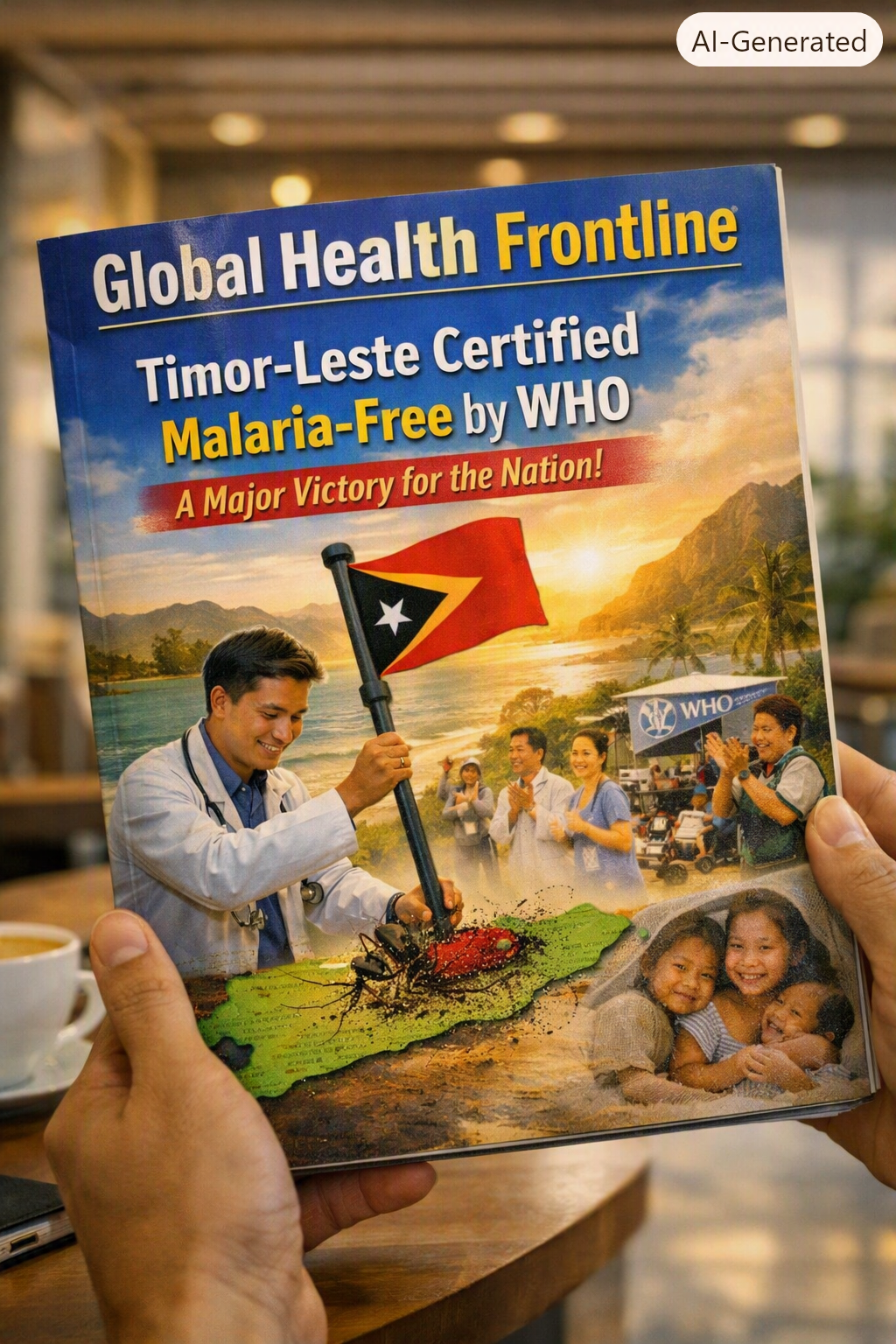
In a landmark moment for global public health, the World Health Organization has officially certified Timor-Leste as malaria-free — a stunning achievement for one of Southeast Asia's youngest and most resilient nations. This milestone not only marks the end of a decades-long battle against one of the world's deadliest parasitic diseases, but it also signals a powerful shift in how the region approaches preventive healthcare and wellness tourism. For international patients and health-conscious travelers keeping a close eye on Southeast Asia, this news carries real significance.
What Does WHO Malaria-Free Certification Actually Mean?
When the World Health Organization certifies a country as malaria-free, it means that the chain of local transmission has been interrupted for at least three consecutive years — and that the country has demonstrated a robust system to prevent re-establishment of the disease. This is not a participation trophy. It is a rigorous, evidence-based designation awarded only after independent verification of national surveillance data, entomological studies, and healthcare system capacity.
As of July 24, 2025, Timor-Leste became the 43rd country or territory in the world to receive this certification, according to the official WHO announcement. This places it alongside nations like Sri Lanka, Maldives, and Kyrgyzstan — countries that have transformed their public health landscapes through sustained political commitment, community engagement, and international cooperation.
Why This Matters Now — and Why the Timing Is Significant
Timor-Leste certified malaria-free by WHO is not just a Southeast Asian story — it is a global wellness story. Malaria has historically been one of the most significant barriers to healthcare access, economic development, and international patient mobility in tropical regions. When a country achieves this status, it frees up substantial healthcare infrastructure — hospitals, clinics, trained personnel, and national budgets — to redirect toward broader health services, chronic disease management, and wellness programs.
For medical travelers in the region, this development reshapes the risk calculus. Patients who once needed prophylactic medications before visiting or transiting through Timor-Leste may soon see updated travel health guidance from their home governments. This can lower the cost and complexity of preparing for medical journeys that route through or near the region.
The timing also matters because Southeast Asia is experiencing a broader health renaissance. Countries like Malaysia, Thailand, South Korea, and Taiwan — all core destinations for Le Medica's patient network — are simultaneously elevating their medical tourism offerings. Timor-Leste's certification adds credibility to the entire region's public health narrative, reinforcing the message that Southeast Asia is not just catching up with global health standards — in many ways, it is leading.
The Long Road to Elimination: Timor-Leste's Public Health Journey
Timor-Leste gained independence only in 2002, emerging from a period of conflict with a fragile healthcare infrastructure and limited resources. That a country with such a challenging starting point could achieve WHO malaria-free certification within roughly two decades is genuinely extraordinary. The achievement reflects sustained investment in community health workers, indoor residual spraying programs, widespread distribution of insecticide-treated bed nets, and rapid diagnostic testing — all coordinated through partnerships with the WHO, the Global Fund, and other international organizations.
At its peak burden, malaria accounted for a significant proportion of illness and mortality across Timor-Leste's 1.3 million population. Reducing that to zero local transmission required not just clinical interventions, but deep behavioral change, cross-border cooperation with Indonesia, and real-time disease surveillance technology. It is the kind of systemic, whole-of-society effort that international health experts point to as the model for other low-income nations striving toward elimination goals.
What This Means for Medical Travelers and International Patients
If you are planning a medical journey to Southeast Asia — whether for oncology care in Malaysia, orthopedic treatment in Thailand, stem cell therapy in South Korea, or cardiac procedures in Taiwan — the regional public health environment directly affects your experience and risk assessment. A malaria-free Timor-Leste contributes to a cleaner regional health profile, which matters especially for immunocompromised patients who must be cautious about infectious disease exposure during travel.
Practically speaking, here is what international patients should consider:
Updated travel advisories: Check your home country's travel health guidance, as prophylaxis recommendations for the region may be updated in light of this certification.
Insurance implications: Some travel health insurers adjust premiums and coverage terms based on WHO disease classifications. A malaria-free designation can work in your favor.
Regional itinerary planning: Patients combining medical treatment with recuperative travel in Southeast Asia now have an expanded menu of lower-risk destinations to consider.
Specialist consultations: Pre-travel health consultations — often priced between USD $50 and USD $150 depending on the country — remain advisable but may become less complex for travelers to this part of the region.
Le Medica's Perspective: Regional Health Progress Elevates Every Patient Journey
At Le Medica, we work with international patients every day who are navigating unfamiliar healthcare systems, weighing clinical quality against cost, and managing real anxieties about traveling abroad for treatment. Public health milestones like Timor-Leste's malaria-free certification matter to us and to our patients because they reflect the broader momentum of healthcare improvement across Asia — the same momentum driving excellence at the hospitals and clinics we partner with in China, Malaysia, Thailand, South Korea, and Taiwan.
When a region demonstrates that it can eliminate a disease as complex and persistent as malaria through coordinated effort and evidence-based strategy, it signals exactly the kind of institutional capacity and commitment to outcomes that international patients need to trust. These are not isolated achievements — they are indicators of healthcare systems that take results seriously.
Frequently Asked Questions
Does Timor-Leste's malaria-free status mean I no longer need malaria prevention measures when traveling to Southeast Asia?
Not necessarily. While Timor-Leste itself no longer has local malaria transmission, other countries in the region — including parts of Indonesia, Myanmar, and Papua New Guinea — still carry transmission risk. Always consult a travel health physician or tropical medicine specialist before any trip to the region, and follow updated guidance from your national health authority. Pre-travel consultations typically cost between USD $50 and USD $200 depending on your location and provider.
How does a WHO malaria-free certification affect healthcare quality in a country?
Certification reflects — and reinforces — strong public health infrastructure. Countries that achieve malaria-free status typically have well-functioning disease surveillance systems, trained community health workers, and effective government-health sector coordination. These are the same foundational capabilities that support broader healthcare quality, including the management of chronic diseases, maternal health, and emergency care.
Can I visit Timor-Leste as part of a medical tourism itinerary in Southeast Asia?
Timor-Leste is not currently a major medical tourism destination, but it is increasingly accessible for recuperative travel and wellness tourism. For primary medical treatment, Le Medica's partner hospitals in Malaysia, Thailand, South Korea, Taiwan, and China offer world-class facilities with internationally accredited standards, English-speaking care coordinators, and transparent pricing — making them the preferred choice for international patients.
What diseases should international patients still be aware of when traveling to Southeast Asia for medical treatment?
Even with malaria eliminated from certain countries in the region, travelers should remain aware of dengue fever, typhoid, hepatitis A and B, Japanese encephalitis (in rural areas), and COVID-19 variants. Your Le Medica care coordinator can connect you with pre-travel health consultants who specialize in preparing patients for international medical journeys, including vaccination schedules and destination-specific health briefings.
Plan Your Medical Journey With Confidence
Regional public health progress — like Timor-Leste's historic WHO malaria-free certification — is one of many reasons that Southeast and East Asia are increasingly attractive destinations for international patients seeking high-quality, affordable medical care. At Le Medica, we are here to help you make sense of it all: comparing hospitals, coordinating care, arranging logistics, and walking with you every step of the journey. Reach out to our team today to begin planning your treatment journey with confidence, clarity, and a team that genuinely cares about your outcome.