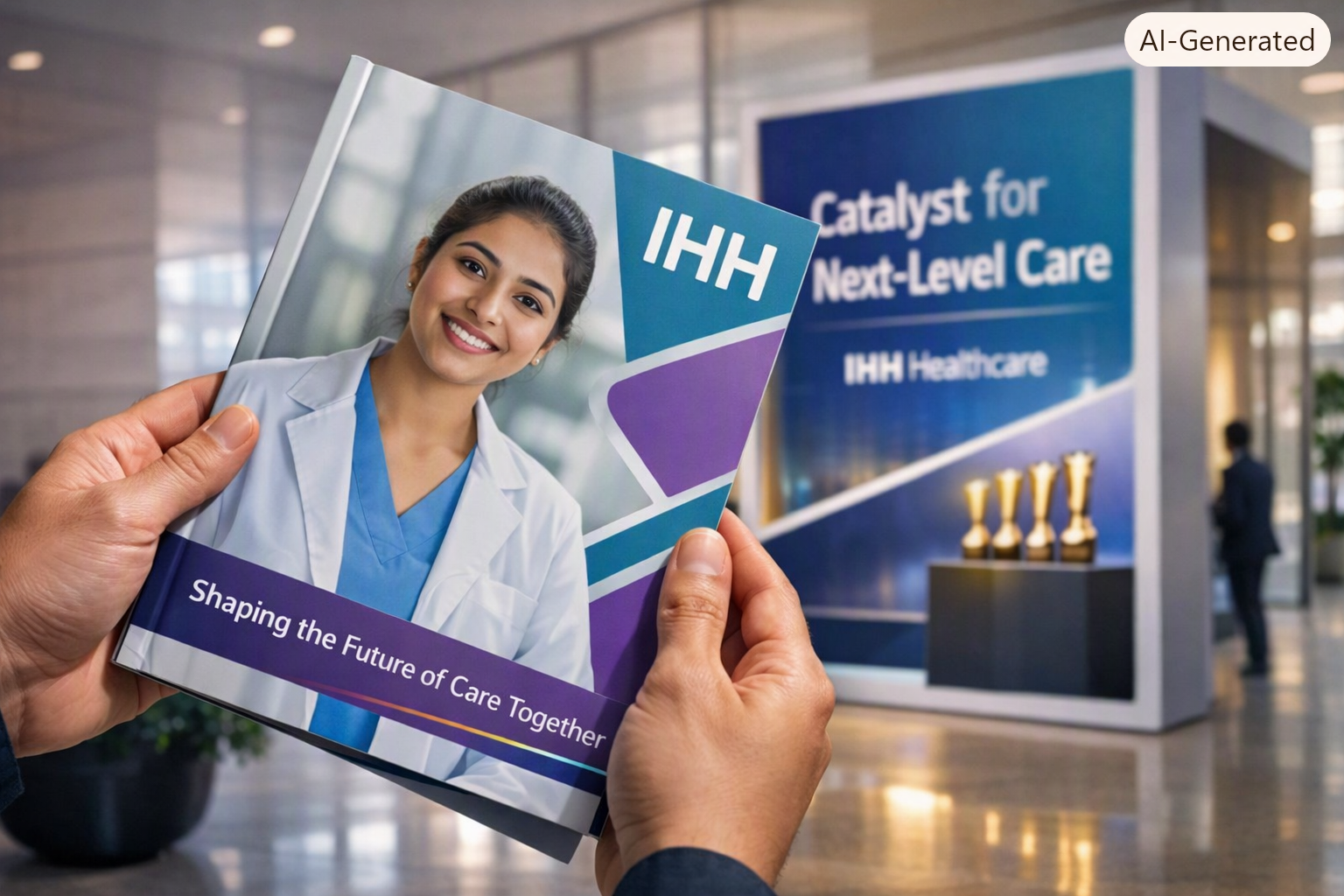
Asia's healthcare landscape is undergoing a quiet revolution — and one of the region's most powerful hospital groups just turned up the volume. IHH Healthcare, the multinational giant behind Gleneagles, Pantai, and Mount Elizabeth hospitals, is pushing its innovation engine into overdrive with a bold northward expansion that could reshape how cutting-edge medical technologies reach patients across Asia.
What Is IHH Catalyst — and Why Does It Matter?
Launched as IHH Healthcare's flagship innovation accelerator, IHH Catalyst was designed with a single purpose: to close the gap between promising healthcare technologies and real-world clinical adoption. Unlike traditional hospital R&D programs that can take years to move from lab bench to patient bedside, IHH Catalyst operates as a fast-track bridge — connecting startups, medtech companies, and digital health innovators directly with IHH's network of world-class hospitals and clinical specialists.
The program has already demonstrated measurable impact across IHH's existing markets in Southeast Asia. Now, IHH Healthcare expands IHH Catalyst to North Asia — a move that signals the group's ambition to become the definitive hub for healthcare innovation across the entire Asia-Pacific region. This expansion targets markets including China, Taiwan, and South Korea, all of which rank among the world's most advanced healthcare ecosystems.
Why North Asia? The Strategic Logic Behind the Expansion
North Asia is not a random choice. China alone is investing hundreds of billions of dollars into healthcare infrastructure modernisation, with the central government committing to major reforms in medical technology adoption and hospital digitisation. South Korea has long been recognised as a global leader in cosmetic surgery, oncology, and robotic-assisted procedures. Taiwan boasts one of the most respected national health systems in the world, with particular strengths in precision medicine and organ transplantation.
By planting IHH Catalyst firmly in North Asia, IHH Healthcare gains access to a deep pool of biotech talent, advanced research institutions, and a patient population hungry for next-generation treatments. The expansion is expected to facilitate partnerships with local startups and established medtech companies alike, accelerating the clinical validation process and ultimately making innovative treatments available to patients faster than ever before.
According to reporting covered by The Manila Times, IHH Healthcare's Catalyst program is being positioned not just as an internal innovation tool, but as a broader ecosystem play — one that invites external partners to co-develop and co-validate solutions within the group's clinical environment.
What Clinical Areas Are in Focus?
While IHH Catalyst casts a wide net, several clinical domains are emerging as priority areas for the North Asia expansion:
Oncology and precision medicine — including AI-driven diagnostics, liquid biopsy technologies, and targeted therapy platforms
Digital health and remote monitoring — wearable devices, telehealth integration, and predictive analytics tools
Surgical robotics — expanding access to minimally invasive robotic procedures across IHH's North Asian partner hospitals
Genomics and personalised treatment — leveraging genomic data to tailor treatment protocols for individual patients
Mental health technology — digital therapeutics and AI-assisted psychological support tools
These focus areas are particularly relevant to international patients who travel to Asia specifically for access to treatments not yet available — or prohibitively expensive — in their home countries. For example, robotic-assisted cancer surgeries available at IHH-affiliated hospitals in Malaysia and Singapore can cost between USD $8,000 and USD $25,000 — a fraction of equivalent procedures in the United States or Western Europe, where costs can exceed USD $80,000.
Why This Matters Now
The timing of IHH Healthcare's northward push is no accident. Post-pandemic, international patient mobility has rebounded strongly, with Asia Pacific medical tourism projected to grow at a compound annual rate of over 12% through 2030. Patients from the Middle East, South Asia, Southeast Asia, and increasingly from Western countries are actively seeking high-quality, affordable care at hospitals that can offer the latest in clinical innovation — not yesterday's standard of care.
The IHH Catalyst expansion to North Asia also signals a deeper philosophical shift in how large hospital groups are thinking about their role. Rather than simply delivering existing treatments, IHH is positioning itself as an active participant in creating the next generation of medical solutions. For international patients, this means that choosing an IHH-affiliated hospital increasingly means choosing access to therapies and technologies that may not yet be widely available elsewhere.
For platforms like Le Medica, this development is directly relevant to how we guide patients through their care decisions. As IHH accelerates innovation adoption across its network — spanning Malaysia, Singapore, India, Turkey, and now deepening ties in North Asia — international patients gain more options, better outcomes data, and greater transparency in what to expect from treatment abroad.
What This Means for International Patients Considering Asia
If you are exploring treatment options in Asia, the expansion of IHH Catalyst adds a meaningful new dimension to your decision-making. Here is what it means in practical terms:
Hospitals within the IHH network are increasingly likely to offer access to clinical trials and emerging therapies
Technology-driven diagnostics may lead to more precise, personalised treatment recommendations
Faster adoption of surgical robotics and AI-assisted care means better outcomes and shorter recovery times
North Asian destinations — particularly South Korea and Taiwan — are becoming even more competitive for complex oncology and cardiology cases
Le Medica already works with patients seeking care at leading hospitals across China, Malaysia, Thailand, South Korea, and Taiwan. The IHH Catalyst expansion strengthens the case for considering IHH-affiliated facilities as part of a comprehensive treatment comparison — especially for patients dealing with cancer, cardiovascular disease, or neurological conditions where access to the latest technology can make a life-changing difference.
Frequently Asked Questions
What hospitals are part of the IHH Healthcare network in Asia?
IHH Healthcare operates some of Asia's most recognised hospital brands, including Gleneagles Hospitals (Malaysia, Singapore, Hong Kong, India), Pantai Hospitals (Malaysia), Mount Elizabeth and Parkway East (Singapore), and Acibadem (Turkey). Through its North Asia expansion, IHH is deepening clinical and research ties with partner institutions in China, South Korea, and Taiwan.
How does IHH Catalyst affect patient care directly?
IHH Catalyst accelerates the process by which new medical technologies, devices, and digital health tools are tested and adopted within IHH hospitals. For patients, this means faster access to innovative treatments — from AI-assisted diagnostics to robotic surgeries — within the safety and oversight of a world-class hospital environment, rather than waiting years for these tools to reach mainstream clinical practice.
Can international patients access treatments developed through IHH Catalyst?
Yes. Once technologies are validated and clinically adopted through the IHH Catalyst process, they become available to all patients at participating IHH hospitals — including international patients travelling for medical care. Le Medica can help you identify which IHH-affiliated facilities offer specific innovative treatments and coordinate your consultation and travel logistics accordingly.
Is healthcare innovation in Asia affordable compared to Western countries?
Generally, yes — often significantly so. Patients seeking advanced oncology treatments, robotic surgery, or precision diagnostics at IHH-affiliated hospitals in Malaysia or Singapore typically pay 30% to 70% less than they would for comparable care in the United States, United Kingdom, or Australia, even when accounting for travel and accommodation costs. Le Medica provides transparent cost comparisons to help patients make fully informed financial decisions.
Plan Your Care Journey with Le Medica
The expansion of IHH Catalyst into North Asia is one of the most exciting developments in Asian healthcare this year — and it opens doors that simply did not exist for international patients even a few years ago. Whether you are researching oncology treatment in South Korea, cardiac care in Malaysia, or precision medicine options in Taiwan, Le Medica is here to help you navigate every step with confidence, clarity, and personalised support. Contact our team today to start your care comparison and find the right hospital for your needs.