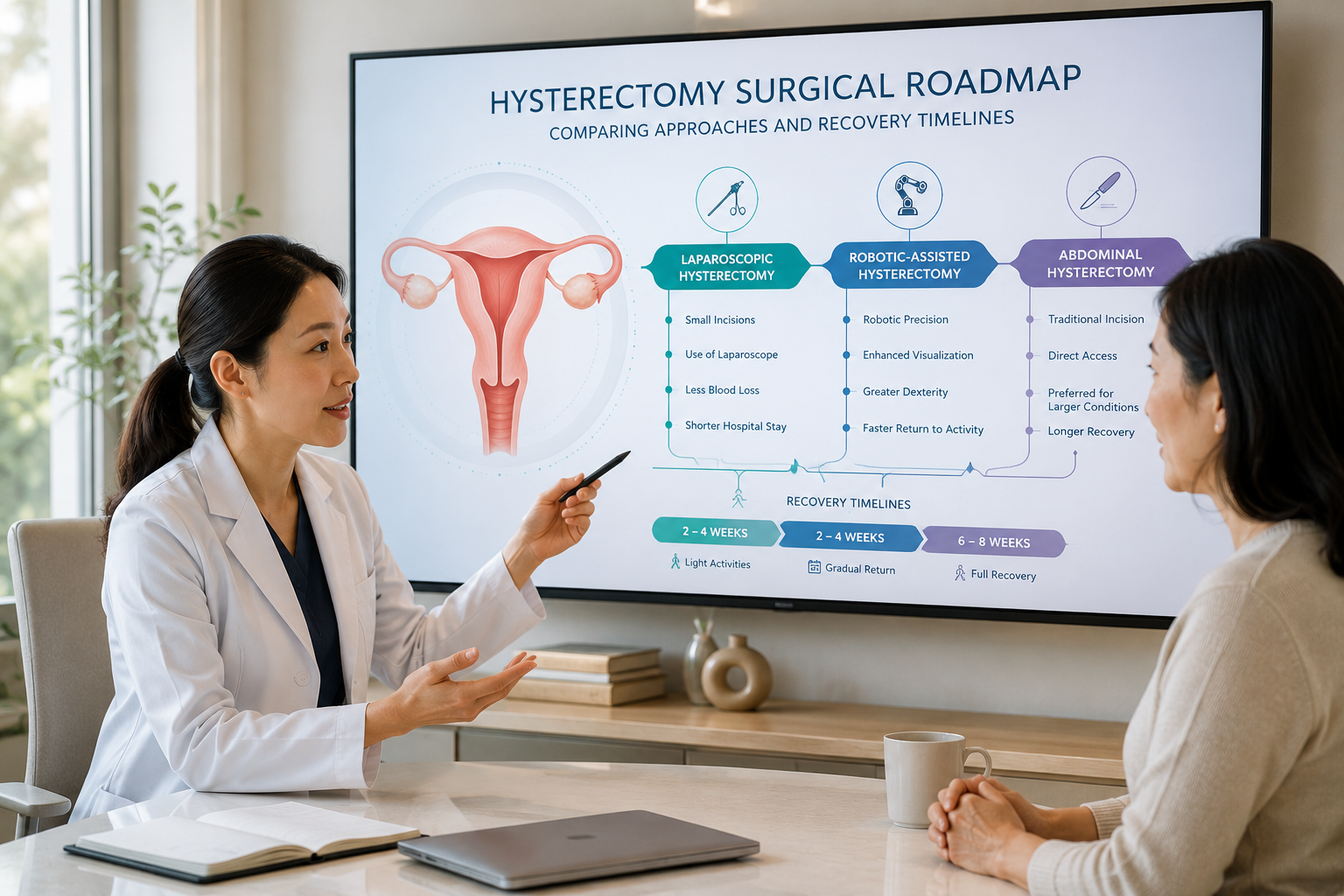
``` Considering a hysterectomy can be overwhelming, especially with the conflicting information online about recovery times and surgical methods. Here is the honest truth about what you need to know to make an informed decision for your health. Whether you are navigating fibroids, endometriosis, uterine prolapse, or gynecologic cancer, understanding your hysterectomy recovery and surgical options before you step into a surgeon's office can meaningfully change your outcome and your experience.
At Le Medica, we connect international patients with leading gynecologic surgeons across China, Malaysia, Thailand, South Korea, and Taiwan, specialists who perform hundreds of these procedures each year. This guide brings together clinical evidence, patient experience data, and our network's real-world expertise to give you a clear, honest roadmap.
See our complete guide to Fibroid Removal if you are still exploring uterine-sparing options before committing to a hysterectomy.
---
Surgical Approaches at a Glance: Minimally Invasive vs. Open Hysterectomy
The single biggest factor shaping your recovery is how the surgery is performed, not just what is removed. The information below summarises the four main surgical routes your specialist may recommend.
Laparoscopic (MIS):
Incision: 3–4 small cuts (0.5–1 cm).
Hospital Stay: 1–2 days.
Full Recovery: 3–6 weeks.
Best For: Fibroids, endometriosis, and smaller uterine size.
Robotic-Assisted (da Vinci):
Incision: 4–5 small ports.
Hospital Stay: 1–2 days.
Full Recovery: 3–5 weeks.
Best For: Complex anatomy, obesity, or patients with prior surgeries.
Vaginal:
Incision: No external incision.
Hospital Stay: 1–2 days.
Full Recovery: 3–4 weeks.
Best For: Uterine prolapse and benign conditions.
Abdominal (Open):
Incision: 10–15 cm horizontal cut.
Hospital Stay: 3–5 days.
Full Recovery: 6–8 weeks.
Best For: Large fibroids, cancer staging, and extensive internal adhesions.
Choosing the right surgical route is a complex decision that depends on your specific anatomy, pathology, and health history. At Le Medica, we don't just provide surgery; we coordinate comprehensive pre-surgical imaging and teleconsultations with your specialist to ensure the selected approach, whether laparoscopic or open, is optimized for your specific safety profile and recovery goals.
Who Is Best Suited for a Minimally Invasive Approach?
Laparoscopic or robotic hysterectomy is ideal for women with a uterus smaller than approximately 12-week pregnancy size, those managing benign conditions like fibroids or endometriosis without heavy scarring, patients who prioritise a faster return to daily life, and women in generally good cardiovascular health. According to data referenced by My Medicine Advisor, minimally invasive patients typically resume light activities within two weeks.
Who Should Consider Open Abdominal Surgery?
Open hysterectomy remains the gold standard when the uterus is significantly enlarged, when cancer staging requires thorough exploration of surrounding lymph nodes and tissue, when dense adhesions from prior surgeries complicate laparoscopic access, or when emergency bleeding requires rapid control. Several hospitals in Le Medica's network, including tertiary cancer centres in Shanghai and Seoul, are equipped for both approaches and will recommend the safest route based on your imaging and pathology results.
---
Which Surgery Is Best for Uterus Removal? A Decision Framework
The "best" surgery is personal. Here are the three questions your surgeon should answer with you before you decide:
What is being removed? A total hysterectomy removes the uterus and cervix. A subtotal (partial) hysterectomy removes only the uterus. A radical hysterectomy, typically for cancer, removes the uterus, cervix, upper vagina, and nearby lymph nodes.
Why is it being done? Benign indications allow for more flexibility in approach; malignancy often narrows the choice to open or robotic with lymph node dissection.
What are your recovery priorities? A woman who cannot take six weeks off work has different constraints than one who can rest at home. Both are valid, and your surgical team should plan around them.
At Le Medica, our care coordinators arrange pre-surgical teleconsultations with accredited specialists so you can have exactly this conversation before you travel or commit. Learn how our process works here.
---
Week-by-Week Recovery: Laparoscopic vs. Open Hysterectomy
Understanding hysterectomy recovery and surgical options side by side helps you plan your life around surgery, not the other way around. The following timeline draws on guidance from the South Lake Medical Centre Healing Guide.
Laparoscopic / Vaginal / Robotic Recovery Timeline
Week 1: Focus on Rest. Discharge occurs within 24–48 hours. Fatigue is the dominant symptom. Light walking around the home is encouraged, but avoid repeated stair climbing. Manage pain with prescribed oral analgesics.
Week 2: Increasing Mobility. Most patients move around the house freely. Driving is still off-limits. Mild spotting or discharge is normal; monitor for any changes in colour or volume.
Week 3–4: Returning to Routine. Energy returns noticeably. Short walks outdoors are appropriate, and many desk-job professionals return to remote work. Lifting above 5 kg remains strictly restricted.
Week 5–6: Healing and Clearance. Pelvic floor function strengthens. Most physicians clear patients for driving, light exercise, and non-strenuous work. Sexual activity can typically resume at the 6-week follow-up if the vaginal cuff is fully healed.
Open (Abdominal) Recovery Timeline
Week 1–2: Hospital & Early Healing. Hospital stay of 3–5 days. Wound site requires daily care. Bowel function takes longer to normalize. Fatigue is significant; ensure you have assistance at home.
Week 3–4: Subsided Pain. Pain at the incision site gradually subsides. Short walks are encouraged. Constipation and bloating are common complaints during this phase.
Week 5–6: Emotional Adjustment. The incision scar begins to flatten. It is common to feel a peak in emotional sensitivity during this window; this is a normal and expected part of the healing process.
Week 7–8: Full Recovery Benchmark. This is the milestone for most open surgery patients. Strenuous activity and heavy lifting remain restricted until you receive final surgeon clearance, typically at the 8-week mark.
---
What Happens Inside the Body After a Hysterectomy?
Once the uterus is removed, the surrounding organs- bladder, bowel, and rectum- gradually shift slightly to occupy the space left behind. This is normal and rarely causes problems. If the ovaries are retained (ovarian-sparing hysterectomy), hormonal function continues largely unchanged and natural menopause occurs at its biologically scheduled time. If both ovaries are removed (bilateral oophorectomy), surgical menopause begins immediately; more on this in the FAQ below.
The vaginal cuff, the sutured top of the vaginal canal, takes approximately 6–12 weeks to fully heal. During this time, pelvic rest is critical. Internally, ligaments and fascial supports are redistributed, which is why pelvic floor physiotherapy is increasingly recommended as a standard part of post-hysterectomy care across hospitals in our network in Malaysia and Thailand.
---
Bleeding at 3 Weeks Post-Hysterectomy: Normal vs. Concerning
This is one of the most searched questions in patient communities, and for good reason. Light spotting or pinkish-brown discharge during the first 4–6 weeks is a normal part of healing as internal sutures dissolve. However, certain signs require immediate medical attention:
Normal: Light spotting, watery pinkish discharge, occasional mild cramping, gradual reduction in discharge over weeks 2–6.
Contact your surgeon immediately if you experience: Bright red bleeding heavier than a menstrual period, passing large clots, fever above 38°C, foul-smelling discharge, sudden sharp pelvic pain, or leg pain/swelling (possible DVT).
If you are recovering abroad and are not sure whether a symptom warrants concern, Le Medica's post-care coordinators remain accessible via WhatsApp and email throughout your recovery period. Reach us here.
---
Common Side Effects After Uterus Removal
Beyond bleeding, patients frequently report the following side effects in the weeks after surgery, many of which are addressed in community forums and confirm what clinical literature documents:
Fatigue: The most universal complaint, lasting 4–8 weeks depending on surgical route.
Bloating and gas: Especially after laparoscopic procedures where CO₂ gas is used to inflate the abdomen. Shoulder or neck pain from residual gas is common in the first 48 hours.
Bladder sensitivity: Frequent urination or mild burning for 2–3 weeks as the bladder re-adjusts.
Mood changes: Hormonal fluctuation, pain medication, and the emotional weight of major surgery combine to affect mood. This is not weakness — it is physiology.
Hot flushes (if ovaries removed): Surgical menopause symptoms can begin within days. Hormone replacement therapy (HRT) options should be discussed with your specialist prior to surgery.
---
Advice for Husbands and Partners After Hysterectomy
Recovery does not happen in isolation. Partners play a measurable role in how well and how quickly women heal, and yet, this dimension is almost entirely absent from clinical guides. Here is practical, honest guidance:
Understand the physical limits. Lifting, bending, and prolonged standing are restricted for weeks. Take over household tasks without being asked.
Respect pelvic rest. Sexual abstinence for 6 weeks is medical advice, not preference. Patience and physical closeness in non-sexual forms, holding hands, gentle massage, presence, matter enormously.
Watch for emotional shifts. If ovaries are removed, hormonal change is abrupt. Irritability, sadness, or anxiety are physiological symptoms, not relationship signals.
Attend the follow-up appointment. Your presence signals that this is a shared journey. Many surgeons welcome the opportunity to answer both partners' questions together.
Ask how she feels, not just how she looks. Internal healing is invisible. "You look fine" is not reassurance; "How are you feeling today?" is.
---
What Real Patients Say: Insights from Recovery Communities
Threads in forums like Reddit's r/Hysterectomy reveal consistent fatigue returning after a strong week two, the anxiety around first bowel movements after abdominal surgery, and the genuine grief some women feel, even those who wanted the surgery. These are valid, documented experiences. They do not mean something went wrong. They mean recovery is a full-body, full-mind process.
What patients consistently report as most helpful: having a single point of contact for questions, knowing in advance exactly what symptoms to watch for, and having realistic timelines set before surgery, not discovered through online searching afterwards. That preparation is a core part of what Le Medica builds into every patient journey. See how we support you from first consultation to full recovery.
---
Hysterectomy Costs Across Le Medica's Network
Cost is a legitimate part of the decision, particularly for international patients. Here is an approximate range based on our network hospitals as of 2024–2025:
China (Shanghai / Beijing): USD 4,000–9,000 for laparoscopic; USD 5,500–12,000 for robotic-assisted at JCI-accredited facilities.
Malaysia (Kuala Lumpur): USD 3,500–7,000, with strong English-language care and short waiting times.
Thailand (Bangkok): USD 4,000–8,500 including hospital accommodation packages.
South Korea (Seoul): USD 5,000–11,000 for laparoscopic; higher for complex robotic cases at advanced medical centres. Known for high-precision surgical outcomes
Note: These ranges vary based on the surgical approach (laparoscopic vs. robotic), the complexity of your specific pathology, and the length of hospital stay required. Our coordinators confirm the exact quote for your case during the pre-surgical planning phase.
These estimates are designed to help you plan. For a personalized quote or to see specific hospital packages, visit our Hysterectomy treatment program page.
Why Choose Le Medica?
We understand that choosing a surgical partner abroad is a decision rooted in trust. Our surgical pathways are built on a 3-step structural enhancement designed to provide you with clinical confidence and peace of mind:
Clinical Vetting & Imaging Review: Before you commit to travel, our specialists review your specific pathology and imaging results to confirm that the proposed surgical approach, whether laparoscopic or open, is the safest and most effective option for your anatomy.
Concierge-Managed Surgical Journey: We act as your single point of contact, coordinating every detail from pre-operative teleconsultations with your surgeon to post-operative follow-up appointments, ensuring you are never navigating the logistics alone.
Localized Aftercare & Support: Our support doesn't end when you leave the hospital. With 24/7 access to our local coordinators and established nursing check-ins, we ensure your recovery is monitored and any concerns are addressed immediately, just as they would be at home. Learn more about our full concierge process here.
Hysterectomy Recovery: Frequently Asked Questions
1. What are the 5 types of hysterectomy?
A hysterectomy is defined by how much of the reproductive system is removed:
Total Hysterectomy: Removal of the uterus and the cervix.
Partial (Supracervical) Hysterectomy: Removal of the uterus, while leaving the cervix intact.
Radical Hysterectomy: Removal of the uterus, cervix, both ovaries, and nearby tissue (often performed for certain cancers).
Hysterectomy with Salpingo-oophorectomy: Removal of the uterus, along with one or both ovaries and fallopian tubes.
Total Hysterectomy with Bilateral Salpingo-oophorectomy: Removal of the uterus, cervix, both ovaries, and both fallopian tubes.
2. Which surgery is "best" for uterus removal?
There is no single "best" surgery; the best approach is determined by your diagnosis, the size of your uterus, and your surgical history.
Laparoscopic/Robotic: Generally preferred for faster recovery, less pain, and smaller incisions.
Vaginal: Often the "gold standard" when possible, as it has no external incisions and the shortest recovery time.
Abdominal (Open): Usually reserved for cases with very large fibroids, severe endometriosis, or suspected cancer, where a wider view for the surgeon is necessary.
3. What is the recovery timeline for a laparoscopic hysterectomy?
Recovery is individual, but generally follows this path:
Weeks 1–2: Focus on rest, hydration, and short, gentle walks. You may feel significant fatigue. You are typically restricted from driving until you are off narcotic pain medication.
Weeks 2–4: You can likely return to light, sedentary work (like a desk job). You may feel "good" enough to do more, but caution is required to avoid internal strain.
Weeks 4–6: Energy levels return to normal. You can gradually resume more physical activity.
Week 6+: Many surgeons provide full clearance for exercise, heavy lifting (usually over 10 lbs), and sexual activity after a final internal check.
4. Is it normal to have bleeding at 3 weeks post-op?
Yes, it is common. As the internal stitches (cuff) begin to dissolve, you may notice light spotting or pink/brown discharge. This can last for several weeks.
When to call the doctor: If the bleeding becomes bright red, is heavier than a period, is accompanied by a foul odour, or if you develop a fever.
5. What is happening "inside" my body after the surgery?
The most significant healing happens at the vaginal cuff, the area where the uterus was detached, and the top of the vagina was closed with stitches. This area takes about 6 weeks to heal completely. While your skin incisions may look healed on the outside in a week or two, the internal healing requires rest to prevent complications like tears or infection.
6. Should I use Reddit or online forums for recovery advice?
Online communities can be great for emotional support and feeling less alone. However, never use them as a substitute for your surgeon’s advice. Every person's anatomy, surgical reason, and healing speed are unique. Always prioritize the instructions given by your surgical team, and treat forum advice as "anecdotal," not medical.
Conclusion
A hysterectomy is a life-changing procedure, but the process of arranging it abroad doesn't have to be overwhelming. By prioritizing clinical vetting, transparent surgical pathways, and dedicated post-operative concierge support, Le Medica ensures that your focus remains entirely on your recovery, not the logistics.
You don't have to navigate this roadmap alone. Book your pre-surgical teleconsultation with our specialist team today to discuss your specific surgical needs, compare hospital pathways, and take the first step toward a healthier, pain-free future.