QUICK TAKE: STEM CELL HAIR TREATMENT COST ABROAD 2026
Stem cell hair treatment costs run from $3,000 to $10,000 abroad, depending on technique and destination.
Cost Range ($3,000–$10,000): Varies widely based on technique tier and destination.
Standalone Tier ($1,500–$4,000): Entry-level option available across Thailand, Malaysia, and South Korea.
Combination Tier ($3,000–$9,000+): Stem cell therapy bundled with FUE or DHI hair transplants.
Candidacy: Best for early-to-moderate thinning with active follicles; not a replacement for surgical transplants on bald areas.
What stem cell hair treatment costs by technique and country
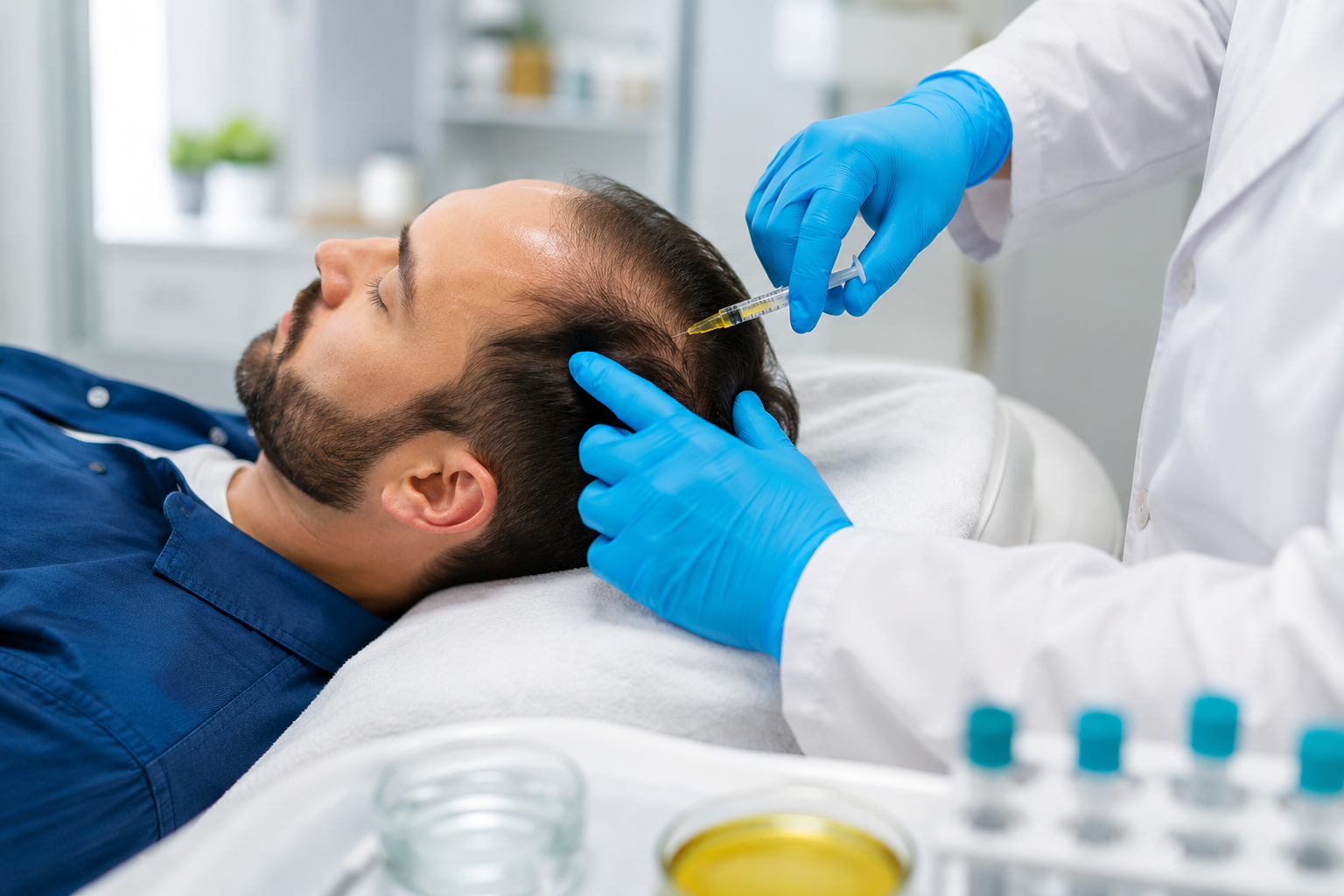
Stem cell hair treatment abroad costs the most when it is combined with a follicle transplant, because you pay for the biologic material and the surgical procedure at once. Standalone stem cell therapy is the entry tier; adding platelet-rich plasma (PRP) raises the price modestly, and pairing stem cells with a full FUE or DHI transplant sits at the top of the range. The comparison below shows each tier across South Korea, Thailand, Malaysia, and Singapore, with a US figure for contrast.
Country / Region | Standalone Stem Cell | Stem Cell + PRP | Stem Cell + FUE/DHI Transplant |
South Korea | $2,000 – $4,500 | $2,800 – $5,500 | $4,500 – $9,000 |
Thailand | $1,800 – $4,000 | $2,400 – $5,000 | $3,500 – $8,000 |
Malaysia | $1,500 – $3,500 | $2,000 – $4,500 | $3,000 – $7,000 |
Singapore | $3,000 – $6,000 | $4,000 – $7,500 | $6,000 – $12,000 |
US Baseline | $5,000 – $12,000 | $7,000 – $15,000 | $12,000 – $30,000 |
Two factors explain most of the spread between tiers. The combination tier adds hours of operating time, since a surgeon harvests and places grafts on top of preparing and injecting the cell concentrate, and that labor is billed on top of the biologic cost. Graft count drives the rest. A patient covering a large recession needs thousands of grafts, and each one lengthens the procedure and raises the total, which is why the FUE/DHI tier stretches so much wider at the top than the standalone tier does.
Ranges vary within each country by clinic accreditation, surgeon seniority, and how much of the price a package folds in. Figures reflect the procedure itself and typically exclude flights, hotels, and aftercare medication, so budget those separately when you compare quotes.
No competing cost guide breaks these three tiers out across all four of these destinations, so treat the table as your working baseline rather than a single flat per-country average. For how these numbers sit against a standard transplant trip, our hair transplant abroad cost comparison covers the FUE and DHI side in full.
Stem cell therapy vs. FUE/DHI: which fits your hair loss
Your hair loss stage decides this choice more than price does. Stem cell therapy works with follicles you still have, so it fits people in the early-to-moderate thinning stages who want to slow shedding and thicken existing hair without surgery. FUE and DHI move healthy follicles into bald areas, so they fit people with established, patterned baldness who want new permanent coverage from a single procedure. The two methods answer different problems, and picking by cost alone leads people to the cheaper option that does not solve their case.
Stem Cell Therapy (Follicle Preservation)
Primary Goal: Strengthen and thicken active follicles in thinning areas.
Typical Cost (Asia): $1,800 – $6,500 (depending on procedure tier).
Downtime: Minimal; return to daily activities within 24 hours.
Permanence: Temporary maintenance; requires periodic upkeep sessions.
Best Candidate: Early-to-moderate diffuse thinning where active follicles remain.
FUE / DHI Transplant (Surgical Regrowth)
Primary Goal: Relocate healthy donor follicles to completely bald or receding zones.
Typical Cost (Asia): $2,500 – $7,000 for a full session.
Downtime: Several days of localized healing; full recovery over 10 to 14 days.
Permanence: Permanent regrowth in transplanted areas.
Best Candidate: Defined bald patches or a receding hairline seeking a one-time fix.
The cost and recovery gap looks smaller than it reads. A standalone stem cell session costs less upfront than a transplant, but its effect fades, so repeat treatments push the multi-year total above a one-time FUE or DHI procedure for anyone with real bald areas. Recovery favors stem cell therapy for people who cannot take a week away from work, though a transplant's longer downtime buys a result you never repeat.
Choose stem cell therapy if you are catching thinning early and want to protect what you have. Choose FUE or DHI if you have established baldness and want new hair that stays. Many people combine both, using a transplant to rebuild bald zones and stem cell therapy to support the surrounding native hair. That combination is where the technique-tier pricing above matters most, since a stem cell plus FUE or DHI package prices the two together rather than as separate trips.
Does stem cell hair treatment actually work?
Stem cell therapy can thicken existing hair, but the current evidence does not support it as a permanent regrowth solution or a replacement for FUE and DHI in established baldness. A 2024 PubMed Central review of autologous stem cell-derived treatments found that they "can promote hair regeneration and density," while noting plainly that the outcomes may be temporary and results vary between patients. That temporariness is the core limitation. Stem cells work on follicles that are still alive, so they cannot restore coverage in areas where the follicles are already gone.
The science is still being formally tested rather than settled. An active clinical trial registered on ClinicalTrials.gov is currently studying allogeneic mesenchymal stem cells for male-pattern baldness, and a broader PubMed Central review describes stem cells as being investigated for hair loss rather than proven for it. No health system treats this as a standard therapy. The NHS does not offer or endorse stem cell hair treatment, and it is classed as cosmetic and elective everywhere, including across the UK private sector.
That uncertainty raises the stakes on where you have the treatment done, not whether the science is perfect. Because stem cell therapy is unregulated as a hair-loss treatment, the practical safety question is whether the clinic and the physician administering it hold verifiable credentials at an accredited facility. Le Medica applies the same standard here that it uses across its transplant work, confirming surgeon licensing and hospital accreditation before a patient books. If you are weighing stem cell therapy against surgery, our hair transplant treatment page explains what FUE and DHI actually deliver for established baldness, our dedicated stem cell treatment page covers the procedure itself in more depth, and our hair transplant abroad cost comparison shows where the two options sit on price. Treat stem cell therapy as a complementary or early-stage option, and verify the provider before you commit.
Bundling stem cell treatment with a hair transplant trip
If you plan to combine stem cell therapy with an FUE or DHI procedure on the same trip, Le Medica coordinates both bookings, the surgeon vetting, and the travel logistics so you handle one itinerary instead of two. Many patients who choose stem cell treatment as a supporting therapy alongside a transplant want a single overseas visit rather than separate trips to South Korea, Thailand, Malaysia, or Singapore. We arrange that scheduling around your surgeon's availability and your recovery window.
Travel sharing on a bundled trip runs through Le Medica's Elite membership and caps at two people. You can bring one companion or a second patient onto the same coordinated trip, and Elite membership gates access to that shared arrangement. Our group travel logistics guide covers how this coordination works in practice for any combined procedure.
The practical benefit is continuity. One coordinator manages your clinic communication, verifies both the transplant surgeon and the stem cell provider, and keeps your local follow-up care connected to the overseas team. If a bundled trip fits your treatment plan, we can map the timeline and confirm what Elite membership covers before you commit.
FAQs
How much does stem cell hair treatment cost abroad?
Standalone stem cell therapy runs roughly $1,500 to $4,000 across South Korea, Thailand, Malaysia, and Singapore, with combination packages reaching $8,000 or more. A US course of comparable sessions often exceeds $10,000.
Is stem cell hair treatment cheaper than a hair transplant?
A single stem cell course is usually cheaper upfront, but it requires repeat sessions to maintain results, so lifetime cost can approach or exceed a one-time FUE transplant.
Does insurance cover it?
No. Every source treats stem cell hair treatment as elective and cosmetic, so you pay out of pocket everywhere, including the UK private sector.
Can stem cells permanently regrow hair?
No. Current evidence shows regrowth results can be temporary, and stem cell therapy cannot create new follicles in completely bald areas.
What's the difference between stem cell therapy and PRP?
Both are injectable, non-surgical treatments. PRP costs less per session, around $1,500 to $2,000, while stem cell therapy tends to cost more and demands ongoing maintenance.
Which is a better fit for advanced baldness, stem cell or FUE?
FUE. Stem cell therapy suits early-to-moderate thinning with active follicles, not established bald zones.
How many sessions are needed?
Most protocols use two to three sessions, and patients report roughly $5,000 for a three-session course.
Which destinations offer it for international patients?
South Korea, Thailand, Malaysia, and Singapore all treat overseas patients at accredited clinics.
How long until you see results?
Expect three to six months for early density changes, with full assessment closer to a year.
Get your treatment plan verified before you book
Before you send a deposit anywhere, have the surgeon's credentials and the hospital's accreditation checked against the source registries, and get the quoted price broken down line by line. Le Medica does this verification for you across South Korea, Thailand, Malaysia, and Singapore, so you know the surgeon is qualified, the facility is accredited, and the price you were quoted is the price you pay. Tell us your hair loss stage and what you're weighing, and we'll confirm whether stem cell therapy, FUE, DHI, or a combination actually fits before you commit.
References
Gasteratos K, et al. Autologous Stem Cell-derived Therapies for Androgenetic Alopecia. PMC10863936. https://pmc.ncbi.nlm.nih.gov/articles/PMC10863936/
The Effectiveness of Allogeneic Mesenchymal Stem Cells for Androgenic Alopecia. ClinicalTrials.gov NCT06764329. https://clinicaltrials.gov/study/NCT06764329
Krefft-Trzciniecka K, et al. Human Stem Cell Use in Androgenetic Alopecia. PMC10047891. https://pmc.ncbi.nlm.nih.gov/articles/PMC10047891/